In today’s fast-paced, software-defined engineering world, Model-Based Development (MBD) is no longer a luxury—it’s a necessity. From automotive ECUs to aerospace control systems, engineering teams are turning to MBD to accelerate development cycles, reduce errors, and bring higher-quality products to market faster.
Whether you’re a systems engineer, embedded software architect, or project manager, understanding the strategic advantages of Model-Based Development can transform how your team designs, tests, and validates complex systems.
🚀 What is Model-Based Development?
Model-Based Development (MBD) is an engineering methodology that uses graphical models to design, simulate, verify, and generate code for embedded systems. These models, often built in tools like MATLAB/Simulink, represent system behavior, control logic, and interfaces visually, enabling early validation and automation.
Think of it like building a full-scale flight simulator before you construct the aircraft. You get to test everything—without risking a crash.
🔍 Why Engineering Teams Are Moving to Model-Based Development
Here are the top 10 benefits of MBD that engineering teams experience in real-world product development.
1. Faster Development Cycles
MBD promotes early simulation and automated code generation, drastically cutting down development time.
- Teams can validate control logic before hardware is available.
- Parallel development reduces bottlenecks between software and hardware teams.
🧠 Example: Automotive OEMs using MBD reduced ECU development time by up to 40%.
2. Early Error Detection with Simulation
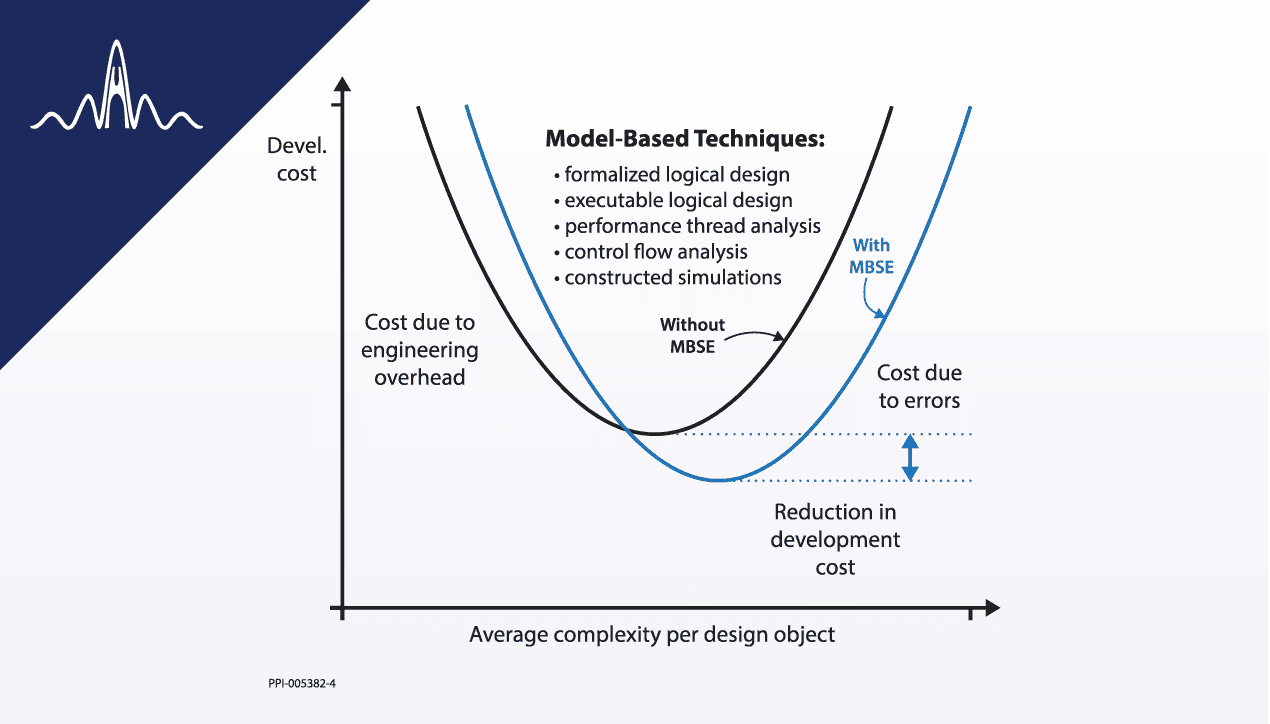
With continuous model simulation, teams can catch design flaws at the requirements or design stage—before coding begins.
- Visual debugging uncovers edge cases.
- Simulink models reveal logical inconsistencies and invalid transitions.
📉 Fixing errors at the modeling stage costs 10x less than after deployment.
3. Improved Collaboration Between Teams
Mechanical, electrical, and software engineers can speak a common language through shared system models.
- Easier cross-domain communication.
- Real-time co-simulation between mechanical and control models.
🛠️ In aerospace, multidisciplinary teams use shared Simulink models to align control surfaces with structural limits.
4. Automatic Code Generation (ACG)
MBD tools can generate production-grade C/C++ code directly from models using tools like Embedded Coder or TargetLink.
- Ensures code is consistent with the model.
- Reduces human error and improves traceability.
⚙️ A Tier 1 supplier in automotive reported 70% fewer software bugs by using auto-generated code from models.
5. Test-Driven Development with Model-in-the-Loop (MiL)
Engineers can create test harnesses around their models to verify functional correctness using MiL, SiL, and HiL approaches.
- Test cases derived from requirements are tied to models.
- Coverage tools ensure robust testing.
🔁 Think of it as “unit testing” for control algorithms—before real hardware is involved.
6. Traceability from Requirements to Code
Using tools like Simulink Requirements and IBM DOORS, MBD allows complete end-to-end traceability.
- Requirements link to model blocks and auto-generated code.
- Essential for safety-critical systems (ISO 26262, DO-178C, ASPICE).
🧾 Traceability reports are often mandatory in functional safety audits.
7. Rapid Prototyping & Hardware-in-the-Loop (HiL)
MBD supports rapid deployment to real-time simulators and embedded targets.
- Enables HiL testing before the actual hardware is finalized.
- Useful in automotive, robotics, and industrial automation.
🏎️ Example: Electric vehicle teams test motor control strategies on dSPACE HiL rigs before road testing.
8. Better Compliance with Functional Safety Standards
MBD is built for standards like ISO 26262, DO-178C, and IEC 61508.
- Formal verification, static checks, and coverage analysis.
- Certification-ready artifacts can be auto-generated.
🔐 OEMs reduce the cost of safety audits by producing Simulink-generated documentation.
9. Supports Agile and Continuous Integration Workflows
Models can be version-controlled (e.g., with Git), and simulations can be integrated into CI pipelines.
- Test results can be visualized in dashboards.
- Changes to control logic are instantly testable.
⚡ Modern teams use Jenkins pipelines to simulate every commit to a control model.
10. Better System Understanding & Training
New engineers grasp system behavior faster with graphical models than with thousands of lines of C code.
- Intuitive representation helps onboarding.
- Real-time plots aid in debugging.
🎓 A robotics startup cut onboarding time by 50% using Simulink models as live documentation.
📘 Real-World Case Study: MBD in Electric Power Steering (EPS)
Problem:
A Tier-1 supplier developing an Electric Power Steering (EPS) module faced long cycles, late bugs, and hardware dependency for testing.
Solution:
- Built Simulink models for torque-to-assist logic and motor control.
- Used Model-in-the-Loop (MiL) to validate assist strategies.
- Performed HiL testing with a dSPACE simulator before real road trials.
- Auto-generated embedded code with Embedded Coder for STM32.
Result:
- Development time cut by 38%.
- Bugs detected 3 months earlier.
- Zero critical issues in production release.
✅ Conclusion: Why MBD is a Strategic Advantage
Engineering teams that adopt Model-Based Development don’t just build faster—they build smarter, safer, and with fewer surprises.
With the increasing complexity of embedded systems in EVs, drones, medical devices, and industrial automation, MBD is becoming the standard for robust and reliable development.
📣 Call to Action
Are you still debugging control algorithms at the hardware level? It’s time to shift left—simulate, verify, and accelerate with Model-Based Development.
🔗 Explore tools like Simulink, dSPACE, and TargetLink to start your MBD journey today.
Check out hands-on Model-Based Development courses at https://reynlab.com/course/model-based-development/