One of the biggest mistakes in automotive diagnostics is this:
👉 Blaming the ECM when the real problem is a sensor
👉 Or replacing sensors when the ECM is faulty
This confusion leads to:
- Wasted money 💰
- Time loss ⏱️
- Customer dissatisfaction 😡
🧠 Key Insight
👉 Sensors provide data
👉 ECM makes decisions
If either fails → engine problems occur
⚠️ Why This Confusion Happens
Because symptoms look similar:
- Engine misfire
- Poor mileage
- Check engine light
- Starting issues
👉 These can be caused by BOTH ECM and sensors
🔍 What is a Sensor Failure?
A sensor failure occurs when a sensor sends:
- Wrong data
- No data
- Delayed data
🔌 Common Sensors:
- Crankshaft sensor
- Camshaft sensor
- Oxygen sensor
- MAF/MAP sensor
🧠 What is ECM Failure?
ECM failure occurs when:
- It cannot process data
- It cannot send output
- Internal circuits fail
🔍 Key Differences (Quick Table)
Feature | Sensor Failure | ECM Failure |
Data input | Incorrect | Correct |
Processing | Normal | Faulty |
Output | May be correct | Incorrect or absent |
Frequency | Very common | Less common |
Cost | Low | High |
🚨 Common Symptoms Comparison
🟢 Sensor Failure Symptoms
- Check engine light
- Poor mileage
- Rough idling
- Specific fault codes
🔴 ECM Failure Symptoms
- No start
- No communication
- Multiple system failures
- No injector/spark
🔍 Step-by-Step Diagnosis
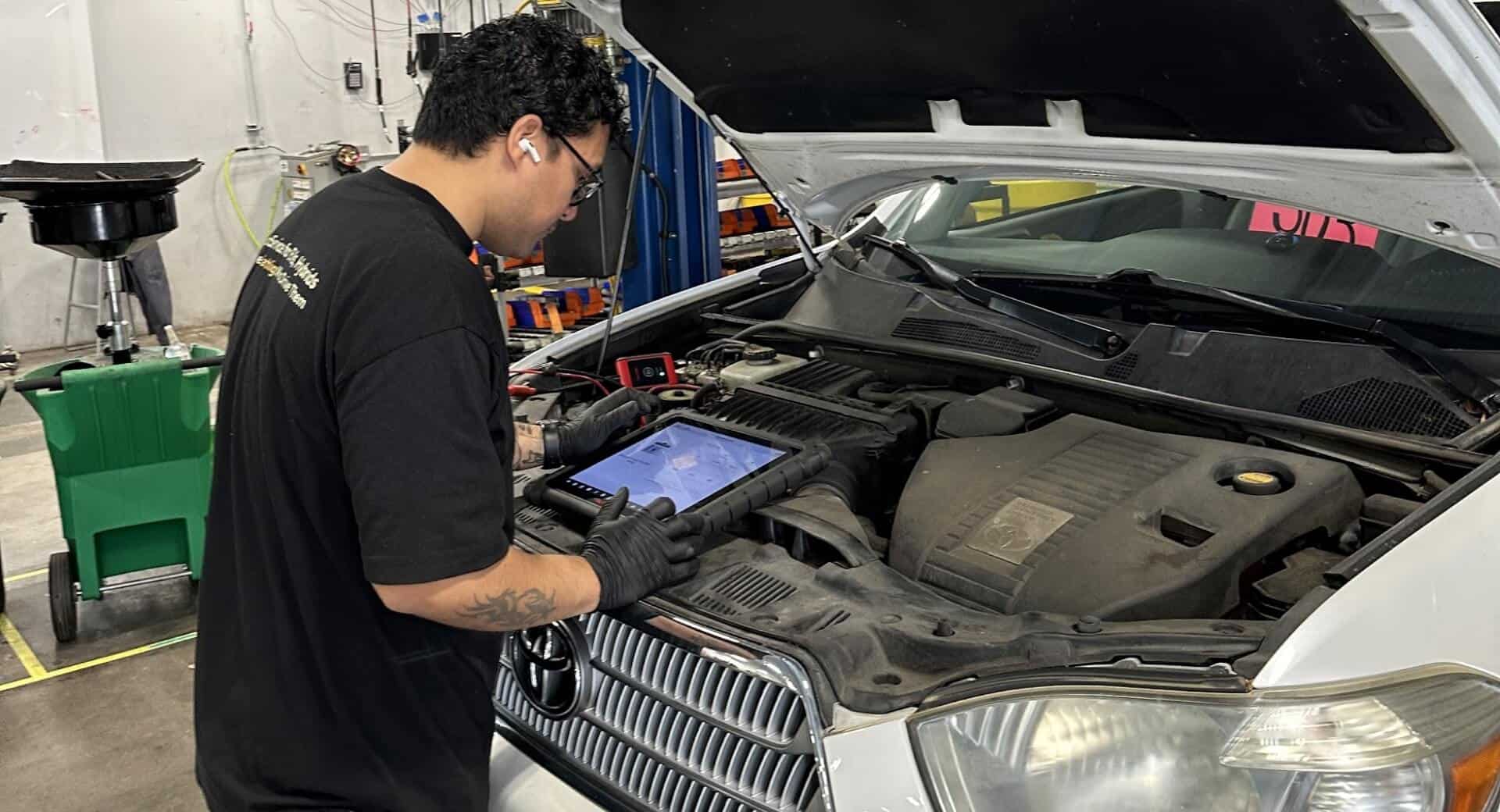
🟢 Step 1: Scan for Error Codes
📊 Sensor Failure:
- Specific codes (e.g., P0335 crank sensor)
📊 ECM Failure:
- No communication OR multiple unrelated codes
🟡 Step 2: Check Live Data
🧪 Sensor Failure:
- Abnormal readings
🧪 ECM Failure:
- Data may be missing or frozen
🔵 Step 3: Verify Sensor Signals
🔧 Method:
- Use multimeter or oscilloscope
🧪 Result:
- No signal → sensor issue
🟠 Step 4: Check ECM Output
🔧 Test:
- Injector pulse
- Ignition signal
🧪 Result:
- No output → ECM issue
⚫ Step 5: Cross-Check with Known Good Sensor
👉 Replace sensor temporarily
Result:
- Problem fixed → sensor fault
- No change → check ECM
🔴 Step 6: Check Power & Ground
👉 Weak power can mimic ECM failure
🟣 Step 7: Check Wiring
👉 Wiring issues often look like:
- Sensor failure
- ECM failure
🛠️ Real Workshop Case Study
🚘 Problem:
Car not starting
Initial Guess:
ECM failure
Diagnosis:
- No RPM signal
- Crank sensor faulty
Result:
👉 Sensor replaced → car started
🧪 Advanced Case Study
🚘 Problem:
No injector signal
Diagnosis:
- Sensors OK
- Power OK
Root Cause:
👉 ECM driver circuit failure
⚠️ Golden Diagnostic Rule
👉 Always check sensors first before blaming ECM
🧠 Logical Thinking Approach
If:
- Input wrong → sensor issue
- Input correct but output wrong → ECM issue
📊 Visual Logic Flow
👉 Sensor → ECM → Actuator
Where problem occurs:
- Before ECM → sensor
- After ECM → ECM
🔧 Tools Required
🧰 Basic:
- Multimeter
- OBD scanner
🔬 Advanced:
- Oscilloscope
- Scan tool
🇮🇳 Indian Conditions Insight
Common Issues:
- Cheap sensors fail frequently
- Wiring damage due to rodents
- Poor aftermarket parts
👉 Sensor failures are more common than ECM failures
💰 Cost Comparison
Sensor Replacement:
₹500 – ₹5,000
ECM Repair:
₹3,000 – ₹15,000
ECM Replacement:
₹20,000+
👉 Always confirm before replacing ECM
❌ Common Mistakes
❌ Mistake 1: Replacing ECM first
👉 Very costly mistake
❌ Mistake 2: Ignoring sensor data
👉 Data tells truth
❌ Mistake 3: Not checking wiring
👉 Wiring causes confusion
❓ Frequently Asked Questions (FAQs)
Q1: How do I know if it’s ECM or sensor?
Check input (sensor) vs output (ECM).
Q2: Which fails more often?
Sensors fail more frequently.
Q3: Can bad sensor damage ECM?
Yes, in some cases.
Q4: Should I replace ECM first?
No, always test sensors first.
Q5: Can wiring cause both issues?
Yes, very commonly.
🏁 Conclusion
Understanding the difference between ECM failure and sensor failure is one of the most valuable skills in automotive diagnostics.
👉 Remember:
- Sensors provide input
- ECM gives output
If you master this:
👉 You avoid costly mistakes
👉 You diagnose faster
👉 You build trust with customers
📺 Watch a real battery testing demo here: Reynlab YouTube Channel
🌐 Explore our automotive training programs: www.reynlab.com/our-courses