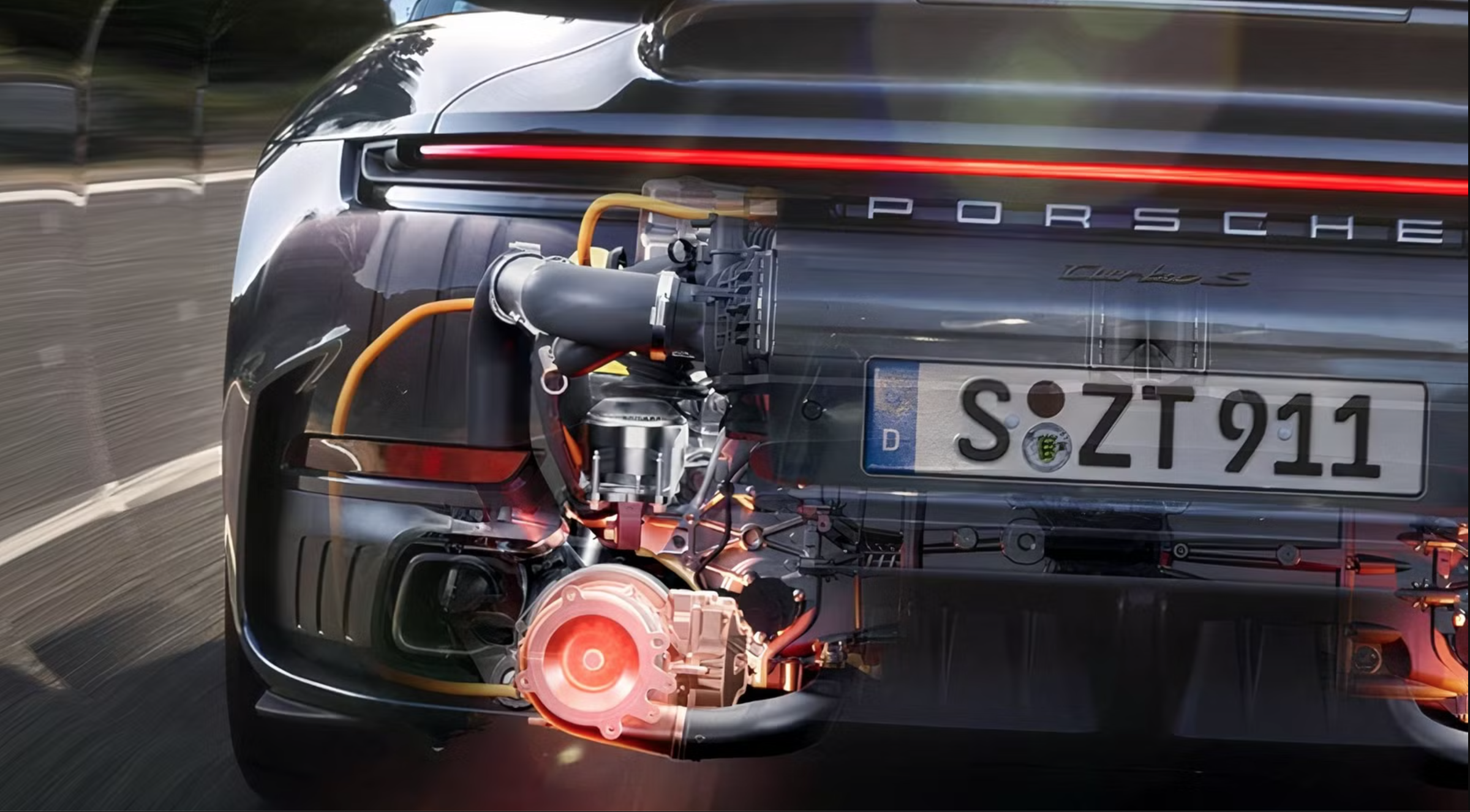
ECU Tuning for Reduced Turbo Lag
Turbochargers have revolutionized automotive performance, offering significant power gains while maintaining relatively good fuel efficiency. However, one persistent challenge with turbocharged engines is turbo lag—that frustrating delay between pressing the accelerator and feeling the surge of power. Through strategic ECU tuning, this inherent characteristic can be substantially reduced, creating a more responsive and enjoyable driving experience.
Understanding Turbo Lag
Before diving into solutions, it’s essential to understand what causes turbo lag. At its core, turbo lag represents the time delay between throttle application and the turbocharger reaching sufficient speed to produce the desired boost pressure.
This delay occurs primarily because:
- Inertia of Rotating Components: The turbine and compressor wheels have mass that requires time to accelerate.
- Exhaust Gas Dynamics: Sufficient exhaust gas pressure and volume must build up to spin the turbine wheel.
- Boost Threshold: Smaller turbos spool quickly but reach their flow limits earlier, while larger turbos provide more top-end power but require more exhaust energy to start working effectively.
- Plumbing Volume: The physical volume of intercoolers and associated piping must be pressurized before boost reaches the intake manifold.
The factory ECU programming often prioritizes reliability, emissions compliance, and drivability across a wide range of conditions and driver behaviors. This conservative approach typically leaves room for optimization when targeting specific performance characteristics like reduced turbo lag.
ECU Parameters Affecting Turbo Lag
Several ECU-controlled parameters directly influence how quickly a turbocharger builds boost:
- Ignition Timing
Ignition timing significantly impacts exhaust gas temperature and pressure. Retarding timing during spool-up increases exhaust gas energy, helping the turbine wheel accelerate more quickly.
The ECU can be programmed to:
- Temporarily retard timing when boost build-up is requested
- Create dynamic timing maps that optimize for spool-up in lower gears
- Implement different timing strategies based on engine temperature and ambient conditions
- Fuel Delivery
Fuel mapping affects both power production and exhaust gas characteristics. Strategic richening of the air-fuel mixture during spool-up can:
- Increase exhaust gas temperature
- Generate more exhaust volume
- Improve combustion stability during transition phases
Modern direct injection systems offer even more precise control, allowing for multiple injection events per cycle that can be optimized for turbocharger response.
- Variable Valve Timing
For engines equipped with variable valve timing or lift systems, the ECU can alter cam timing to:
- Increase exhaust backpressure when needed
- Optimize scavenging effects
- Create valve overlap conditions that help maintain turbine speed
- Throttle Mapping
How the electronic throttle responds to pedal input significantly impacts driver perception of lag. By modifying throttle mapping, the ECU can:
- Apply progressive throttle opening that matches turbocharger response
- Implement predictive algorithms that anticipate boost requirements
- Create different response profiles for various driving modes
- Boost Control
Direct manipulation of wastegate duty cycle or variable geometry turbo position allows the ECU to:
- Maintain some boost pressure during shifts
- Preemptively close the wastegate before acceleration
- Create custom boost build-up curves optimized for specific driving scenarios
Advanced ECU Tuning Strategies for Reducing Turbo Lag
Anti-Lag Systems
Originally developed for rally cars, anti-lag systems (ALS) represent the most aggressive approach to eliminating turbo lag. These systems work by:
- Retarding ignition timing drastically when the throttle is closed
- Injecting additional fuel that combusts in the exhaust manifold
- Creating an explosive environment that keeps the turbo spinning during off-throttle conditions
While effective, traditional anti-lag systems have significant drawbacks:
- Dramatically increased wear on exhaust components
- Potential reliability issues from extreme thermal cycling
- Loud backfiring and flames from the exhaust (undesirable for street use)
Modern street-friendly versions implement milder strategies that balance response with reliability:
- Partial anti-lag that activates only in sport modes
- Temperature-based limitations to prevent overheating
- Smoother implementations that avoid dramatic backfiring
Two-Step Rev Limiters
Two-step launch control systems can double as anti-lag mechanisms when properly configured:
- The lower rev limit maintains engine speed in the turbo’s efficiency range
- Modified ignition timing creates optimal exhaust energy
- Fuel enrichment protects engine components while increasing exhaust energy
This approach works particularly well for improving launch performance and reducing lag when accelerating from a stop.
Rolling Anti-Lag
For improving in-gear acceleration, rolling anti-lag strategies focus on maintaining boost during partial throttle conditions:
- Wastegate preemptively closes when throttle position changes
- Ignition timing temporarily retards to increase exhaust energy
- Air-fuel ratio richens momentarily to support combustion stability
This creates a more responsive feel during everyday driving without the drawbacks of full anti-lag systems.
Predictive Boost Control
The most sophisticated ECU tuning incorporates predictive algorithms that anticipate driver intentions:
- Analyzing throttle position rate of change
- Monitoring brake pressure release patterns
- Incorporating vehicle speed and gear position data
- Using lateral g-force information to predict corner exits
These inputs allow the ECU to prepare the turbocharger before maximum boost is requested, effectively “pre-spooling” the turbo during predictable driving scenarios.
Implementation Techniques
Dynamic Boost Control Tables
Rather than using static wastegate duty cycle maps, advanced tuning creates dynamic tables that respond to:
- Rate of throttle application
- Current gear selection
- Engine temperature
- Ambient pressure conditions
This approach allows for contextually appropriate boost control that prioritizes response when needed while maintaining reliability under sustained load.
Transient Fueling Optimization
During the transition from low to high load, precisely calibrated fueling prevents hesitation:
- Accelerator pump effect emulation in electronic systems
- Momentary enrichment during boost onset
- Compensation for wall-wetting effects in port injection systems
- Specialized calibration of injector dead-time and latency
These adjustments ensure that fuel delivery precisely matches airflow during the critical spool-up phase.
Multi-Dimensional Mapping
Modern ECU tuning platforms allow for multi-dimensional maps that consider:
- Engine RPM
- Current boost pressure
- Target boost pressure
- Rate of change in throttle position
- Coolant temperature
- Intake air temperature
By incorporating these variables, tuning can become highly situational, applying aggressive anti-lag strategies only when conditions permit while defaulting to conservative settings when component protection is prioritized.
Vehicle-Specific Tuning Approaches
Different turbocharged engines respond better to specific tuning strategies:
Small-Displacement Turbocharged Engines
For engines like the 1.4L-2.0L turbocharged four-cylinders common in modern vehicles:
- Focus on optimizing valve timing to improve exhaust flow
- Implement aggressive throttle mapping to compensate for perceived lag
- Utilize speed-density tuning to improve load calculation accuracy
- Create specific calibrations for cold-start conditions when turbo response is naturally delayed
Twin-Turbo V6/V8 Applications
For larger twin-turbo applications:
- Optimize crossover points between primary and secondary turbos
- Implement cylinder-specific timing strategies to balance exhaust energy
- Create sophisticated boost control that accounts for uneven exhaust pulses
- Utilize individual cylinder timing and fueling to maintain optimal exhaust temperature
Variable Geometry Turbochargers
Engines with VGT technology benefit from:
- Highly dynamic vane position control based on both engine load and rate of change
- Preemptive vane closure before anticipated acceleration
- Custom vane position maps for different driving modes
- Integration with transmission control for gear-specific vane strategies
Tools and Equipment for Turbo Lag Reduction Tuning
Effective turbo lag tuning requires specialized equipment:
Essential Hardware
- High-Quality ECU Interface: Flash tools like COBB Accessport, EcuTek, or HP Tuners that provide full access to relevant parameters
- Data Logging Equipment: Systems capable of capturing:
- Manifold pressure with fast sampling rates
- Throttle position and rate of change
- Turbine speed (if sensor equipped)
- Lambda values before and after catalytic converters
- Wide-Band Oxygen Sensors: For precise air-fuel ratio monitoring during transient conditions
- Boost Control Solenoids: Higher flow capacity units may be required for more responsive wastegate control
Software Requirements
- Real-Time Tuning Capability: Software that allows parameter adjustments while driving to fine-tune boost response
- Advanced Table Structures: Programs supporting 3D and 4D mapping for complex interconnected parameters
- High-Resolution Data Analysis: Tools that can overlay multiple data channels with millisecond precision
Practical Tuning Process
A methodical approach to reducing turbo lag involves several key steps:
- Baseline Assessment
Before making any changes:
- Record stock boost onset and build rate at various RPM points
- Measure throttle response time and boost threshold
- Document normal operating temperatures and pressures
- Establish baseline performance metrics for later comparison
- Initial Parameter Adjustments
Begin with conservative changes to:
- Wastegate duty cycle tables (5-10% increase initially)
- Ignition timing (1-2 degrees of retard during spool-up)
- Throttle mapping (10-15% more aggressive initial response)
- Fuel enrichment during boost onset (2-3% richer initially)
- Incremental Testing
After each set of adjustments:
- Test drive under consistent conditions
- Data log all relevant parameters
- Analyze time-to-boost metrics
- Evaluate drivability and smoothness
- Refinement Phase
Based on testing results:
- Fine-tune individual parameters that showed positive results
- Address any drivability issues that emerged
- Create smoothing functions between operating regions
- Develop driver-selectable maps for different response profiles
- Stress Testing
Finally, verify reliability under challenging conditions:
- High ambient temperature operation
- Low-speed, high-load scenarios
- Aggressive driving with rapid throttle changes
- Extended highway cruising followed by sudden acceleration
Balancing Performance with Reliability
While reducing turbo lag is desirable, it must be balanced against:
Component Longevity
Aggressive anti-lag strategies can:
- Increase exhaust gas temperatures
- Accelerate turbocharger wear
- Stress engine internals due to rapid torque onset
- Reduce catalytic converter lifespan
Drivability Compromises
Some anti-lag approaches may create:
- Rougher idle characteristics
- Increased combustion noise
- More abrupt power delivery
- Higher fuel consumption
Emissions Compliance
Street-legal vehicles must maintain:
- Functional catalytic converters
- Compliant air-fuel ratios under normal operation
- Proper operation of OBD-II monitoring systems
- Legal sound levels without excessive backfiring
Complementary Modifications
ECU tuning works best when paired with hardware that supports reduced turbo lag:
Exhaust System Upgrades
- Larger diameter downpipes reduce exhaust restriction
- High-flow catalytic converters minimize back pressure
- Equal-length headers improve exhaust pulse sequencing
- Ceramic coatings help maintain exhaust gas temperature
Intake Improvements
- Lower restriction air filters allow faster compressor response
- Streamlined intake plumbing reduces turbulence
- Optimized intercooler designs balance flow with cooling efficiency
- Cold air sourcing improves charge density
Mechanical Enhancements
- Lighter turbine and compressor wheels reduce rotational inertia
- Ball bearing center sections decrease friction during spool-up
- Electronic boost controllers offer faster response than pneumatic units
- Lightweight flywheels improve engine acceleration rate
Conclusion
Reducing turbo lag through ECU tuning represents one of the most transformative modifications for turbocharged vehicles. By understanding the complex interplay between ignition timing, fueling, boost control, and throttle mapping, skilled tuners can dramatically improve throttle response while maintaining reliability.
The most successful approaches combine multiple strategies tailored to specific driving conditions, creating a comprehensive solution that addresses all aspects of turbocharger behavior. When properly executed, these modifications don’t just improve performance metrics—they fundamentally transform the driving experience by creating the immediate, linear throttle response that enthusiasts crave.
Whether implemented through professional tuning or advanced DIY methods, reducing turbo lag allows turbocharged vehicles to deliver their impressive power outputs with minimal delay, combining the efficiency advantages of forced induction with the responsive character traditionally associated with naturally aspirated engines.
📺 Watch a real battery testing demo here: Reynlab YouTube Channel
🌐 Explore our automotive training programs: www.reynlab.com/our-courses
🌐 Explore our automotive training programs: www.reynlab.com/our-courses