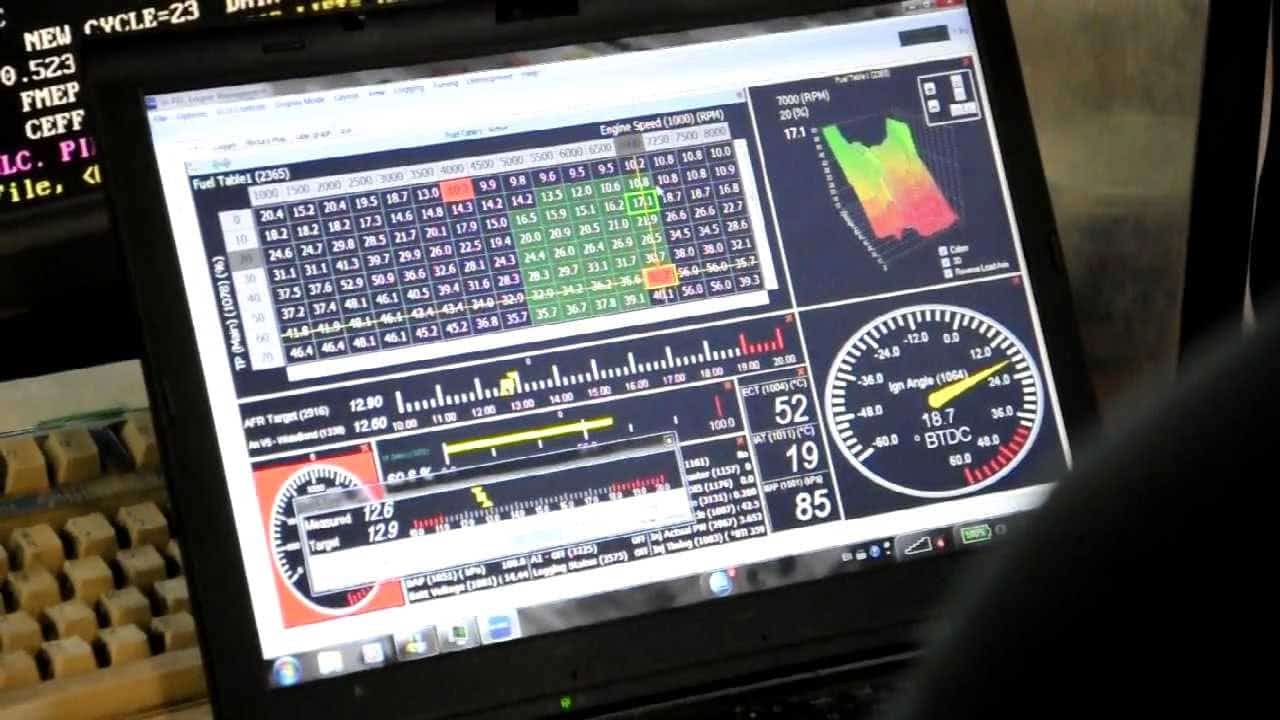
While many ECU tuning discussions focus on maximizing power and performance, one of the most beneficial applications of ECU remapping is optimizing drivability in everyday conditions—particularly stop-and-go traffic. For drivers who navigate congested urban environments daily, improving throttle response, reducing hesitation, and enhancing low-speed maneuverability can transform the driving experience far more meaningfully than gaining a few extra horsepower at the track.
Why Factory ECU Settings Often Struggle in Traffic
Modern vehicles face competing design objectives that often lead to compromised drivability in congested conditions:
Emissions Optimization
Factory ECU calibrations prioritize emissions compliance, particularly during the frequent acceleration and deceleration cycles typical in traffic:
- Lean Running Conditions: Many manufacturers program slightly lean air-fuel ratios during light throttle operation to reduce fuel consumption and emissions, which can create hesitation during acceleration.
- Exhaust Gas Recirculation (EGR): Heavy EGR use at low speeds reduces NOx emissions but can cause stumbling and irregular idle.
- Catalyst Protection: Fuel enrichment may be delayed to protect catalytic converters, resulting in momentary lean conditions during throttle transitions.
Fuel Economy Prioritization
The increasing pressure to achieve impressive fuel economy ratings leads to programming choices that can negatively impact drivability:
- Aggressive Throttle Mapping: Electronic throttle systems often use non-linear mapping that reduces throttle opening significantly in the initial pedal travel to improve economy figures.
- Early Upshift Programming: Automatic transmissions are frequently calibrated to upshift at the lowest possible RPM, placing the engine outside its torque sweet spot.
- Torque Management: Deliberate torque reduction during shifts and throttle changes helps protect transmissions but creates noticeable “holes” in power delivery.
One-Size-Fits-All Calibration
Perhaps most significantly, factory calibrations must work acceptably across widely varying:
- Driving styles (from conservative to aggressive)
- Environmental conditions (temperature, altitude, humidity)
- Fuel quality variations
- Vehicle loading situations
- Maintenance conditions
This requirement for broad adaptability inevitably creates compromises that become most noticeable in the demanding stop-and-go traffic environment.
Key ECU Parameters for Traffic Drivability
Several specific ECU parameters have outsized effects on drivability in congested conditions:
Throttle Mapping
The relationship between pedal position and actual throttle opening represents one of the most impactful calibrations for traffic driving:
- Initial Throttle Response: The first 5-15% of pedal travel disproportionately affects perceived drivability.
- Progressive Curve Development: How quickly throttle opening increases through the middle of pedal travel dictates how intuitive the car feels in varying traffic speeds.
- Dead Zone Elimination: Many factory calibrations include small “dead zones” at the beginning of pedal travel that create a disconnected feeling.
Idle Air Control and Stability
Traffic driving involves extensive idling, making idle stability crucial:
- Idle Speed Targets: Slightly higher idle speeds (often 50-100 RPM above stock) can improve stability.
- Idle Air Control Valve (IACV) Response Rate: How quickly the system responds to load changes (like A/C compressor engagement or steering inputs) affects smoothness.
- Idle Ignition Timing: Advanced timing at idle can improve stability and reduce emissions in certain engines.
Low-RPM Fueling
Precision in fuel delivery during the frequent transitions of traffic driving is essential:
- Accelerator Pump Effect: Electronic “accelerator pump” behavior that momentarily enriches the mixture during throttle opening prevents hesitation.
- Transient Fueling Rates: How quickly fuel delivery changes during rapid throttle adjustments prevents momentary lean or rich conditions.
- Wall-Wetting Compensation: Accounting for fuel that adheres to intake surfaces during throttle changes improves consistency.
Transmission Integration
For vehicles with automatic transmissions, ECU tuning must address:
- Shift Point Optimization: Keeping the engine in its torque sweet spot improves responsiveness.
- Torque Converter Lockup Strategy: Fine-tuning when the converter locks and unlocks enhances smoothness.
- Shift Speed Calibration: Balancing quick gear changes with smooth transitions is particularly important in traffic.
Diagnostic Assessment Before Tuning
Before modifying any parameters, a thorough diagnostic assessment establishes baseline performance and identifies specific issues:
Data Logging Parameters
Critical metrics to record during stop-and-go driving include:
- Short-Term and Long-Term Fuel Trims: Indicates how the ECU is currently compensating for factory calibration
- Throttle Position vs. Manifold Pressure: Reveals throttle response characteristics
- Lambda Values During Transitions: Shows air-fuel ratio stability during acceleration and deceleration
- Knock Sensor Activity: Indicates detonation sensitivity during low-RPM operation
- Intake Air Temperature Variations: Reveals heat soak issues in traffic conditions
Common Issues Identified Through Logging
Several patterns typically emerge from traffic condition logs:
- Throttle Response Lag: Significant delay between throttle application and manifold pressure increase
- Lean Excursions: Momentary lean conditions during throttle tip-in
- Inconsistent Idle Quality: Fluctuating RPM under varying loads
- Excessive Timing Retard: Conservative ignition timing at low RPM
- Torque Interruption: Noticeable dips in torque during transmission shifts
ECU Tuning Strategies for Traffic Drivability
With baseline data established, several tuning approaches can dramatically improve traffic drivability:
Throttle Response Enhancement
Modifying the throttle mapping creates more intuitive response:
- Linear Initial Response: Creating a 1:1 relationship between the first 10-15% of pedal travel and throttle opening
- Custom Progressive Curve: Developing a throttle curve that increases more rapidly in the middle of pedal travel
- Eliminating Electronic Deadbands: Removing programmed delays that create disconnected feel
Idle Stability Optimization
Refining idle parameters improves the stationary experience:
- Target RPM Adjustment: Finding the optimal balance between stability and fuel economy
- Adaptive Idle Parameters: Expanding the range of acceptable idle variation before intervention
- Load-Based Compensation: Creating specific idle targets for different accessory loads
Low-RPM Torque Enhancement
Several calibration changes can improve off-idle and low-RPM drivability:
- Low-End Ignition Advance: Increasing timing advance at low RPM where knock is rarely an issue
- Torque Reserve Elimination: Removing conservative torque restrictions that limit responsiveness
- Optimized VVT/VCT Operation: Adjusting variable valve timing for better low-end response
Transient Fueling Calibration
Precise fuel control during the acceleration and deceleration cycles of traffic delivers smoother operation:
- Enhanced Accelerator Pump Effect: Electronic simulation of traditional carburetor accelerator pumps
- Transient Enrichment Tuning: Optimizing momentary fuel enrichment during throttle opening
- Deceleration Fuel Cut Modifications: Smoother transition when returning to idle
Transmission Control Integration
For vehicles with electronically controlled transmissions, comprehensive tuning includes:
- Shift Point Recalibration: Keeping the engine in its optimal torque range during traffic maneuvers
- Torque Converter Lockup Adjustment: Fine-tuning partial lockup engagement for smoother operation
- Torque Management Reduction: Limiting unnecessary torque interruption during shifts
Vehicle-Specific Tuning Approaches
Different vehicle types benefit from specialized approaches:
Naturally Aspirated Engines
For non-turbocharged engines, focus on:
- Throttle Body Airflow Optimization: Particularly important with electronic throttle systems
- Precise MAF/MAP Calibration: Ensuring accurate airflow measurement during partial throttle operation
- VVT/VCT/VTEC Transition Smoothing: Creating seamless cam profile or timing changes
Turbocharged Applications
Forced induction vehicles require attention to:
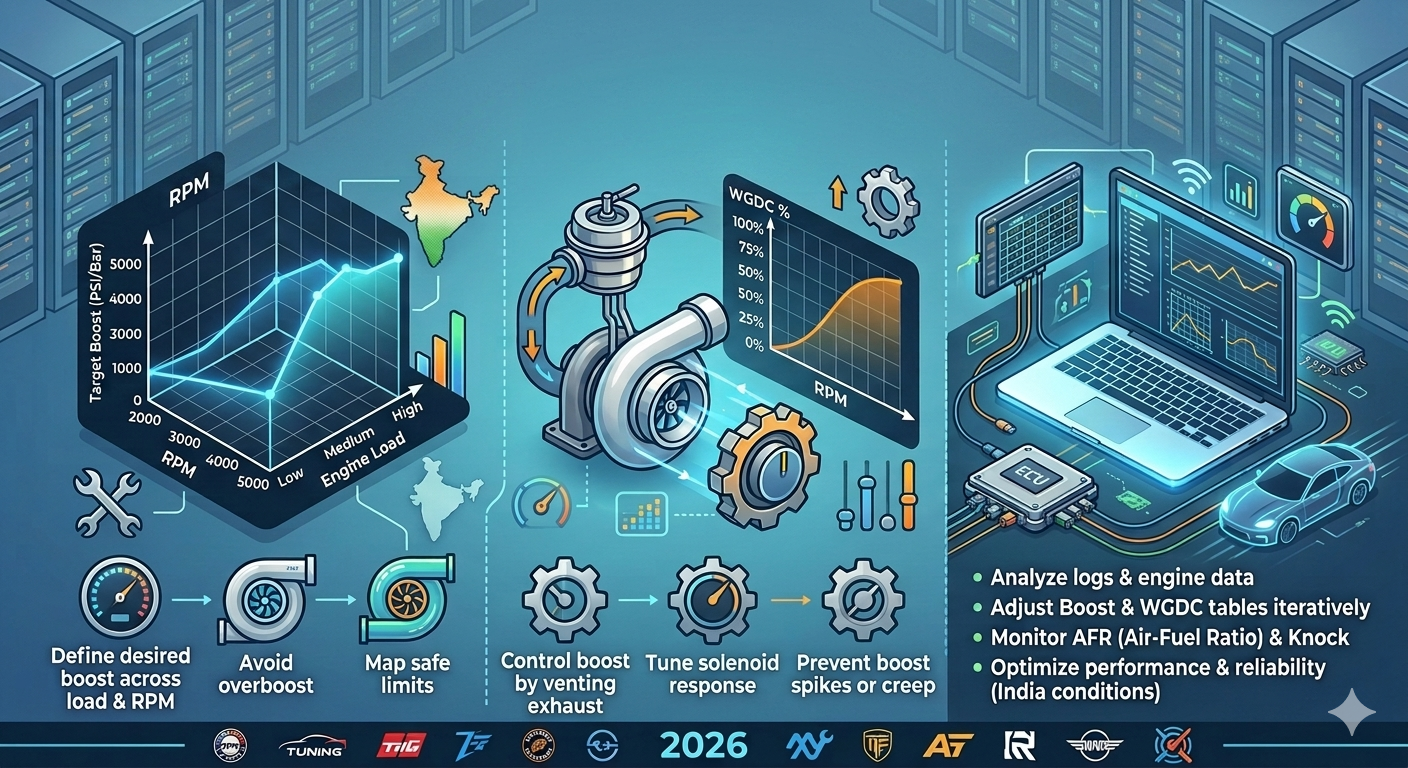
- Boost Threshold Reduction: Lowering the RPM where boost begins to build
- Wastegate Preload Adjustment: Creating earlier boost response
- Compressor Bypass Valve Tuning: Optimizing recirculation during throttle closure
- Boost Control at Low RPM: Managing boost targets specifically for traffic speeds
Diesel-Specific Considerations
Modern diesel engines benefit from:
- Injection Timing Optimization: Earlier injection for improved combustion at low RPM
- Pilot Injection Quantity: Fine-tuning pre-injection events for smoother combustion
- EGR Flow Modification: Balancing emissions compliance with throttle response
- Turbo VGT Position: Optimizing vane angle for low-end response
Hybrid System Integration
For hybrid vehicles, specialized tuning addresses:
- Engine Start-Stop Smoothness: Refining the transition between electric and combustion power
- Regenerative Braking Modulation: Creating more natural deceleration feel
- Power Blending Optimization: Smoothing the handoff between electric and combustion propulsion
Real-World Tuning Process
A methodical approach ensures optimal results:
- Baseline Assessment
Before making any changes:
- Record stock drivability in various traffic scenarios
- Collect comprehensive data logs covering all operating parameters
- Identify specific pain points and drivability issues
- Establish measurable criteria for improvement
- Incremental Parameter Adjustment
Begin with conservative changes to:
- Electronic throttle mapping (typically 10-15% more aggressive)
- Initial ignition timing advance (1-2 degrees)
- Low-RPM fuel enrichment (2-3% richer)
- Idle target adjustment (50-75 RPM increase)
- Progressive Testing
After each set of adjustments:
- Test drive in consistent traffic conditions
- Data log all relevant parameters
- Evaluate subjective drivability improvements
- Assess fuel economy impact
- Refinement Phase
Based on testing results:
- Fine-tune individual parameters that showed positive results
- Address any unexpected consequences
- Create smoother transitions between operating regions
- Develop multiple calibrations for different driving preferences if possible
- Long-Term Validation
Verify performance under varying conditions:
- Cold and hot ambient temperatures
- Varying humidity levels
- Different fuel qualities
- Various passenger and cargo loading
Before-and-After Case Studies
Examining real-world examples demonstrates the potential improvements:
Case Study 1: Turbocharged Crossover SUV
Vehicle Specifications:
- 2.0L turbocharged four-cylinder
- 8-speed automatic transmission
- Electronic throttle control
Drivability Issues:
- Significant throttle lag in stop-and-go conditions
- “Dead” feeling in first 20% of pedal travel
- Abrupt power delivery when boost threshold reached
- Hunting between gears in moderate traffic
ECU Modifications:
- Throttle mapping linearized for first 30% of pedal travel
- Wastegate preload increased by 0.5 PSI
- Shift points raised by 200 RPM in first three gears
- Torque management during shifts reduced by 15%
Results:
- Throttle response time decreased by 40%
- Smooth, predictable acceleration from stop
- Elimination of gear hunting in 15-30 mph range
- Improved driver confidence in traffic gaps
- 2% reduction in city fuel economy (acceptable trade-off)
Case Study 2: Naturally Aspirated Sedan
Vehicle Specifications:
- 2.5L four-cylinder
- CVT transmission
- Drive-by-wire throttle
Drivability Issues:
- Nonlinear throttle response
- Surging sensation at steady speeds
- Delayed acceleration from stop
- Artificial “stepped” feeling from CVT
ECU Modifications:
- Complete throttle map revision with 1:1 relationship in first 15%
- Idle target increased by 50 RPM
- Initial timing advance increased by 1.5 degrees
- CVT ratio change rate modified for smoother transitions
Results:
- Elimination of surging behavior
- More natural throttle feel
- Improved cold-start drivability
- No measurable change in fuel economy
- Smoother operation in dense traffic
Case Study 3: Turbodiesel Hatchback
Vehicle Specifications:
- 1.6L turbocharged diesel
- 6-speed dual-clutch transmission
- Variable geometry turbocharger
Drivability Issues:
- Significant turbo lag from stop
- Abrupt clutch engagement from DSG transmission
- Excessive EGR at low speeds causing hesitation
- Jerky operation in heavy traffic
ECU Modifications:
- VGT vane position optimized for low-end response
- Low-speed EGR rate reduced by 10%
- DSG clutch pressure and engagement speed refined
- Pilot injection quantity increased
Results:
- Smoother power delivery from stop
- Reduced sensation of turbo lag
- More predictable vehicle behavior
- Smoother idle quality
- Improved fuel economy due to fewer accelerator inputs needed
Balancing Drivability with Other Factors
Optimization must consider several competing priorities:
Emissions Compliance
Maintaining legal emissions levels while improving drivability:
- Staying within acceptable long-term fuel trim ranges
- Preserving catalyst light-off strategies
- Maintaining closed-loop operation whenever possible
- Preserving OBD-II readiness monitors
Fuel Economy
Balancing responsiveness with efficiency:
- Accepting minor fuel economy trade-offs for significant drivability gains
- Creating driver-selectable maps that prioritize economy or response
- Optimizing for real-world efficiency rather than standardized test cycles
- Educating drivers on how improved drivability can reduce fuel-wasting driving behaviors
Reliability Considerations
Ensuring long-term durability:
- Maintaining adequate component safety margins
- Avoiding excessive temperatures or pressures
- Preserving critical protection strategies
- Implementing temperature-based parameter adjustments
Advanced Drivability Tuning Techniques
For the most comprehensive results, consider these sophisticated approaches:
Adaptive Learning Optimization
Modern ECUs incorporate adaptive learning to fine-tune parameters over time:
- Expanding adaptation parameter ranges
- Accelerating adaptation rates for faster optimization
- Creating driver-specific adaptive profiles
- Preserving successful adaptations across drive cycles
Altitude and Temperature Compensation
Comprehensive tuning accounts for environmental variations:
- Creating barometric pressure compensation tables
- Developing intake temperature correction factors
- Implementing humidity-based adjustments
- Fine-tuning cold-start enrichment duration
Driver-Selectable Maps
Multiple calibrations accessible to the driver provide flexibility:
- Economy-focused maps for maximum efficiency
- Standard maps for balanced operation
- Sport maps for enhanced responsiveness
- Custom maps for specific driving conditions
Conclusion
While high-performance modifications often dominate discussions about ECU tuning, optimizing drivability for stop-and-go traffic represents one of the most practical and beneficial applications of this technology. By addressing the specific challenges of urban driving—throttle response, transient fueling, and transmission behavior—skilled tuning can transform daily commutes from frustrating experiences into smooth, intuitive journeys.
The most successful traffic-oriented tuning balances responsiveness with refinement, creating a driving experience that feels natural and predictable without sacrificing efficiency or reliability. With thoughtful calibration focused on real-world driving conditions, ECU remapping can deliver improvements that are appreciated every day, not just during occasional performance driving.
Whether implemented through professional tuning services or advanced DIY methods, drivability-focused ECU modifications offer perhaps the best return on investment for drivers who regularly face the challenges of congested urban environments. By prioritizing the driving characteristics that matter most in everyday situations, these targeted calibrations enhance not just the performance of the vehicle but the overall quality of the daily driving experience.
📺 Watch a real battery testing demo here: Reynlab YouTube Channel
🌐 Explore our automotive training programs: www.reynlab.com/our-courses