Complete Guide to ECU Tuning in Supercharger Applications
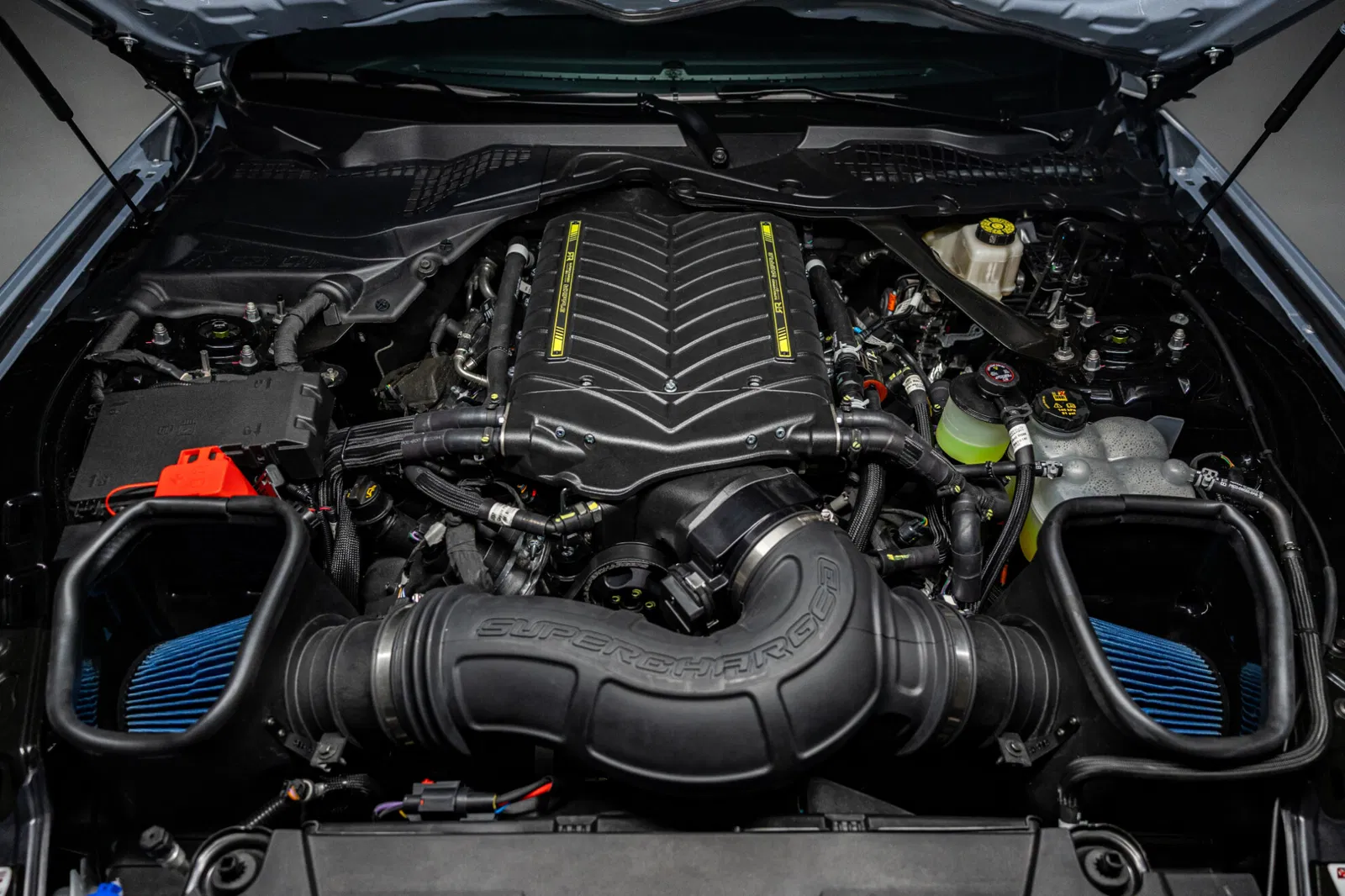
The role of ECU tuning in supercharger applications
When it comes to extracting maximum performance from a supercharged engine, the Electronic Control Unit (ECU) is the bridge between raw mechanical power and refined, usable performance. The supercharger provides the air compression needed for more power, but without proper ECU tuning that potential remains largely untapped. This post looks at the relationship between ECU tuning and supercharger applications, and why neither reaches its full potential without the other.
Understanding the basics: superchargers and ECUs
What is a supercharger?
A supercharger is a forced induction device that increases an engine's power output by forcing more air into the combustion chamber. Unlike turbochargers, which are powered by exhaust gases, superchargers are mechanically driven directly from the engine's crankshaft via a belt, chain, gear or shaft. This direct connection means superchargers provide immediate power delivery without the "lag" associated with turbochargers.
The three main types of superchargers are:
- Roots-type: uses two counter-rotating lobes to push air.
- Twin-screw: employs meshing screws to compress and move air.
- Centrifugal: works more like a belt-driven turbocharger, using an impeller to accelerate air.
The role of the ECU
The ECU is essentially the brain of your vehicle's engine management system. It controls parameters including:
- Fuel injection timing and quantity
- Ignition timing
- Idle speed
- Variable valve timing
- Boost pressure control
- Air-fuel ratio management
In factory settings, these parameters are calibrated for stock components and moderate performance goals, prioritizing reliability, emissions compliance and fuel economy.
Why ECU tuning matters for supercharged applications
1. Air-fuel ratio management
When you install a supercharger, you greatly increase the volume of air entering the engine. Without corresponding adjustments to fuel delivery, the engine will run "lean" (too much air, not enough fuel), which can cause:
- Reduced power output
- Increased cylinder temperatures
- Engine knock and detonation
- Potential catastrophic engine failure
Through ECU tuning, the air-fuel ratio can be optimized across all RPM ranges and load conditions. For supercharged applications, this typically means enriching the mixture (adding more fuel) to compensate for the additional air. Most supercharged engines perform best with air-fuel ratios between 11.5:1 and 12.5:1 under full load, compared to the stoichiometric 14.7:1 ratio in normally aspirated engines.
2. Ignition timing adjustment
Compressed air from a supercharger creates higher cylinder pressures and temperatures, which makes the stock ignition timing potentially dangerous. Advanced timing that works well in a naturally aspirated engine can cause damaging detonation in a supercharged setup.
ECU tuning allows for:
- Retarded ignition timing under boost conditions
- Dynamic timing adjustments based on knock sensor feedback
- Customized timing maps specific to the supercharger's characteristics
- Compensation for different fuel octane ratings
For example, while a naturally aspirated engine might run 30-35 degrees of advance at cruise, a supercharged engine might need to pull back to 20-25 degrees under similar conditions, with even more aggressive timing retard under full boost.
3. Boost control and management
Different superchargers have different boost delivery characteristics. A properly tuned ECU can:
- Set appropriate boost limits based on engine capacity and internals
- Implement progressive boost delivery for better traction and drivability
- Adjust boost based on environmental conditions
- Create separate boost maps for different driving modes
For a centrifugal supercharger that builds boost progressively with RPM, the tune might provide richer fuel mixtures at higher RPMs where boost pressure peaks. For a Roots-type blower that delivers more immediate boost, the tune might focus on low-end torque management.
4. Drivability enhancements
A stock ECU calibration was not designed with a supercharger in mind. This can result in:
- Hesitation during throttle transitions
- Rough idle
- Poor cold-start behavior
- Inconsistent power delivery
Professional ECU tuning addresses these issues by:
- Smoothing throttle response maps
- Creating custom idle parameters
- Developing specific cold-start enrichment strategies
- Calibrating part-throttle boost response
5. Protection features and safety
Advanced ECU tuning can add protective features that safeguard your investment:
- Boost cut-off at dangerous temperatures
- Fuel cut protection at high RPMs
- Torque management to protect transmission components
- Limp-home modes if critical parameters exceed safe ranges
The ECU tuning process for supercharged applications
Pre-installation baseline
Before installing a supercharger, it is advisable to:
- Document the car's baseline performance.
- Address any existing mechanical issues.
- Ensure the engine is in good health.
- Consider collecting baseline data from the ECU.
Installation and initial setup
After supercharger installation:
- Install any required fuel system upgrades.
- Ensure all sensors are functioning correctly.
- Check for air leaks in the intake system.
- Update the ECU with a conservative initial tune.
Dyno tuning approach
The most precise method for tuning a supercharged application involves these steps:
- Initial safe mapping: begin with conservative timing and rich air-fuel ratios.
- Progressive load testing: gradually increase load while monitoring air-fuel ratios, knock and temperatures.
- Power enrichment tuning: fine-tune fuel delivery under boost.
- Ignition optimization: carefully advance timing until maximum safe power is achieved.
- Part-throttle refinement: ensure smooth operation under normal driving conditions.
- Heat soak testing: verify performance under prolonged load and high temperatures.
Street tuning refinements
After dyno tuning, street driving reveals real-world conditions that may need further adjustment:
- Cold-start behavior
- Transient throttle response
- Cruise efficiency
- Heat management in traffic
Common ECU tuning challenges specific to superchargers
Heat management
Superchargers, especially Roots and twin-screw types, can generate significant heat. ECU tuning must account for:
- Intercooler efficiency
- Heat soak after repeated runs
- Increased intake air temperatures
Strategies might include temperature-based timing retard maps or fuel enrichment under high temperature conditions.
Low-end torque management
The immediate boost from positive displacement superchargers can overwhelm traction at low speeds. ECU tuning can implement:
- Progressive throttle maps
- Torque limiting in lower gears
- Custom traction control parameters
Fuel system limitations
High-horsepower supercharged applications often push fuel systems to their limits. Tuning must:
- Account for fuel pressure drop under load
- Maximize injector duty cycles without exceeding safe limits
- Implement multiple injection pulses if necessary
- Compensate for fuel temperature effects
Advanced ECU tuning strategies for supercharged applications
Multi-map switching
Performance-oriented ECU tunes can include multiple maps that the driver can switch between:
- Economy mode for daily driving
- Performance mode for maximum power
- Valet mode with limited boost
- Race mode for competition with specific fuel requirements
Ethanol flex tuning
For those using E85 or flex-fuel setups with their superchargers:
- Automatic fuel composition detection and adjustment
- Custom timing maps for ethanol's higher octane rating
- Adjusted fuel volume to compensate for ethanol's lower energy content
- Cold-start strategies specific to ethanol blends
Data logging and analysis
Continuous improvement comes through data:
- Setting up comprehensive logging parameters
- Analyzing logs for detonation events
- Identifying boost drop-off points
- Fine-tuning based on real-world usage patterns
Summary: the inseparable relationship
A supercharger without proper ECU tuning is like a powerful orchestra with no conductor. The raw mechanical potential exists, but without coordination the result is chaotic and potentially destructive. Professional ECU tuning turns a simple bolt-on supercharger from a crude power adder into a performance upgrade that works in harmony with your engine.
For enthusiasts on the supercharged path, the ECU tune is not an optional extra. It protects your investment while unlocking its full potential, and neither the supercharger nor the tune can reach its full potential without the other being optimized.
Whether the car is a daily driver with enhanced performance or a dedicated track machine, taking the time to tune the ECU properly for your specific supercharger application pays off in performance, drivability and engine longevity.
Watch our workshop videos on the Reynlab YouTube Channel, or explore our automotive training programs at www.reynlab.com/our-courses.
For blog on Ecu tuning & remap
For course on Ecu tuning & remap
Related reading
Why Data Logging Is Important in ECU Tuning Performance