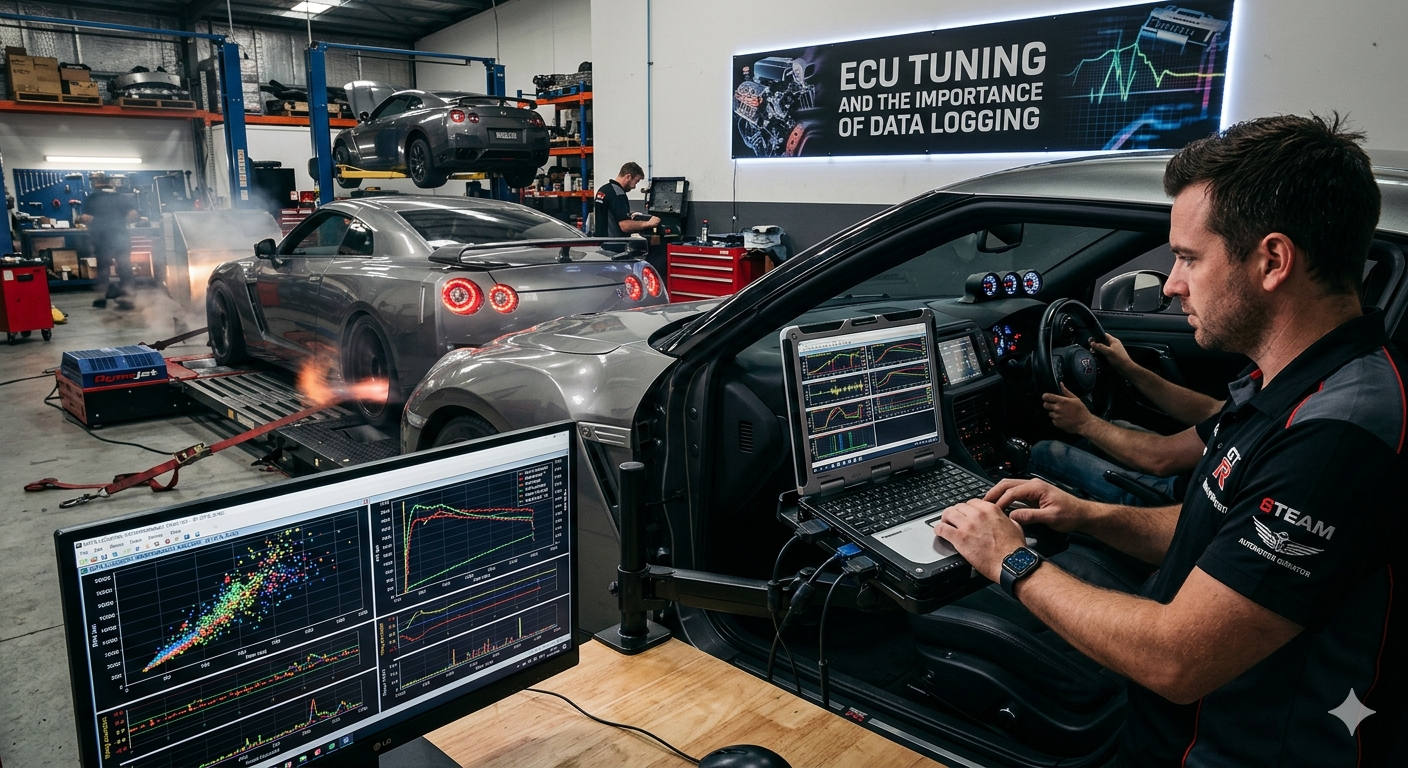
Introduction
In the world of automotive performance, few modifications offer as much potential improvement as electronic control unit (ECU) tuning. The modern vehicle’s electronic brain controls virtually every aspect of engine operation, from fuel delivery to ignition timing, making it the ultimate frontier for performance enhancement. However, the difference between a mediocre tune and an exceptional one often comes down to a single factor: data logging. While many enthusiasts focus exclusively on the end results—more horsepower, better throttle response, or improved fuel economy—professional tuners understand that the path to these gains is paved with data. In this article, we’ll explore why data logging is not just helpful but essential to the ECU tuning process, how it works, and how it transforms vehicle performance optimization from guesswork into science.
What Is ECU Tuning?
Before diving into data logging, let’s establish what ECU tuning actually entails. The Electronic Control Unit (ECU)—sometimes called the Engine Control Module (ECM) or Powertrain Control Module (PCM)—is essentially the computer that manages your engine’s operation. It processes information from various sensors throughout the vehicle and uses preprogrammed parameters to determine optimal settings for:
- Fuel injection quantity and timing
- Ignition timing
- Turbocharger boost pressure (in turbocharged vehicles)
- Variable valve timing
- Idle speed
- Rev limiters
- Torque management
ECU tuning refers to the process of modifying these factory settings to improve performance, efficiency, or both. Manufacturers typically program ECUs with conservative settings that prioritize reliability, emissions compliance, and fuel economy across a wide range of operating conditions and fuel qualities. Tuning removes these limitations by optimizing the ECU’s parameters specifically for your vehicle and usage patterns.
The Traditional Approach to Tuning
Historically, tuning was often performed using what might be called the “seat of the pants” method:
- Make a change to the tune
- Test drive the vehicle
- Subjectively evaluate the results
- Repeat
While experienced tuners could achieve decent results this way, this approach has significant limitations:
- It relies heavily on the tuner’s subjective perception
- It provides no quantifiable data to analyze
- It makes diagnosing problems difficult
- It can miss dangerous conditions that aren’t immediately apparent
- It’s inefficient and time-consuming
Enter Data Logging: The Game Changer
Data logging fundamentally transforms the tuning process by providing objective, measurable information about how your engine is performing in real-time. Instead of guessing what’s happening inside your engine, data logging tells you exactly what’s occurring at any given moment.
What Does Data Logging Capture?
A comprehensive data logging setup can record dozens of parameters simultaneously, including:
- Air/Fuel Ratios (AFR): The proportion of air to fuel in the combustion mixture
- Ignition Timing: When the spark plugs fire relative to piston position
- Intake Air Temperature (IAT): Temperature of incoming air
- Engine Coolant Temperature (ECT): Temperature of the engine cooling system
- Manifold Absolute Pressure (MAP): Pressure in the intake manifold
- Boost Pressure: In turbocharged/supercharged engines
- Knock Sensor Activity: Detection of engine detonation
- Short Term Fuel Trim (STFT): Immediate adjustments to fuel delivery
- Long Term Fuel Trim (LTFT): Adaptive fuel adjustments over time
- Throttle Position: How far the throttle is open
- Engine RPM: Revolutions per minute
- Vehicle Speed: How fast the vehicle is traveling
- Oxygen Sensor Voltage: Output from O2 sensors
- Exhaust Gas Temperature (EGT): Temperature of exhaust gases
The Data Logging Process
The typical data logging process for ECU tuning follows these steps:
- Equipment Setup: Connect specialized hardware to the vehicle’s OBD-II port or install standalone sensors
- Baseline Logging: Record data while the vehicle is operating with its current tune
- Analysis: Review the logs to identify areas for improvement
- Tune Adjustment: Modify the ECU parameters based on the analysis
- Verification Logging: Record new data to verify the changes had the desired effect
- Iteration: Repeat the process until optimal performance is achieved
Equipment for Data Logging
Data logging typically requires:
- OBD-II Scanner/Interface: Connects to the vehicle’s diagnostic port
- Data Logging Software: Programs like HP Tuners, EFILive, Cobb AccessPort, or standalone systems
- Additional Sensors: For parameters not tracked by the factory ECU (like wideband O2 sensors for precise AFR readings)
- Computer or Mobile Device: To run the software and store the data
Why Data Logging Is Essential
- Safety First
Perhaps the most important aspect of data logging is safety. Without proper data, it’s impossible to know if your engine is experiencing dangerous conditions:
- Detonation Detection: Knock sensors may indicate detonation that isn’t audible
- Lean Conditions: Excessively lean air/fuel ratios can cause engine damage
- Overheating: Monitoring coolant and oil temperatures prevents thermal damage
- Boost Spikes: Uncontrolled increases in boost pressure can cause catastrophic failure
- Precision Tuning
Data logging allows for precise adjustments across the entire operating range of the engine:
- RPM-Specific Tuning: Different engine speeds require different parameters
- Load-Specific Tuning: Engine behavior varies under different loads
- Temperature Compensation: Adjustments for varying operating temperatures
- Transient Conditions: Tuning for acceleration and deceleration events
- Diagnosing Issues
When something isn’t working as expected, data logs provide the information needed to diagnose the problem:
- Sensor Malfunctions: Identifying when sensors provide incorrect readings
- Mechanical Issues: Spotting patterns that indicate mechanical problems
- Fuel System Limitations: Determining if fuel delivery is inadequate
- Airflow Restrictions: Identifying intake or exhaust flow problems
- Validating Modifications
After installing aftermarket parts, data logging confirms whether they’re performing as expected:
- Intake Upgrades: Verify improved airflow and temperature reduction
- Exhaust Modifications: Confirm reduced backpressure
- Intercooler Efficiency: Measure charge air cooling effectiveness
- Cam Profile Effects: Analyze changes in volumetric efficiency
Real-World Data Logging Techniques
Street Logging
Street logging captures data during normal driving conditions and should include:
- Steady-state cruising at various speeds
- Acceleration from different starting speeds
- Hill climbs and descents
- Cold and hot start behavior
- Idle quality assessment
Dyno Logging
Dynamometer testing provides controlled conditions for more detailed analysis:
- Steady-state power at specific RPM points
- Full power acceleration runs
- Heat soak testing
- Consistent load testing
Track or Performance Logging
For vehicles used in competition or high-performance driving:
- Full-course logging during track sessions
- Launch control effectiveness
- Shift point optimization
- Sustained high-load behavior
Common Data Logging Pitfalls and How to Avoid Them
Insufficient Sample Rate
Problem: Logging too infrequently misses important transient events. Solution: Use the highest practical sample rate for critical parameters (10-20 samples per second minimum).
Too Few Parameters
Problem: Not logging enough information to see the complete picture. Solution: Always log fundamental parameters (RPM, MAP/MAF, AFR, timing, knock, temperatures) plus any parameter relevant to your specific modifications.
Misinterpreting Data
Problem: Drawing incorrect conclusions from complex data. Solution: Learn to recognize patterns and relationships between parameters; consult with experienced tuners when uncertain.
Poor Test Conditions
Problem: Inconsistent ambient conditions affecting results. Solution: Log multiple runs in similar conditions; note weather conditions for each session.
Practical Example: Optimizing Ignition Timing
To illustrate the power of data logging, let’s examine how it’s used to optimize ignition timing:
- Baseline Run: Log current timing and knock sensor activity
- Incremental Advancement: Increase timing by 1-2 degrees in target cells
- Validation Run: Log again to check for knock events
- Torque Measurement: Verify timing changes result in power increases
- Refinement: Adjust individual cells based on knock threshold and torque production
- Temperature Testing: Verify timing is safe under various temperature conditions
Without data logging, this process would require guesswork and could easily result in engine damage or suboptimal performance.
The Future of Data Logging
As vehicle technology advances, data logging capabilities continue to expand:
- Direct ECU Communication: Faster and more comprehensive data access
- Wireless Logging: Real-time data transmission to remote devices
- AI Analysis: Automated pattern recognition and tuning suggestions
- Integrated Sensor Networks: More measurement points throughout the vehicle
- Predictive Analytics: Anticipating potential issues before they occur
Conclusion
ECU tuning without data logging is like flying blind—you might reach your destination, but the journey will be inefficient and potentially dangerous. The integration of comprehensive data logging into the tuning process has transformed automotive performance enhancement from an art into a science, allowing for safer, more effective, and more precise adjustments.
Whether you’re seeking maximum horsepower, optimal fuel economy, or simply a more enjoyable driving experience, data logging provides the foundation for achieving your goals. For enthusiasts serious about getting the most from their vehicles, investing in proper data logging equipment and learning to interpret the resulting information is not just recommended—it’s essential.
As with any performance modification, always work with qualified professionals if you’re unsure about any aspect of the tuning process. The data gathered through logging is only as valuable as your ability to interpret it correctly and apply appropriate changes. When done properly, data-driven ECU tuning can unlock your vehicle’s true potential while maintaining reliability and drivability.
📺 Watch a real battery testing demo here: Reynlab YouTube Channel
🌐 Explore our automotive training programs: www.reynlab.com/our-courses