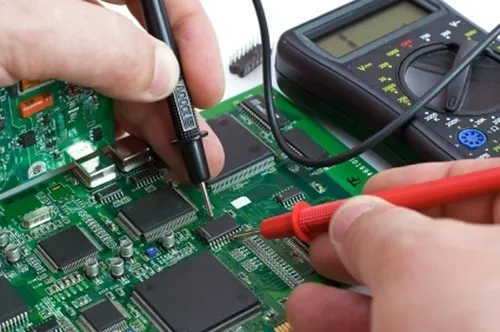
If you open the bonnet of a modern car, you won’t just find mechanical parts—you’ll find electronics controlling everything. At the center of all this intelligence is the ECM (Engine Control Module).
Whether you are:
- A student learning automotive basics
- A garage owner upgrading your skills
- An enthusiast curious about how cars work
Understanding ECM is your first step into automotive electronics and repair.
In simple terms:
👉 The ECM is the brain of your car’s engine.
But what exactly does it do? How does it work? And why is it so important in modern vehicles—especially in India with BS6 norms?
Let’s break it down in the simplest way possible.
🧠 What is an ECM in a Car?
The Engine Control Module (ECM) is an electronic device that controls and manages the engine’s performance using real-time data.
📌 Simple Definition:
👉 ECM is a computer that controls how your engine runs.
It continuously:
- Receives data from sensors
- Processes that data
- Sends commands to engine components
🔄 What Does ECM Control?
The ECM controls multiple critical engine functions:
- Fuel Injection
Decides how much fuel should go into the engine.
- Ignition Timing
Controls when the spark plug fires.
- Air-Fuel Ratio
Maintains the perfect balance for combustion.
- Emission Control
Ensures the car meets pollution norms (very important in India).
- Idle Speed
Keeps engine stable when not accelerating.
⚙️ How Does an ECM Work? (Step-by-Step)
To understand ECM, think of it as a 3-step system:
🟢 Step 1: Input (Sensors)
The ECM receives data from sensors such as:
- Oxygen sensor
- Throttle position sensor
- Engine temperature sensor
- Crankshaft sensor
👉 These sensors tell the ECM what is happening inside the engine.
🟡 Step 2: Processing
The ECM processes this data using pre-programmed software.
It uses:
- Stored maps
- Algorithms
- Calibration data
🔴 Step 3: Output (Actuators)
The ECM sends commands to:
- Fuel injectors
- Ignition coils
- Throttle body
👉 This ensures the engine runs efficiently.
🔍 Real-Life Example
Let’s say you press the accelerator:
- Throttle sensor sends signal
- ECM processes the input
- ECM increases fuel injection
- Engine produces more power
👉 All this happens in milliseconds!
🆚 ECM vs ECU – What’s the Difference?
This is one of the most searched questions.
Term | Meaning | Usage |
ECU | Electronic Control Unit | General term |
ECM | Engine Control Module | Engine-specific |
👉 Important:
All ECMs are ECUs, but not all ECUs are ECMs.
In Indian garages, both terms are often used interchangeably.
🇮🇳 Why ECM is Important in Indian Vehicles
With the introduction of BS6 emission norms, ECM has become even more critical.
Key reasons:
- Strict emission control
- Better fuel efficiency
- Advanced diagnostics
Modern Indian cars from:
- Maruti Suzuki
- Hyundai
- Tata
- Mahindra
👉 All rely heavily on ECM.
⚠️ Common Symptoms of ECM Failure
A faulty ECM can cause serious issues.
🚨 Warning Signs:
- Car not starting
- Check engine light ON
- Poor mileage
- Engine misfiring
- No communication with scanner
👉 These are common problems seen in Indian workshops.
🔧 Can ECM Be Repaired?
Yes—and this is very important in India.
💡 Repair vs Replacement:
- Replacement cost: ₹20,000–₹1,00,000+
- Repair cost: ₹3,000–₹15,000
👉 That’s why ECM repair is a huge business opportunity.
🛠️ Why Students Should Learn ECM
If you’re between 18–25, this is a high-demand skill.
🎯 Benefits:
- Growing automotive electronics field
- High earning potential
- Demand in every city
- Opportunity to start your own workshop
📚 Basic Skills Required
To start learning ECM:
- Basic electronics knowledge
- Soldering skills
- Understanding of sensors
🔮 Future of ECM
With the rise of:
- Electric vehicles (EVs)
- Hybrid cars
- AI-based diagnostics
👉 ECM technology is evolving rapidly.
Even EVs have control modules similar to ECM.
❌ Common Myths About ECM
Myth 1: ECM cannot be repaired
👉 False – Most ECMs can be repaired.
Myth 2: ECM fails frequently
👉 False – Usually fails due to external issues (voltage, water).
Myth 3: Only big workshops can repair ECM
👉 False – Even small garages can learn and earn.
🧪 Real Workshop Insight
In many Indian garages:
- 60% of “engine problems” are actually sensor or ECM-related
- Mechanics often replace parts without proper diagnosis
👉 Learning ECM gives you a huge competitive advantage.
❓ Frequently Asked Questions (FAQs)
Q1: What is ECM full form?
ECM stands for Engine Control Module.
Q2: Can a car run without ECM?
No. Modern cars cannot function without ECM.
Q3: Is ECM same as ECU?
Not exactly. ECM is a type of ECU.
Q4: How do I know if my ECM is faulty?
Look for:
- Starting issues
- Check engine light
- Poor performance
Q5: Is ECM repair worth it?
Yes, especially in India where replacement is expensive.
🏁 Conclusion
The Engine Control Module (ECM) is the heart and brain of modern vehicles. It ensures your engine runs efficiently, safely, and within emission limits.
For students and aspiring technicians, learning ECM is not just useful—it’s a career opportunity.
👉 If you master ECM:
- You understand modern cars
- You improve diagnostic skills
- You unlock new income streams
📺 Watch a real battery testing demo here: Reynlab YouTube Channel
🌐 Explore our automotive training programs: www.reynlab.com/our-courses