Understanding ECM Internals: Key Components Made Simple
· ECM Repair – Diagnostics & Maintenance
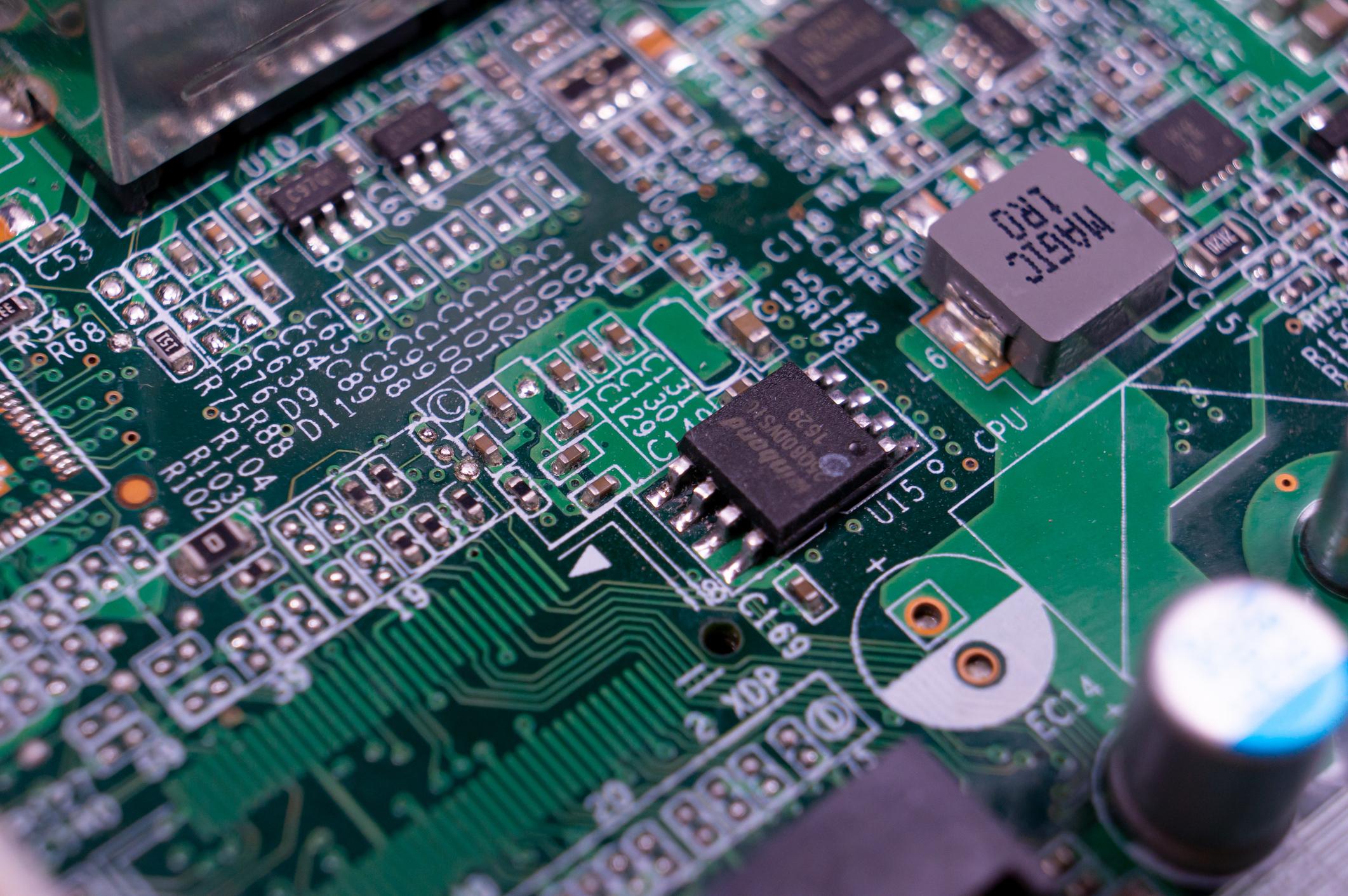
If you want to move beyond theory and actually repair ECMs, you must understand what is inside them. Most beginners see the ECM as a "black box". As a technician, you should see it as a circuit board with identifiable, repairable components.
This guide covers all the major ECM components, their functions, why they fail and how technicians repair them.
What is inside an ECM?
At its core, an ECM is a Printed Circuit Board (PCB) with electronic components. These components work together to process sensor data, execute logic and control engine functions.
Main components inside an ECM
Here they are one by one.
1. Microcontroller (the brain of the ECM)
The microcontroller executes all logic and calculations: it processes sensor inputs, runs the software and controls the outputs. Think of it as the CPU of a computer.
Common failures are overheating, voltage spikes and internal short circuits. Microcontrollers are usually not repairable; they are replaced or reprogrammed.
2. Memory chips (EEPROM, flash memory)
Memory chips store critical data such as engine maps, the VIN number and error codes. There are two main types. EEPROM stores permanent data, and flash memory stores the software.
Common problems are data corruption, software failure and improper programming. Memory can be reprogrammed or cloned, which is a high-income skill in ECM repair.
3. Capacitors
Capacitors stabilize voltage and filter noise. A simple way to picture them is as mini batteries that store and release energy.
They commonly fail by bulging, leaking or drying out. Capacitors are easy and cheap to replace, and replacing them is one of the most common ECM repairs.
4. Resistors
Resistors control current flow. They fail by burning from overload or by value drift. They are easily replaceable, but you must match the correct value.
5. Transistors and MOSFETs
Transistors and MOSFETs act as switches to control high current. They are used for fuel injectors, ignition coils and relays. Common failures are short circuits and overheating, and they are frequently replaced in ECM repair.
6. Voltage regulators
Voltage regulators maintain a stable voltage supply. They fail because of battery issues or alternator problems, and a faulty regulator can cause malfunction of the entire ECM.
7. Diodes
Diodes allow current to flow in one direction only. Failures include a shorted diode and reverse polarity damage.
8. PCB (Printed Circuit Board)
The PCB is the base on which all components are mounted. Common issues are burnt tracks, corrosion and broken connections. Repair means fixing tracks with jumper wires and cleaning off corrosion.
Why ECM components fail
Understanding the causes of failure is critical.
- Voltage fluctuations: a bad battery or a faulty alternator.
- Water damage: flooded vehicles and poor sealing.
- Heat: exposure to engine heat.
- Short circuits: wiring issues and improper modifications.
Real workshop example
In one case, a car was not starting. Diagnosis showed the fuel injector was not working, and checking the ECM revealed a faulty MOSFET. The solution was to replace the MOSFET, and the car started.
Tools required to work on ECM components
The basic tools are a soldering iron and a multimeter. Advanced work needs a hot air rework station, a microscope and an oscilloscope.
Beginner learning path
- Identify components.
- Learn soldering.
- Practice on scrap boards.
Safety tips
- Avoid static electricity.
- Use proper grounding.
- Do not overheat the PCB.
Why this knowledge is important
If you understand the components, you can repair instead of replace, save customers money and increase your profit margins.
Common beginner mistakes
- Replacing the ECM without checking components: this leads to unnecessary cost.
- Overheating the PCB: this damages the tracks.
- Replacing a component with the wrong one: this causes further issues.
Indian market opportunity
In India, ECM repair demand is growing while skilled technicians are limited. That creates a huge business opportunity.
Frequently asked questions
Which component fails most in an ECM?
Capacitors and MOSFETs are the most common failures.
Can an ECM PCB be repaired?
Yes, tracks and components can be repaired.
Is ECM repair difficult?
Beginner-level repair is easy, while advanced repairs need practice.
Do I need expensive tools?
Basic repairs can be done with affordable tools.
Can I learn ECM repair at home?
Yes, with practice and guidance.
Summary
Inside every ECM is a well-designed electronic system made of components that can be understood, tested and repaired. Once you understand the microcontroller, memory, capacitors and PCB, you move from beginner to skilled ECM technician.
Watch our workshop videos on the Reynlab YouTube Channel, or explore our automotive training programs at www.reynlab.com/our-courses.
Related reading
How to Repair ECM in India: A Practical Guide for Technicians
How ECM Controls Fuel Injection and Ignition Timing: A Practical Guide
No Communication with ECM? Troubleshooting Guide (Step-by-Step Professional Method)