Intermittent Engine Issues: Is Your ECM to Blame? (Complete Diagnostic Guide)
· ECM Repair – Diagnostics & Maintenance
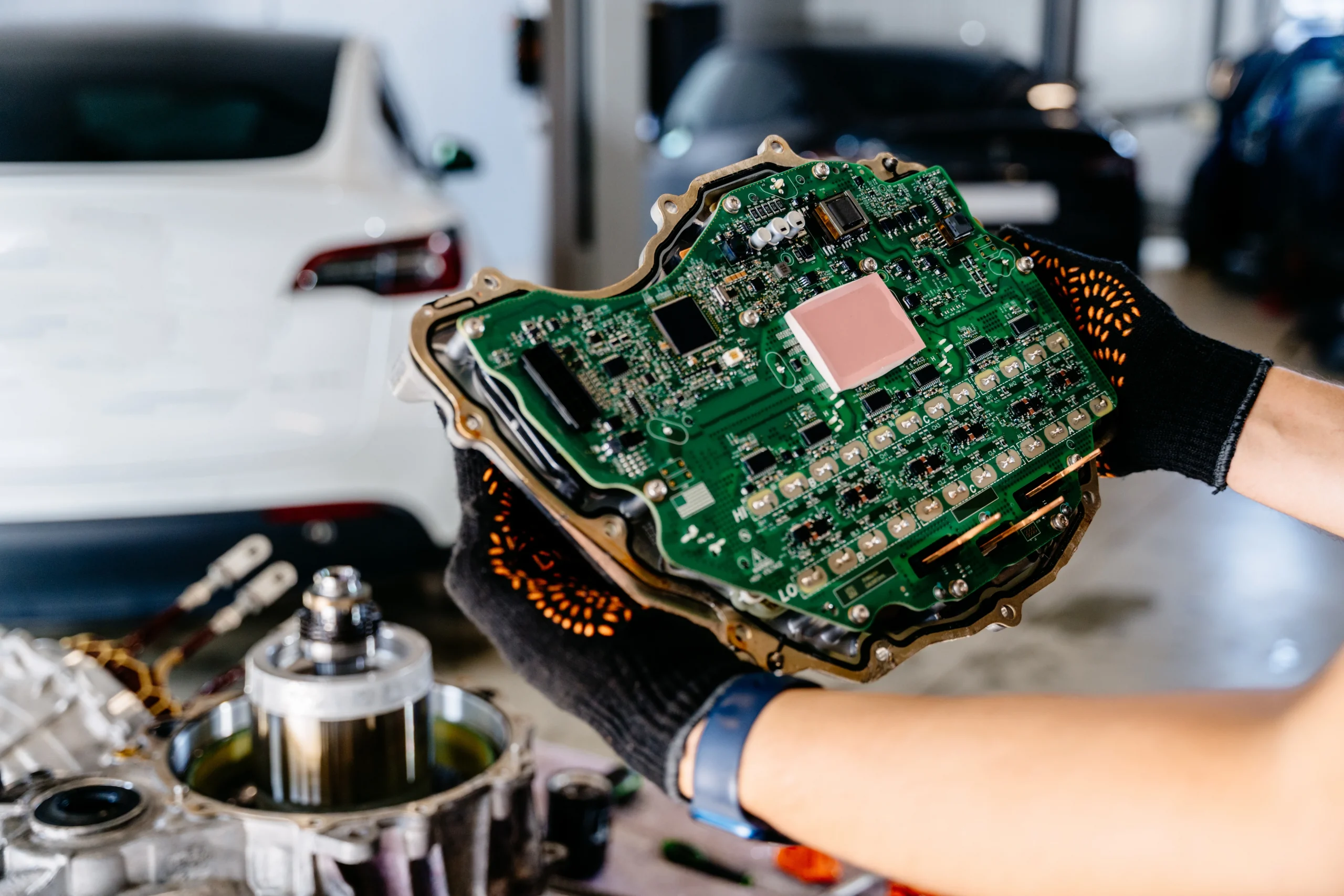
Does your car start normally one day and fail the next? Does it run smoothly and then suddenly jerk, or shut off randomly while driving? These are intermittent engine problems, and they are among the hardest issues to diagnose.
Why intermittent problems are hard
Unlike permanent faults, intermittent ones do not occur consistently. They may not show error codes, and they often disappear during testing. This is what leads to misdiagnosis.
The main causes are usually wiring problems, sensor glitches or ECM-related faults.
What are intermittent engine issues?
These are faults that appear randomly, disappear on their own and return unpredictably. The common symptoms are:
- Random engine stalling: the engine shuts off suddenly.
- Sudden power loss: there is no acceleration response.
- Intermittent misfire: the engine is smooth one moment and rough the next.
- Occasional starting issues: it starts sometimes and fails sometimes.
- Fluctuating RPM: idle speed goes up and down.
How the ECM can cause intermittent issues
The ECM depends on a stable power supply, accurate sensor data and reliable internal circuitry. Any instability in these leads to unpredictable engine behaviour. The top ECM-related causes are:
- Loose ECM connections: a connector that is not tight interrupts the signal and causes random failure.
- Internal ECM circuit fault: cracked solder joints mean the ECM works sometimes and fails when heated.
- Heat-related ECM failure: the ECM overheats, stops temporarily and works again after cooling.
- Voltage fluctuation: an unstable power supply makes the ECM reset randomly.
- Software glitch: corrupted ECM logic gives unpredictable behaviour.
Non-ECM causes
Most intermittent issues are not ECM-related. The common causes are loose wiring, faulty sensors, bad relays and fuel pump issues, and you should always check these first.
Step-by-step diagnosis strategy
- Reproduce the problem. Find out when it occurs and whether the engine is hot or cold.
- Scan for fault codes. Keep in mind that the fault may not always store codes.
- Monitor live data. Look for sudden signal drops or irregular readings.
- Do a wiggle test. This is highly effective: move the wiring while the engine runs, and if the engine reacts, you have a wiring issue.
- Do a heat test. Heat the ECM carefully. If the problem appears, the fault is internal.
- Check power and ground. Use a multimeter and look for voltage drops.
- Check sensors. Focus on the crankshaft and camshaft sensors.
- Confirm the ECM fault. Do this only after eliminating all other possibilities.
Real workshop case studies
Car stalls randomly
The first guess was a fuel issue. A wiggle test made the engine cut off, which showed the root cause: a loose ECM connector. Fixing the connection solved the problem.
Car stops after 20 minutes
This one was diagnosed as a heat-related ECM failure, and the solution was to repair the ECM.
Common mistakes to avoid
- Replacing the ECM too early. It is rarely the first cause.
- Ignoring wiring. Wiring is the number one cause of intermittent faults.
- Not testing under real conditions. The problem may not appear in the workshop.
Indian driving conditions
Heat, dust, water exposure and poor wiring repairs all increase intermittent faults on Indian roads.
Business opportunity for technicians
Intermittent issues are hard to diagnose, which makes them high-value jobs. Skilled technicians can charge premium rates for them.
The basic tools are a multimeter and an OBD scanner. Advanced work needs an oscilloscope and thermal testing tools.
Quick diagnosis checklist
- Check wiring
- Check sensors
- Check power supply
- Perform a wiggle test
- Test under heat
Frequently asked questions
What causes intermittent engine problems?
They are caused by wiring issues, sensor faults or ECM problems.
Can the ECM cause random stalling?
Yes, especially through heat-related or internal faults.
How do you diagnose intermittent issues?
Use live data, a wiggle test and heat testing together.
Are intermittent problems serious?
Yes, they can cause sudden breakdowns.
Can they be fixed permanently?
Yes, with accurate diagnosis they can be fixed permanently.
Summary
Intermittent engine issues are the ultimate test of a technician's skill. Be patient, follow a structured process and test under real conditions. Master this and you become a top-tier diagnostic expert.
Watch our workshop videos on the Reynlab YouTube Channel. You can also explore our automotive training programs at www.reynlab.com/our-courses.
How to Understand Car Wiring Diagrams (ECM Diagnostic Guide)
How to Diagnose ECM Failure Step-by-Step (Complete Workshop Guide)
How to Repair Burnt Tracks on ECM PCB (Step-by-Step Professional Guide)