Introduction
When automotive enthusiasts discuss vehicle modifications, engine performance typically dominates the conversation. However, equally important to the driving experience is how effectively that power reaches the wheels—a function largely controlled by the transmission. Modern vehicles integrate sophisticated transmission control systems that work in concert with the Engine Control Unit (ECU), creating opportunities for performance optimization beyond just horsepower gains.
ECU remapping—the process of modifying the vehicle’s electronic “brain” to alter various performance parameters—can significantly impact transmission behavior, particularly in vehicles equipped with automatic or dual-clutch transmissions. By recalibrating shift points, shift speeds, and shift logic, ECU remapping can transform a vehicle’s character, making it more responsive, engaging, and suited to specific driving styles or conditions.
This blog explores how ECU remapping affects transmission shift points, the technical aspects behind these modifications, and the real-world implications for different driving scenarios. Whether you’re seeking more aggressive performance, smoother daily driving, or optimized efficiency, understanding the relationship between your ECU and transmission behavior is essential for making informed tuning decisions.
Understanding Transmission Control in Modern Vehicles
The Evolution of Transmission Control
To appreciate how ECU remapping affects shift points, it’s important to understand how modern transmissions function:
- Early Automatic Transmissions: Relied primarily on hydraulic controls and mechanical governors to determine shift points based on vehicle speed and throttle position
- Electronic Transmission Control: Introduced electronic solenoids controlled by dedicated Transmission Control Modules (TCMs)
- Integrated Control Systems: Modern vehicles typically use an integrated approach where the ECU communicates with or directly controls transmission functions
Today’s vehicles utilize complex algorithms that consider multiple inputs:
- Engine load and RPM
- Vehicle speed
- Throttle position and rate of change
- Incline/decline sensing
- Temperature conditions
- Stability control data
- Driver behavior patterns
This integration allows manufacturers to program specific “personalities” into their vehicles—from comfort-oriented luxury sedans with nearly imperceptible shifts to performance cars with rapid, firm gear changes.
Shift Points Explained
Shift points refer to the specific conditions (primarily engine RPM and load) at which the transmission changes gears. These points are carefully mapped across various driving conditions:
- Upshift Points: When the transmission changes to a higher gear
- Downshift Points: When the transmission selects a lower gear for more power or engine braking
- Kickdown Thresholds: How much throttle input is required to force a downshift for acceleration
Factory shift maps typically reflect a balance of priorities:
- Fuel economy requirements
- Emissions standards compliance
- NVH (Noise, Vibration, Harshness) targets
- Durability considerations
- Brand-specific driving characteristics
These compromises often result in shift patterns that don’t align perfectly with enthusiast preferences, creating an opportunity for optimization through remapping.
How ECU Remapping Changes Transmission Behavior
Shift Point Modification
The most direct impact of ECU remapping on transmission behavior involves altering when shifts occur:
Performance-Oriented Changes:
- Higher RPM Upshifts: Allowing the engine to reach more optimal power bands before shifting
- Earlier Downshifts: More readily accessing lower gears for improved acceleration
- Reduced Gear Skipping: Preventing the transmission from jumping multiple gears during acceleration
- More Aggressive Kickdown Response: Requiring less throttle input to trigger downshifts
Efficiency-Focused Modifications:
- Earlier Upshifts: Shifting at lower RPMs to improve fuel economy
- Delayed Downshifts: Maintaining higher gears longer to reduce fuel consumption
- Optimized Cruise Gear Selection: Selecting the most efficient gear for highway cruising
Shift Speed and Quality Adjustments
Beyond when shifts occur, remapping can alter how they feel:
- Shift Speed: Reducing the time required to complete a gear change
- Clutch Engagement Rate: How quickly clutches engage in dual-clutch or modern automatic transmissions
- Torque Reduction During Shifts: Modifying how engine torque is managed during gear changes
- Shift Pressure: In transmissions with variable pressure control, altering the hydraulic pressure during shifts
These parameters significantly impact both performance and perceived quality—from crisp, authoritative shifts to smooth, nearly imperceptible transitions depending on the tuner’s goals.
Adaptive Behavior Modifications
Many modern transmissions include adaptive learning algorithms that adjust shift characteristics based on driving style. Remapping can influence these systems by:
- Changing Adaptation Parameters: Modifying how quickly the system adapts to driving patterns
- Setting Different Adaptation Thresholds: Altering what the system considers “sporty” versus “economical” driving
- Creating Custom Drive Modes: Developing distinct shift maps for different driving scenarios
This adaptability allows sophisticated tunes to deliver situation-appropriate transmission behavior rather than a one-size-fits-all approach.
Technical Implementation of Transmission Remapping
Integrated vs. Separate Control Systems
The approach to transmission remapping varies depending on the vehicle architecture:
- Integrated ECU/TCM: Many modern vehicles use a single control unit managing both engine and transmission functions, allowing comprehensive remapping through a single interface
- Separate TCM: Some vehicles utilize distinct control modules requiring specialized tools and methods to modify transmission behavior
- CAN Bus Communication: In systems where separate modules communicate via Controller Area Network, remapping may involve altering communication protocols or message contents
Understanding your vehicle’s specific architecture is crucial for determining appropriate remapping methods.
Remapping Techniques
Several technical approaches exist for modifying transmission control parameters:
Flash Remapping
- Directly replaces the factory software in the control module(s)
- Offers comprehensive control over all parameters
- Requires specialized equipment and expertise
- Provides seamless integration with engine performance modifications
Piggyback Systems
- Intercepts and modifies signals between sensors and control modules
- Can be installed and removed without permanent changes
- May offer limited adjustment range for transmission parameters
- Often used when direct flash access is restricted
Transmission Control Units
- Standalone controllers that replace or supplement factory TCMs
- Provide extensive customization capabilities
- Typically used in high-performance or racing applications
- Require significant expertise to configure properly
The appropriate method depends on your vehicle’s electronics architecture, modification goals, and budget constraints.
Real-World Effects of Transmission Remapping
Performance Driving Benefits
For enthusiasts seeking a more engaging driving experience, transmission remapping offers several advantages:
- Reduced “Gear Hunting”: Eliminating the tendency to shift frequently on winding roads
- Improved Acceleration: Keeping the engine in optimal power bands longer
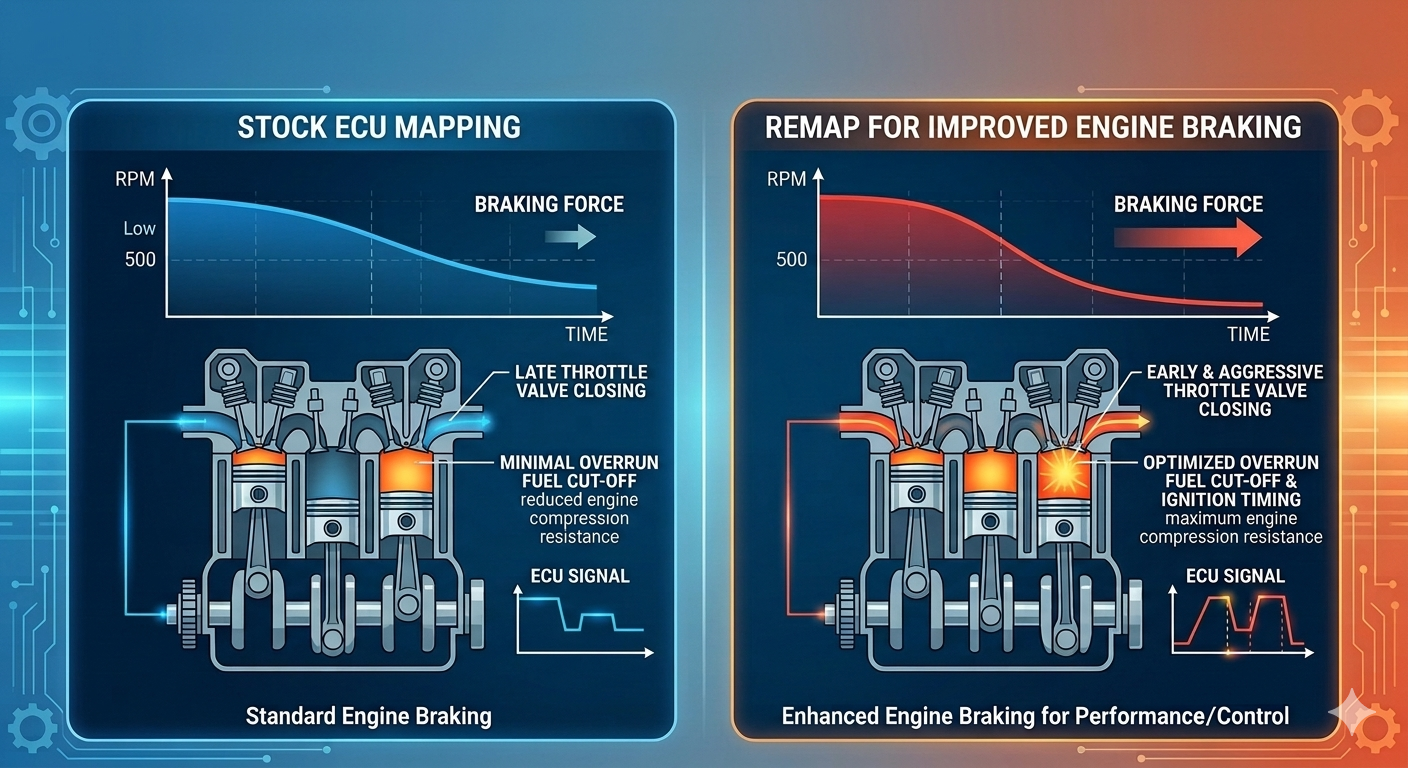
- Enhanced Engine Braking: Providing more predictable downshifts when entering corners
- Launch Control Optimization: Coordinating engine and transmission behavior for optimal starts
- Track-Specific Settings: Creating dedicated maps for track day events with different shift strategies
These benefits contribute to a more connected feeling between driver and vehicle, allowing more precise control during spirited driving.
Daily Driving Improvements
Performance isn’t the only reason to consider transmission remapping. Many drivers seek improvements to everyday usability:
- Smoother Low-Speed Operation: Reducing the “jerky” feeling common in some dual-clutch transmissions
- Improved Cold Weather Performance: Adjusting shift patterns when the transmission fluid is cold
- Reduced Hunting on Inclines: Creating more stable gear selection when climbing hills
- Better Traffic Behavior: Optimizing shift patterns for stop-and-go conditions
Well-executed remapping can actually improve daily drivability while still offering performance benefits when desired.
Towing and Utility Enhancements
For vehicles used in towing or hauling, specialized transmission mapping provides:
- Load-Sensitive Shift Points: Adjusting shift behavior based on detected load
- Enhanced Engine Braking: Providing better downhill control with trailers
- Reduced Heat Generation: Minimizing clutch slippage during heavy load conditions
- Torque Converter Lockup Strategies: Optimizing when the torque converter locks for efficiency and cooling
These modifications can significantly improve capability and reduce transmission wear during demanding operations.
Case Studies: Vehicle-Specific Transmission Remapping
Performance Vehicle Example
A sports sedan with a dual-clutch transmission demonstrated these changes after remapping:
- Upshift points raised by 500-800 RPM across all gears
- Downshift response time reduced by approximately 40%
- Shift execution speed increased by 25%
- Custom sport mode with distinct shift map activated via steering wheel button
The results included a 0.3-second improvement in 0-60 mph time despite no additional horsepower, demonstrating the performance potential of optimized transmission control.
Luxury Vehicle Example
A luxury SUV with a conventional automatic transmission showed these improvements:
- Smoother 1-2 shift particularly at partial throttle
- Reduced tendency to upshift early when climbing slight grades
- More responsive kickdown during passing maneuvers
- Elimination of unnecessary shifts during light acceleration
Owners reported significantly improved drivability without sacrificing the refined character expected of a luxury vehicle.
Diesel Truck Example
A diesel pickup used for towing experienced these benefits:
- Modified shift points accounting for turbo lag characteristics
- Enhanced torque converter lockup strategy reducing transmission temperature
- Specialized towing mode with distinct shift map
- Improved grade detection preventing unwanted upshifts
These changes resulted in more confident towing performance and reduced transmission wear during heavy use.
Considerations Before Remapping Transmission Control
Mechanical Limitations
Before pursuing aggressive transmission tuning, consider:
- Heat Generation: More aggressive shift strategies may increase operating temperatures
- Clutch and Band Wear: Faster or firmer shifts can accelerate wear of friction materials
- Torque Handling Capacity: Ensuring transmission components can handle increased engine torque
- Fluid Requirements: Potentially needing upgraded transmission fluid for modified operating conditions
Always ensure mechanical preparation matches your software modifications.
Warranty Implications
Transmission remapping typically affects warranty coverage:
- Most manufacturers consider transmission control modifications grounds for warranty denial
- Some specialty dealerships offer compatible remapping that maintains warranty coverage
- Removable solutions may allow returning to stock before service visits
- Documented reliability of specific modifications may influence dealership attitudes
Research thoroughly and understand the risks before proceeding with modifications.
Diagnostic Challenges
Modified transmission control can complicate troubleshooting:
- Changed baseline behavior makes identifying new problems more difficult
- Dealer diagnostic equipment may flag remapped controllers as faulty
- Some adaptations may reset when battery power is disconnected
- Custom parameters may interact unexpectedly with other vehicle systems
Maintaining a relationship with your tuner or having a restoration path to factory settings helps mitigate these challenges.
Selecting the Right Transmission Remapping Approach
Questions to Consider
Before pursuing transmission remapping, ask yourself:
- What specific behaviors are you trying to improve?
- Is your transmission physically capable of handling modified operation?
- Do you need different characteristics for different driving scenarios?
- How important is warranty preservation?
- Do you have access to specialized service if issues arise?
The answers will guide you toward appropriate solutions for your situation.
Finding Qualified Specialists
Transmission remapping requires specialized knowledge. Look for:
- Tuners with specific experience on your vehicle platform
- Documented before/after testing of transmission behavior
- Customer testimonials regarding long-term reliability
- Willingness to create custom solutions for your specific needs
- Support for post-tune adjustments if necessary
The right specialist can mean the difference between transformation and frustration.
Conclusion
ECU remapping for transmission shift points represents one of the most impactful yet underappreciated aspects of vehicle tuning. While horsepower figures often grab headlines, the sophisticated dance between engine and transmission ultimately determines how effectively that power translates to performance and driving enjoyment.
The best transmission remapping doesn’t simply make shifts more aggressive—it creates cohesive, intelligent behavior that complements your specific vehicle, driving style, and usage scenarios. Whether you’re seeking razor-sharp shifts for track days, smoother operation for daily commuting, or enhanced capability for towing, transmission optimization offers tangible benefits beyond what engine tuning alone can provide.
As with any modification, the key lies in working with knowledgeable specialists who understand both the technical aspects and the practical implications of transmission control adjustments. With proper implementation, transmission remapping can transform your vehicle’s character, creating a more cohesive, responsive, and enjoyable driving experience tailored precisely to your preferences.
📺 Watch a real battery testing demo here: Reynlab YouTube Channel
🌐 Explore our automotive training programs: www.reynlab.com/our-courses
🌐 Explore our automotive training programs: www.reynlab.com/our-courses