How to Unlock Extreme Engine Rev Limits with ECU Remapping
The impact of ECU remapping on engine rev limit
Modern engines are carefully designed to balance performance, efficiency, reliability and emissions. Among the many parameters controlled by an engine's Electronic Control Unit (ECU), the rev limit is one of the most significant for performance enthusiasts. When it is modified properly through ECU remapping, adjusting the rev limit can bring out hidden potential in your vehicle. These modifications do need careful consideration of the mechanical and electronic factors involved.
Understanding engine rev limits
Before looking at how remapping affects rev limits, it helps to understand what the rev limit is and why manufacturers set it.
Definition and purpose
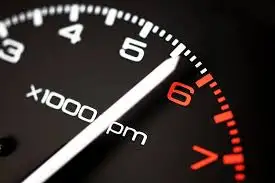
The rev limit, or redline, is the maximum rotational speed (measured in RPM, revolutions per minute) that an engine is designed to sustain without risking damage. Modern vehicles enforce this limit electronically through the ECU, which steps in when the engine approaches the threshold.
Manufacturers set rev limits based on several factors:
- Mechanical constraints: physical limits of engine components such as valvetrain dynamics, connecting rod strength and piston velocities.
- Oil system capacity: the engine's ability to maintain adequate oil pressure and flow at high RPM.
- Balance and harmonics: vibrations that may become destructive at certain engine speeds.
- Emissions compliance: regulatory requirements that may be compromised at extremely high RPM.
- Safety margins: conservative buffers that allow for production tolerances, varying fuel quality and different operating conditions.
Types of rev limiting strategies
Modern ECUs use several methods to enforce rev limits.
A soft cut is a progressive intervention that reduces power gradually as the engine approaches redline. It typically retards ignition timing, reduces fuel delivery in steps and gradually closes the electronic throttle.
A hard cut is an abrupt intervention that reduces power rapidly when redline is reached. It may completely cut fuel to specific cylinders in a sequential pattern, cut ignition to multiple cylinders at the same time, or drastically retard ignition timing across all cylinders.
Bounce limiters are algorithms that allow momentary excursions above redline before they intervene. They permit brief over-rev situations during gear changes, apply time-based allowances for transient conditions and use predictive logic to anticipate transmission shifts.
Factory implementations often put smoothness and component protection ahead of maximum performance, which leaves room for optimisation through remapping.
How ECU remapping affects rev limits
Remapping can change both the numerical RPM ceiling and the method used to enforce it.
Raising the numerical limit
Standard remapping often raises the maximum RPM threshold, typically in these ranges:
- Conservative increases: 200-300 RPM above stock.
- Moderate increases: 300-500 RPM above stock.
- Aggressive increases: 500+ RPM above stock, usually needing supporting modifications.
This extends the engine's operating range. It can add power in high-revving engines where peak power occurs near redline, extend acceleration in each gear before a shift is needed, and give more flexibility in gear selection for track or performance driving.
Modifying limiter behaviour
Beyond raising the ceiling, a sophisticated remap can alter how the limiter works.
- Intervention aggressiveness: softening abrupt factory cut-offs for smoother operation, creating custom taper profiles as the engine approaches redline, and using multi-stage interventions that balance performance with protection.
- Limiter logic: allowing higher RPM in specific gears while keeping lower limits in others, creating temperature-dependent limits that adapt to engine conditions, and using different limiter strategies for the selected drive modes.
- Competition features: flat-shift programming that temporarily extends limits during gear changes, launch control integration that optimises limiter behaviour during starts, and time-based limiters that permit brief excursions beyond normal thresholds.
Technical considerations when remapping rev limits
An effective rev limit modification needs a full assessment of several factors.
Mechanical analysis
Before increasing rev limits, evaluate the following components.
- Valvetrain dynamics: valve float typically begins 500-1000 RPM above the stock redline. Stiffer valve springs may be required to keep valve control, and lighter valvetrain components reduce inertial forces at high RPM.
- Reciprocating assembly strength: connecting rod design becomes critical as RPM increases, the piston and wrist pin must withstand higher inertial loads, and rotating assembly balance becomes increasingly important.
- Bearing load capacity: oil film thickness decreases at higher RPM, bearing materials may need upgrading for sustained high-RPM operation, and oil pressure and volume requirements increase substantially.
Oil system evaluation
Adequate lubrication at higher RPM involves three areas.
- Oil pump capacity: stock pumps often reach their flow limits near the factory redline, pressure relief settings may need adjusting, and high-volume pumps may be necessary for substantial increases.
- Oil selection: look for higher viscosity indices to maintain film strength, improved shear stability for high-RPM operation and enhanced additive packages to protect bearings.
- Cooling system integration: oil temperature management becomes more critical, additional cooling capacity may be required, and temperature-based rev limit strategies should be considered.
Fuel system requirements
Higher RPM puts more demand on fuel delivery.
- Injector duty cycle: injectors may approach 100% duty cycle at higher RPM, larger injectors might be necessary for substantial increases, and fuel pressure regulation becomes more critical.
- Fuel pump flow capacity: stock pumps have finite flow. Pressure drop at high RPM can create lean conditions, so secondary or uprated pumps may be required.
Practical benefits of rev limit remapping
When it is implemented properly, a rev limit modification offers several tangible advantages.
Performance enhancements
- Lap time improvements: fewer shifts on track, a broader usable powerband and more flexible gear selection for specific corners.
- Acceleration gains: extended acceleration in each gear, optimised shift points for maximum acceleration and better use of the engine's power characteristics.
- Drivability improvements: smoother limiter intervention, more predictable engine behaviour near redline and custom limiters matched to specific driving scenarios.
Daily driving considerations
Even for street-driven vehicles, thoughtful rev limit remapping can help in three ways.
- Overtaking: greater flexibility when passing, less need to downshift in certain situations and more confidence in the power reserves available.
- Trailer towing: custom limits when under heavy load, improved temperature-based protection and cooling-focused limit strategies.
- Gear-specific optimisation: lower limits in gears with unfavourable vibration characteristics, higher limits in commonly used passing gears and behaviour customised to the driving mode.
Case studies: rev limit remapping results
Real-world examples help illustrate the potential benefits.
Case study 1: four-cylinder sport compact
The vehicle was a 2.0L turbocharged inline-four with a factory redline of 6,800 RPM and peak power of 265hp at 6,500 RPM.
- Remapping changes: the redline was increased to 7,300 RPM, the limiter changed from hard cut to soft cut, and gear-specific limits were added.
- Results: the power curve showed continued gains to 7,100 RPM, the quarter-mile time improved by 0.3 seconds, and track lap times dropped by 1.2 seconds on a 2-minute circuit. There were no reliability issues after 15,000 miles of mixed driving.
- Supporting modifications: performance valve springs, enhanced oil cooling and a high-flow oil pump.
Case study 2: V8 performance sedan
The vehicle was a 4.0L twin-turbocharged V8 with a factory redline of 7,000 RPM and peak power of 450hp at 6,500 RPM.
- Remapping changes: the redline was increased to 7,400 RPM, a temperature-dependent limiter strategy was added, and flat-shift functionality with a temporary limiter extension was included.
- Results: an additional 12hp was found between 7,000-7,400 RPM, the 0-100-0 mph time fell by 0.8 seconds, and highway passing time (60-80 mph) improved by 0.4 seconds. The car needed more frequent oil changes, with the interval cut from 10,000 to 5,000 miles.
- Supporting modifications: upgraded connecting rods, a performance oil pan with improved baffling and a supplementary oil cooler.
Case study 3: naturally aspirated V6
The vehicle was a 3.5L naturally aspirated V6 with a factory redline of 6,500 RPM and peak power of 300hp at 6,300 RPM.
- Remapping changes: a modest redline increase to 6,800 RPM, softened limiter intervention and a custom limiter for each drive mode.
- Results: the power band extended by approximately 300 RPM, operation was smoother during spirited driving and the engine response felt more natural. There was no measurable reliability impact after 25,000 miles.
- Supporting modifications: a performance air intake, higher-grade engine oil and an enhanced cooling system.
Potential risks and mitigations
Rev limit remapping has real benefits, but it also carries inherent risks that must be managed carefully.
Mechanical stress factors
- Valvetrain: valve float can cause catastrophic valve-to-piston contact, spring fatigue accelerates at higher RPM and camshaft wear increases exponentially with RPM.
- Connecting rod failure: rod bolts experience significantly higher loads, beam design becomes critical at elevated RPM and material quality variations can create weak points.
- Bearing wear: oil film thickness decreases with RPM, temperature rises more rapidly and sensitivity to debris increases with tighter clearances.
Mitigation strategies
Responsible remapping includes protective measures.
- Progressive implementation: make incremental increases that are tested thoroughly between adjustments, log data comprehensively to identify potential issues and inspect the engine physically during testing.
- Supporting systems: improve the oiling system components and cooling capability, and use higher-grade fasteners and assembly practices.
- Conditional limiters: use temperature-based rev limit reductions, an oil pressure-dependent maximum RPM and usage-based limiter adjustments that track accumulated time at high RPM.
Professional vs. DIY remapping
The complexity of rev limit adjustments raises the question of who should perform them.
Professional advantages
- Expertise: experience with specific engine platforms, access to proprietary testing data and an understanding of non-obvious mechanical limitations.
- Equipment: professional dynamometer testing, advanced data acquisition systems and specialised ECU access tools.
- A comprehensive approach: tuning of related parameters as a whole, integration with other vehicle systems and validation testing after the modification.
DIY considerations
If you are considering doing it yourself, keep these points in mind.
- Knowledge: a deep understanding of engine mechanical principles, familiarity with the limitations of your specific platform and data interpretation skills.
- Equipment: quality ECU interface hardware, comprehensive data logging and accurate tools for measuring RPM and engine load.
- Risk management: a conservative approach, frequent inspections during testing and the ability to recognise warning signs that need professional intervention.
Future trends in rev limit technology
As automotive technology evolves, rev limit implementation continues to advance.
Emerging technologies
- Predictive protection systems: AI-based algorithms that predict component stress, real-time adjustment based on driving patterns and integration with advanced sensors that monitor critical parameters.
- Variable redline: dynamic limits based on oil temperature gradients, humidity and air density compensation, and adaptive limits based on detected fuel quality.
- Driver feedback: haptic warnings as limits approach, a visual display of the margin to the limit and performance coaching based on RPM utilisation.
Regulatory influences
Evolving regulations will affect rev limit technology.
- Emissions compliance: high-RPM operation faces increasing scrutiny, OBD-II monitors emissions at all engine speeds, and aftermarket modifications may face restrictions.
- Noise regulation: sound level restrictions affect high-RPM operation, drive-by noise testing is getting more attention and permissible limits vary by region.
Summary
The impact of ECU remapping on engine rev limits goes well beyond changing a number in the ECU's software. When you consider the mechanical limitations, the supporting modifications and a sound implementation strategy together, rev limit adjustments can deliver significant performance gains.
The most successful modifications balance ambition with prudence, extending the operating range while adding sensible protection. This applies to competitive advantage on track and to flexibility on the street alike. As with all performance modifications, the key is to understand not just what can be changed, but why the original limits exist and how best to address them. With technical knowledge and mechanical respect, rev limit remapping can improve performance while keeping the reliability that makes those improvements worthwhile.
Watch our workshop videos on the Reynlab YouTube Channel. You can also explore our automotive training programs at www.reynlab.com/our-courses.
For blog on Ecu tuning & remap
For course on Ecu tuning & remap
Expert Methods to Enhance Transmission Shift Points with ECU Remapping
Proven Role of Knock Sensors in Effective ECU Tuning Strategies