- Customer says
- “The range has dropped”
- The usual fix
- Sell the customer a new battery pack.
- What you will practise
- Test the pack, find the weak cells and decide whether it can be repaired safely or needs replacing.
EV courses / EV Service Technician
Learn EV repair from a team that builds EV systems
Our engineers build EV systems for Angsa Motors, Montra Electric and TML. Our trainers work alongside them and teach mechanics to repair electric scooters, down to the circuit board.
- ₹60,000 + GST
- ₹70,800 in total
- 1 or 2 months
- Full-day or half-day batch
- Porur, Chennai
- Hands-on, in our garage
New to vehicle repair? Start with Master Automotive Technician, then take this course. Both courses: ₹99,999 + GST. See both routes
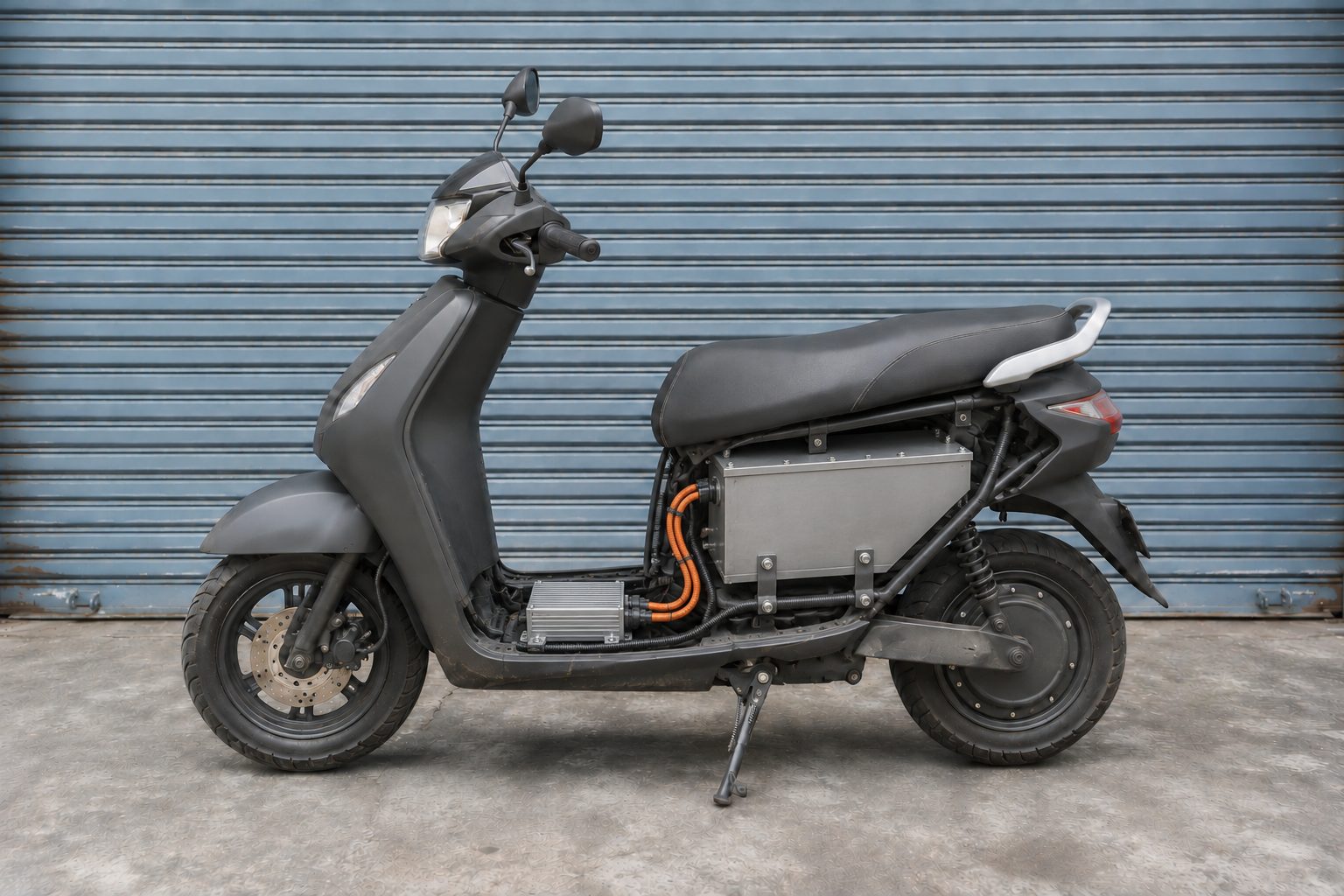
Our engineers’ work for vehicle makers
- Angsa Motors
- The electrical and electronic system of their electric scooter
- Montra Electric
- A hydraulic power pack that runs off the vehicle’s high-voltage battery
- TML
- The EV Centre of Excellence where they train their technicians and engineers
Find the fault before you replace the part
Three common electric scooter complaints, and what you will practise on them.
- Customer says
- “It is dead and will not run”
- The usual fix
- Order a new controller and wait for it.
- What you will practise
- Trace the fault on the board and decide whether the controller can be repaired.
- Customer says
- “It will not charge”
- The usual fix
- Swap the charger, then the battery, until something works.
- What you will practise
- Read the fault from the BMS, then test the charger, socket and pack in order.
Nobody opens a battery before passing the safety check
Battery work needs care, so we start with safety on day 1. You learn to make the scooter safe before you touch it, to use protective gear and to check for electrical danger. You learn to spot a damaged battery and what to do if something goes wrong.
On day 5 you take the safety check. Pass it, then you start hands-on repair work.
Four parts, all on the bench
The same training, spread over one month full-day or two months half-day. The days below are counted on the full-day batch.
 Illustration
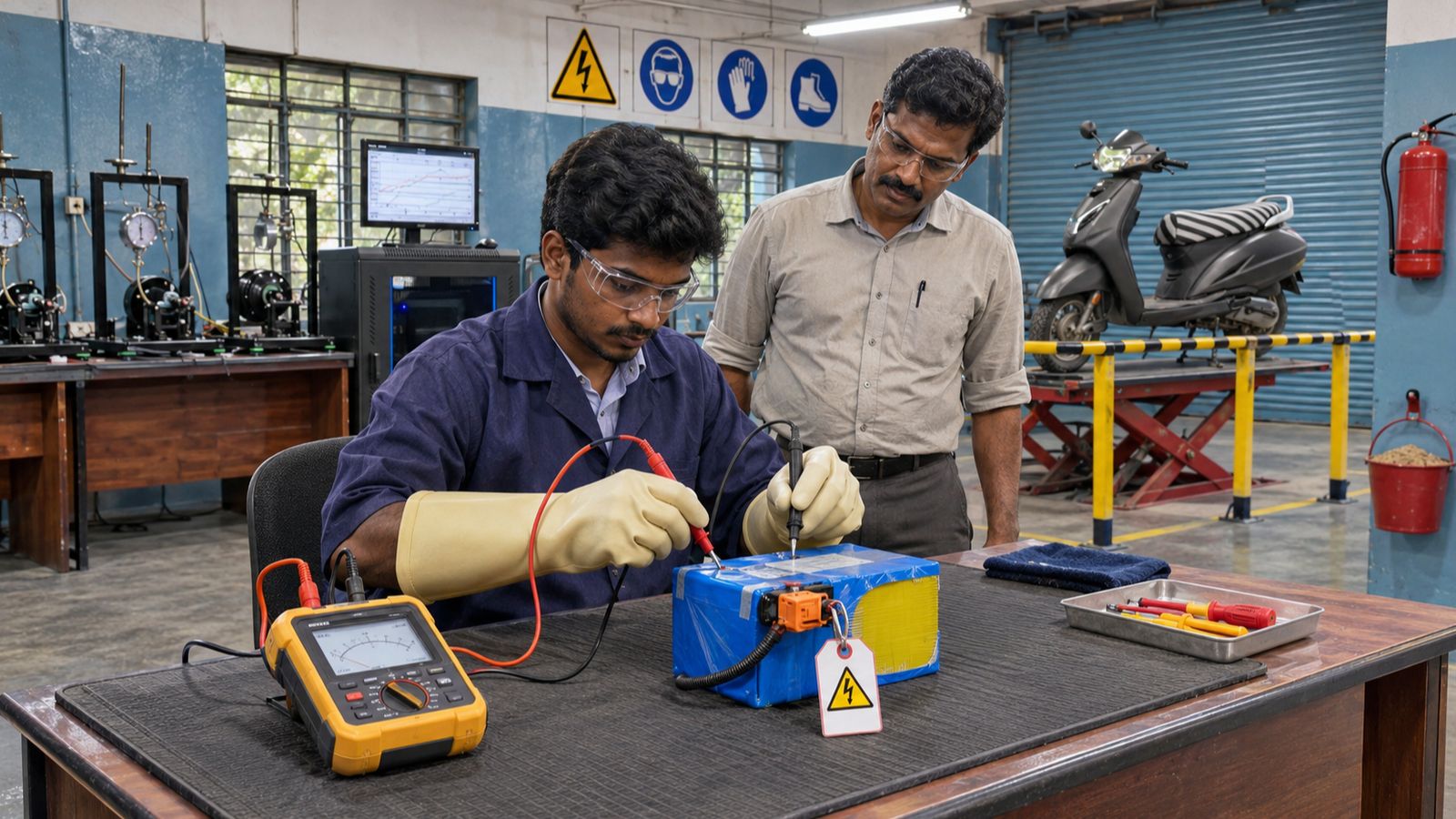
Days 1–5
Safety and scooter checks
Learn to use the meters, read the scooter’s wiring diagram and understand the main parts: battery, controller, motor and charger.
Pass the safety check. Then take apart a battery pack prepared for training.
See the day-by-day topics
- Day 1: Battery safety, protective gear, making the scooter safe to work on
- Day 2: Multimeter, clamp meter, insulation tester and oscilloscope on a scooter
- Day 3: Hub-motor and mid-drive scooters, reading the wiring diagram, the cut-off switches
- Day 4: Battery cells and how a pack is built (NMC and LFP)
- Day 5: Safety check, then a pack taken apart
 Illustration
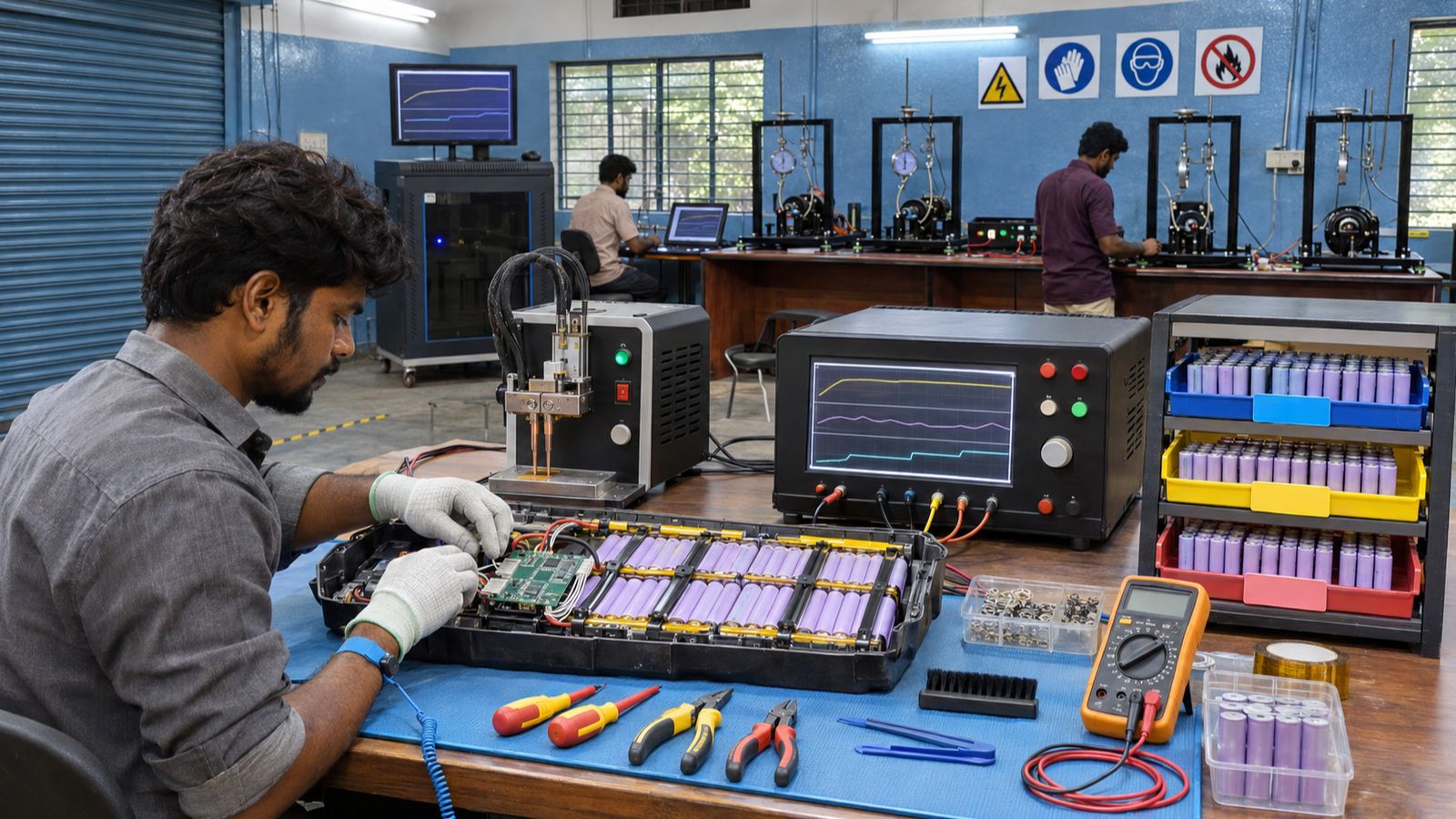
Days 6–10
Battery and BMS repair
Test the battery. Find the weak cells. Replace cells and repair the battery’s control board, called the BMS.
Repair a pack and test its capacity.
See the day-by-day topics
- Day 6: Capacity and internal-resistance tests, finding weak cells
- Day 7: Replacing cells, spot welding, insulating and sealing the pack
- Day 8: Balancing the cells, reading BMS faults with the CAN interface
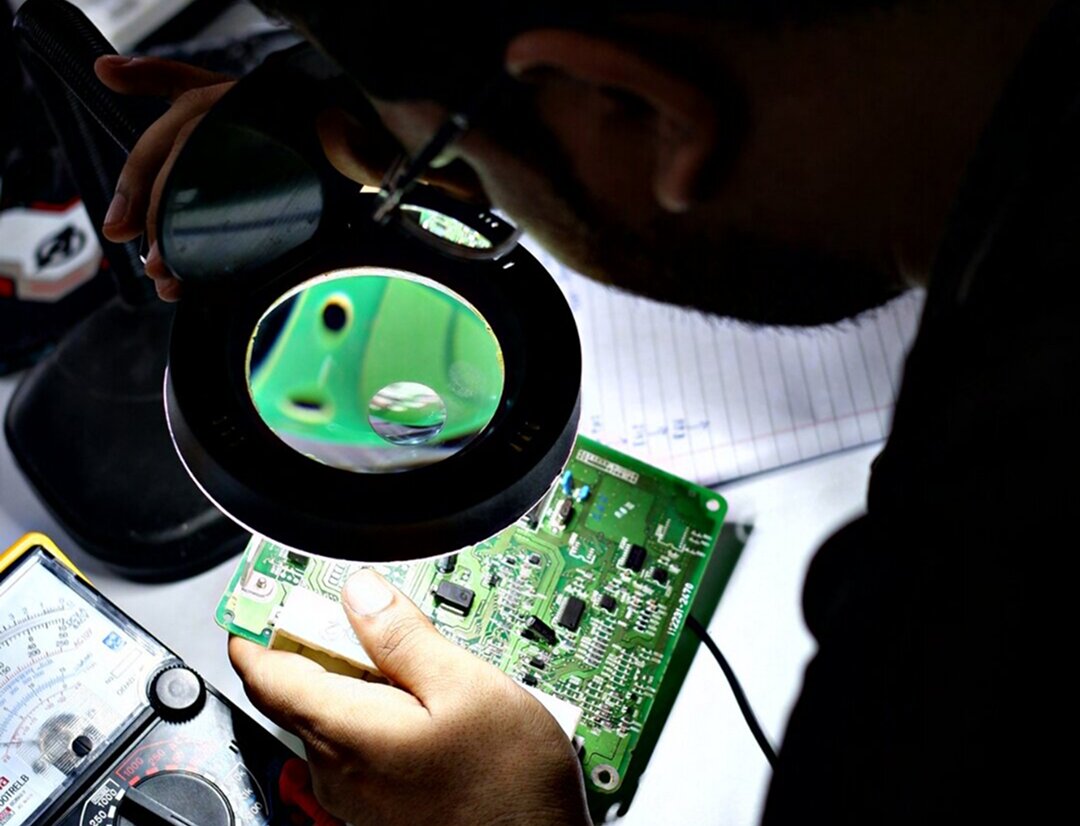
- Day 9: BMS board repair: tracing the board, replacing failed parts
- Day 10: Swollen and water-damaged packs, storage and disposal
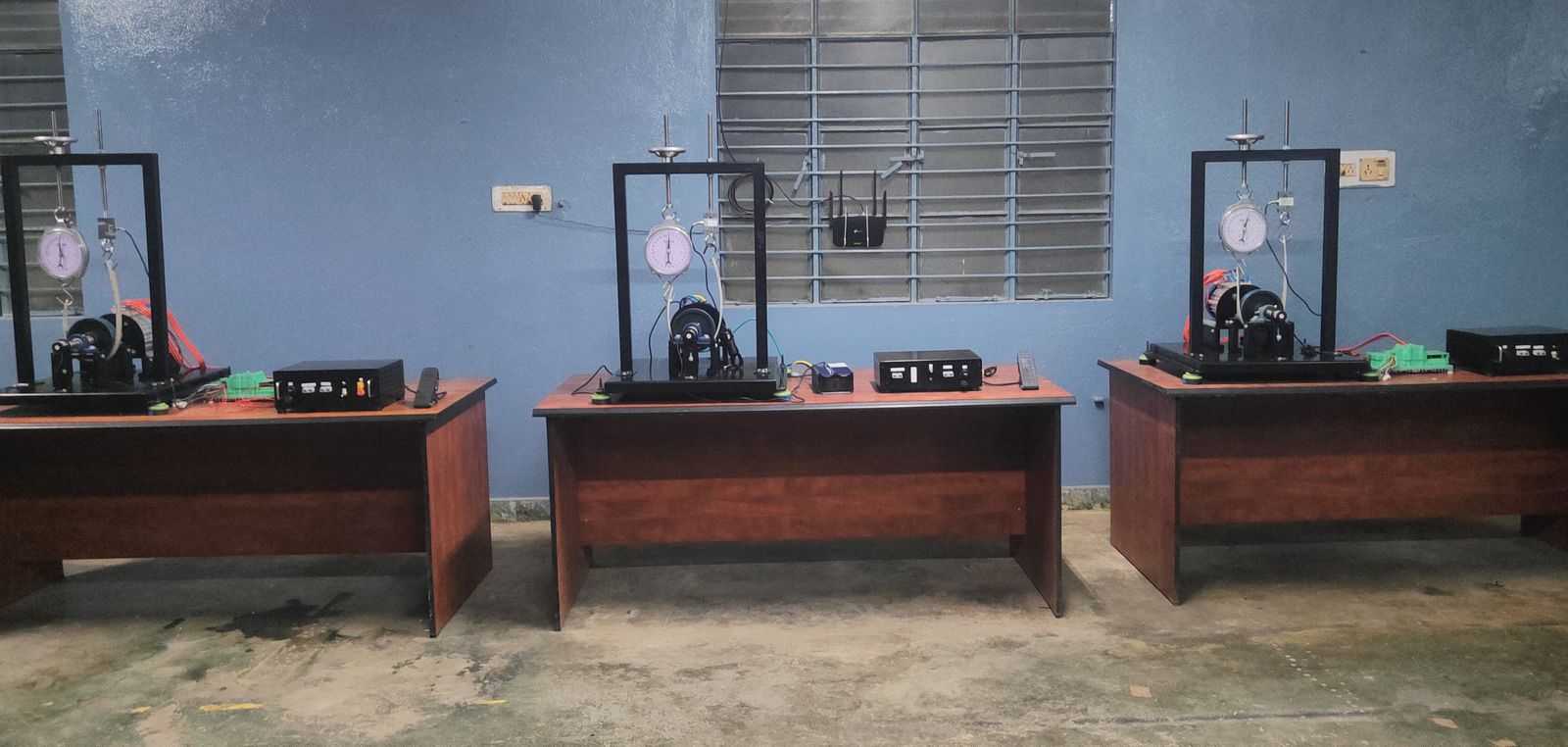
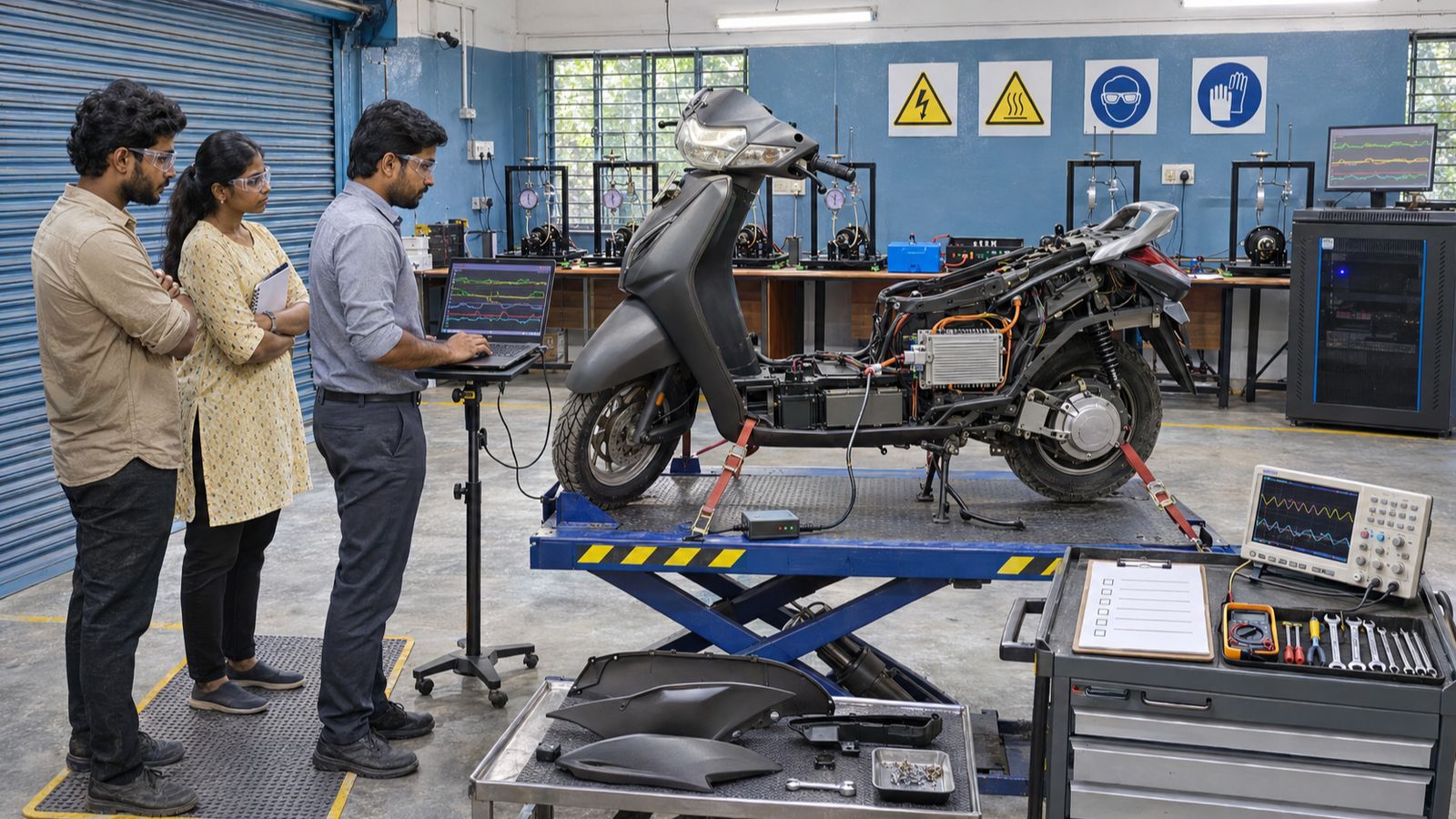
Days 11–15
Motor, controller and charger
Check motors, wiring and switches. Trace faults and repair controller and charger boards, using the same board skills as our ECU repair course.
Repair a controller and test it with a motor.
See the day-by-day topics
- Day 11: Hub and mid-drive motors: hall sensors, phase tests, bearings
- Day 12: How a controller works, finding the fault on the board
- Day 13: Controller board repair: replacing MOSFETs and driver parts, soldering
- Day 14: Controller settings, throttle, side-stand and brake cut-offs
- Day 15: Chargers and DC-DC converters: board repair and connector faults
 Illustration
Days 16–20
A complete repair job
Start with a scooter complaint. Find the fault, give an estimate, repair it and record the test results. Learn when a part should be repaired, replaced or exchanged.
Final practical: find the fault with a meter and oscilloscope first, then with the Reynlab tools. Repair, test and get the scooter ready for handover.
See the day-by-day topics
- Day 16: Reading faults on branded and budget scooters, a full guided diagnosis
- Day 17: Brakes, regen and wheels on an electric scooter
- Day 18: Job cards, estimates, warranty work, repair or replace or exchange
- Day 19: Returned units in our garage (a Refurbishment Centre visit once it opens in Q1 2027), and an introduction to e-rickshaws and cargo three-wheelers
- Day 20: Final practical and certificates
Our engineers built the tools. You use them in your own shop.
The fee includes diagnostic tools made by Reynlab’s own engineering team. You learn them in training, and they are licensed to you for your own workshop.
CAN interface
Reads fault codes and live readings from the scooter’s battery and controller.
Battery pack analyser
Checks battery capacity, cell balance and weak cells.
AI guided diagnostics (not launched yet)
Will take you through the checks using the complaint and your readings. One year of access starts the day it launches.
You also practise finding faults with only a meter and an oscilloscope.
Already a mechanic, or starting out?
Already repair petrol bikes
Start here. You should already know how to use a multimeter and read a wiring diagram, and have finished 10th standard or equivalent. You do not need EV experience or an engineering degree.
₹60,000 + GST
New to vehicle repair
Start with Master Automotive Technician for the vehicle basics, electrical work and scan tools. Then take EV Service Technician.
Both courses: ₹99,999 + GST
Ask about the beginner bundleThere is no entry test. Tell us what work you do now, and we will help you choose where to start.
₹60,000 + GST
₹70,800 in total. Same fee for both batches.
Full-day: 1 month
Monday to Friday. Theory 10 AM to 1 PM, practicals 2 PM to 5 PM.
Half-day: 2 months
Monday to Friday, morning or afternoon. You keep half the day for your shop.
The fee includes
- Training in the Porur garage
- Training materials and use of the workshop equipment
- Reynlab CAN interface and battery pack analyser, licensed for your workshop
- One year of AI guided diagnostics, from its launch
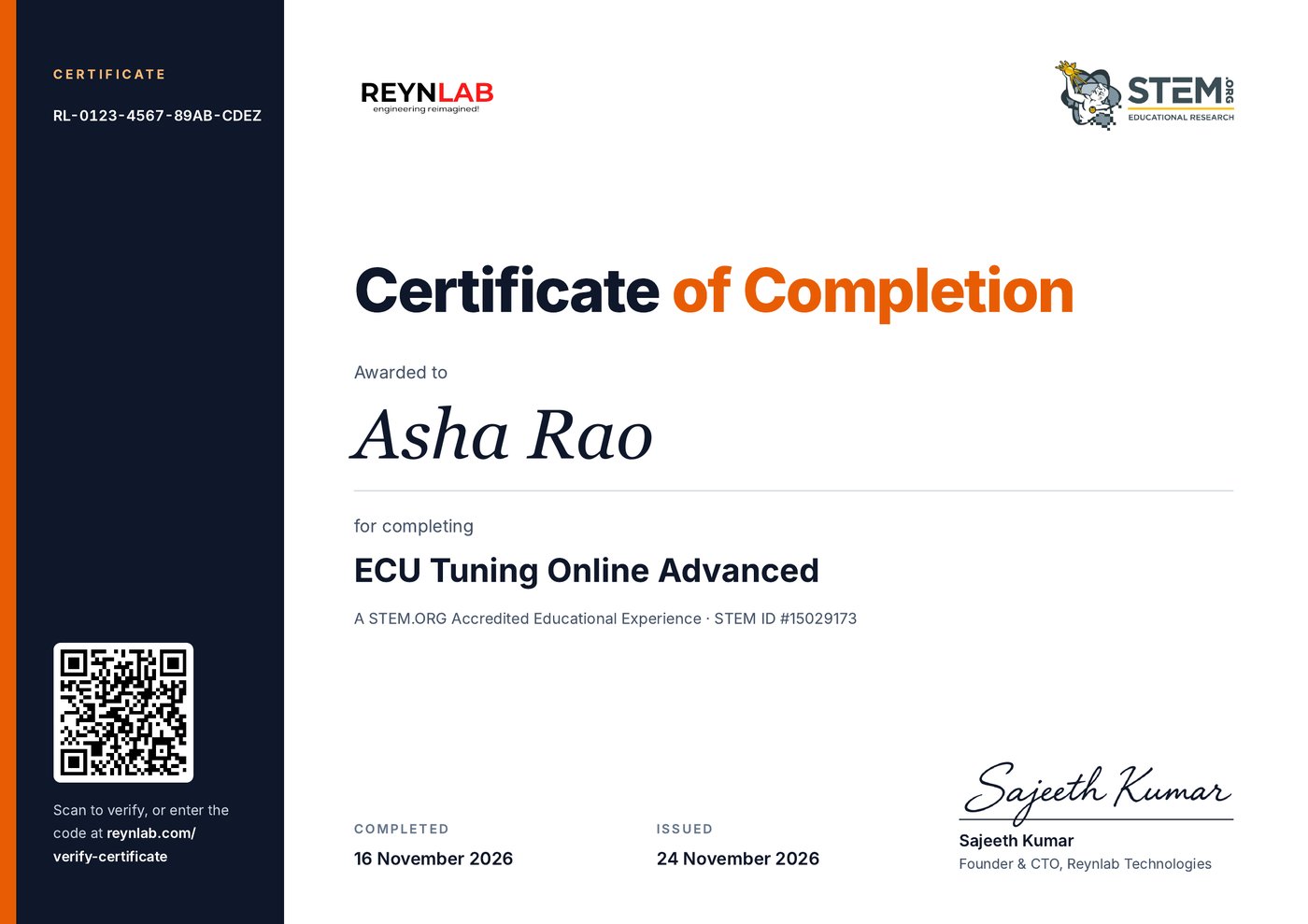
- STEM.ORG-accredited Reynlab certificate with Konwert and KAL, when you pass
Starting from the basics? Master Automotive Technician + EV Service Technician: ₹99,999 + GST (₹1,17,999 in total). Ask about the beginner bundle
A certificate your customers can check
Pass the final practical and you receive a Reynlab certificate accredited by STEM.ORG and issued with our partners Konwert Motors and Kerala Automobiles Limited (KAL). It has your name, this course and a code anyone can check online.
 Konwert MotorsKAL
Who teaches you
Your trainers repair and diagnose vehicles for a living. Our 5 engineers, who design and test our EV products, mentor learners on EV topics.

Hariharan N
General Manager, EV and IC engine labs
Set up our EV and IC engine lab. More than ten years in diagnostics, ECU repair, tuning and EV conversion.
Full profile: Hariharan N
Maniyarasu O
Technical Lead, model-based development
Built a CAN-based BMS viewer and a controller end to end at Reynlab. 12+ years in automotive embedded systems and EVs.
Full profile: Maniyarasu O
Vasanthakumar P
Trainer, diagnostics and chip-level repair
Chip-level repair of control modules, wiring harnesses and fault finding. Teaching at Reynlab since 2021.
Full profile: Vasanthakumar PJ Selvam
Automobile instructor, EV systems
On vehicles since 2005, from dealership workshops to EV fault-finding at Switch Mobility. Teaching at Reynlab since 2026.
Full profile: J Selvam
Our engineers build EV systems for vehicle makers
Our trainers bring vehicle diagnostics, circuit-board repair and EV engineering into the garage. That is why we can teach you to repair a battery or a controller, not just swap it.
 Illustration
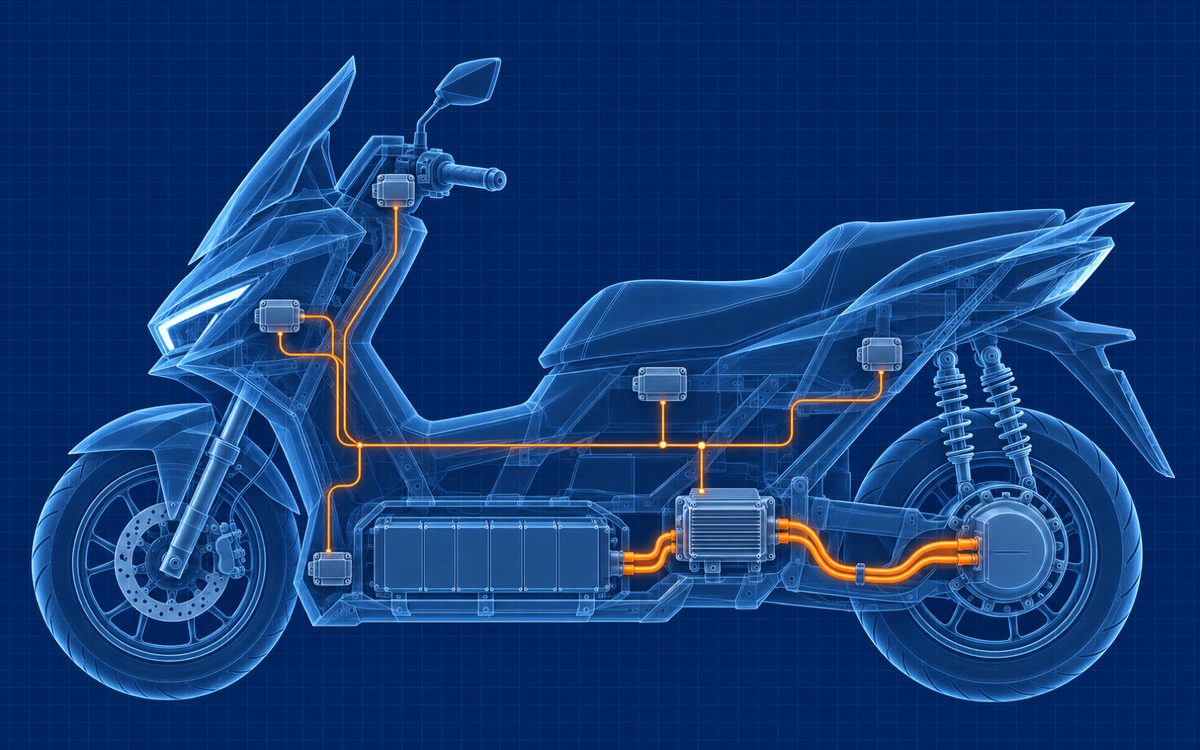
Angsa Motors
The complete electrical and electronic architecture
We are building the whole electrical and electronic system of their electric two-wheeler: the control units and how they talk to each other (ECUs and CAN matrices), 1D modelling, testing and validation.
 Illustration

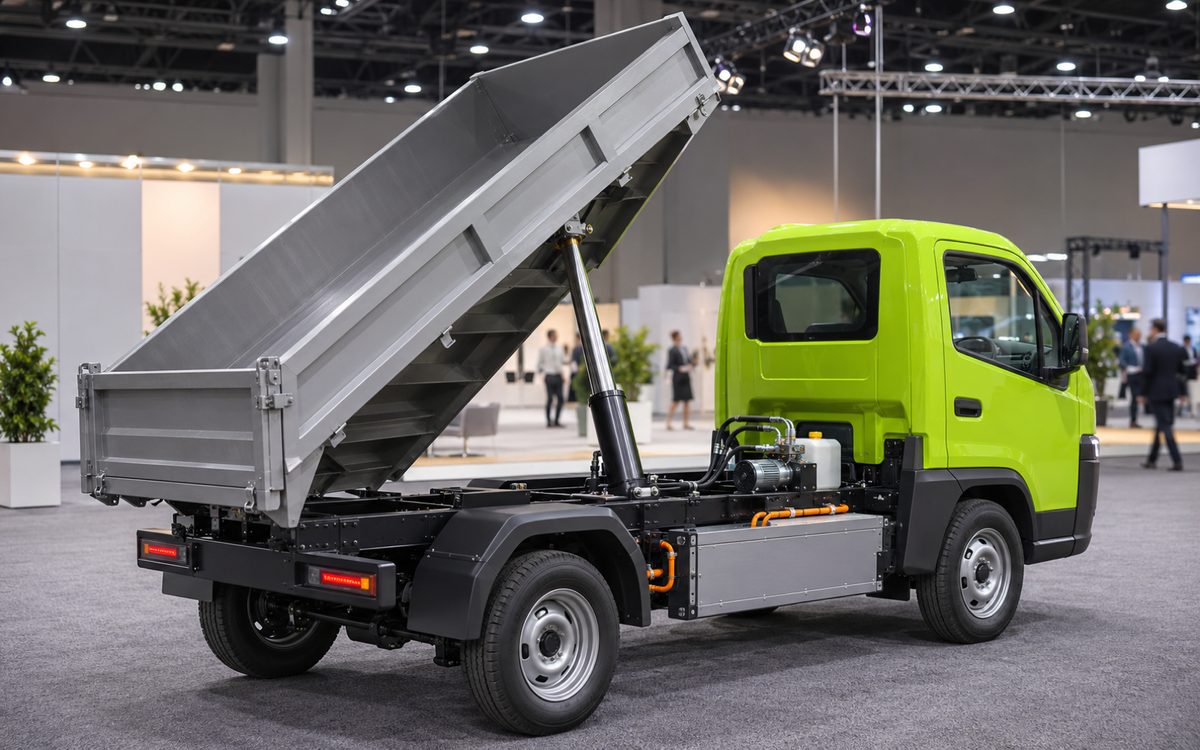
Montra Electric
Hydraulics that run off the high-voltage battery
We built a hydraulic power pack that runs directly off the vehicle’s high-voltage battery pack. Montra Electric showed it at auto shows, driving hydraulic lifts.
 Illustration
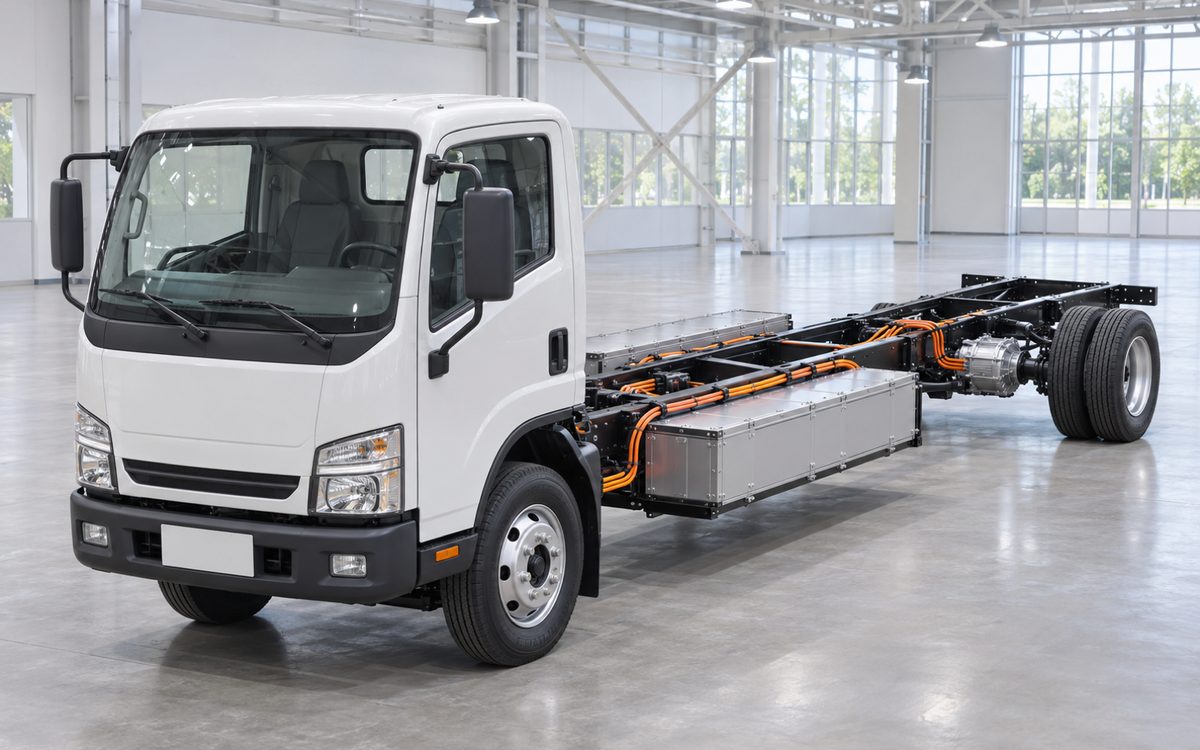
TML
Their EV Centre of Excellence
We are building the EV Centre of Excellence where TML trains its own technicians and engineers.
Built by our engineers
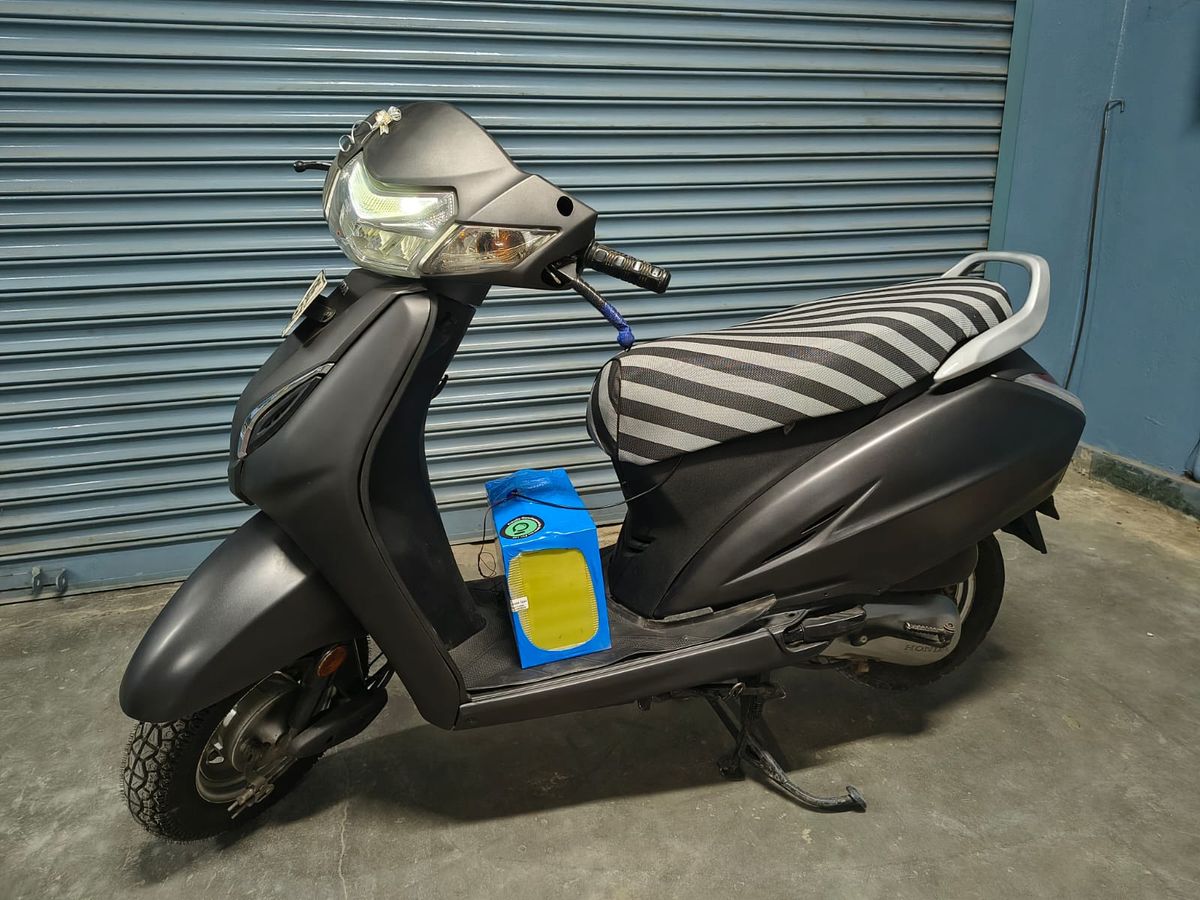
Our hybrid scooter conversion.
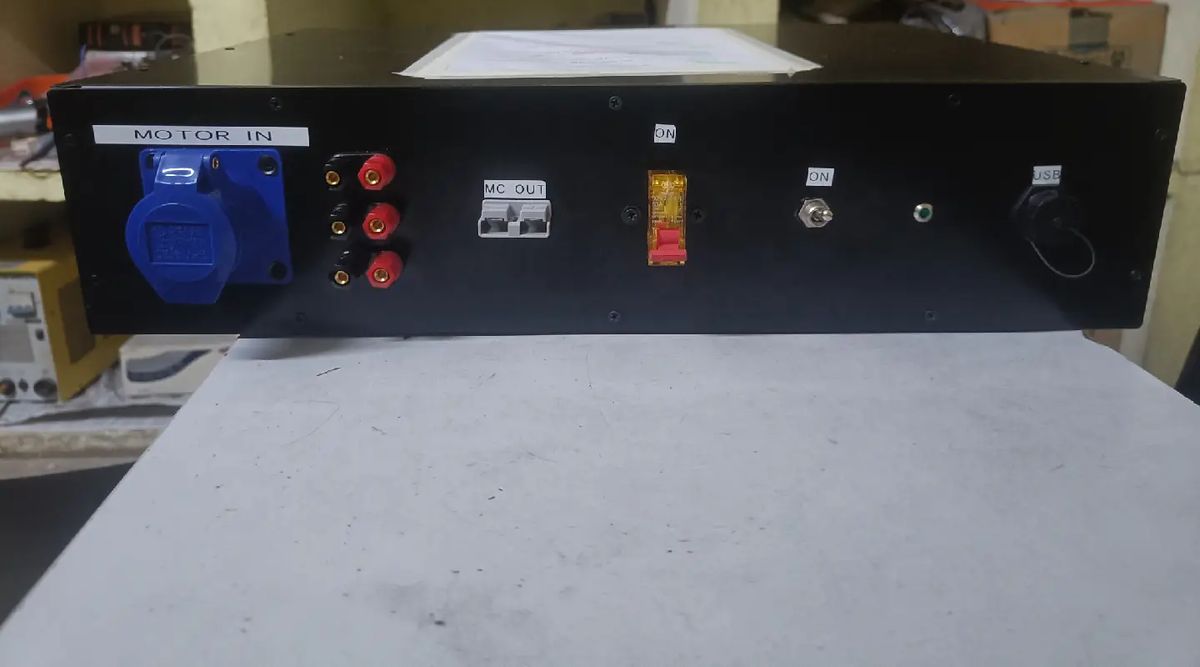
The Advance MIDC, one of our controller products.
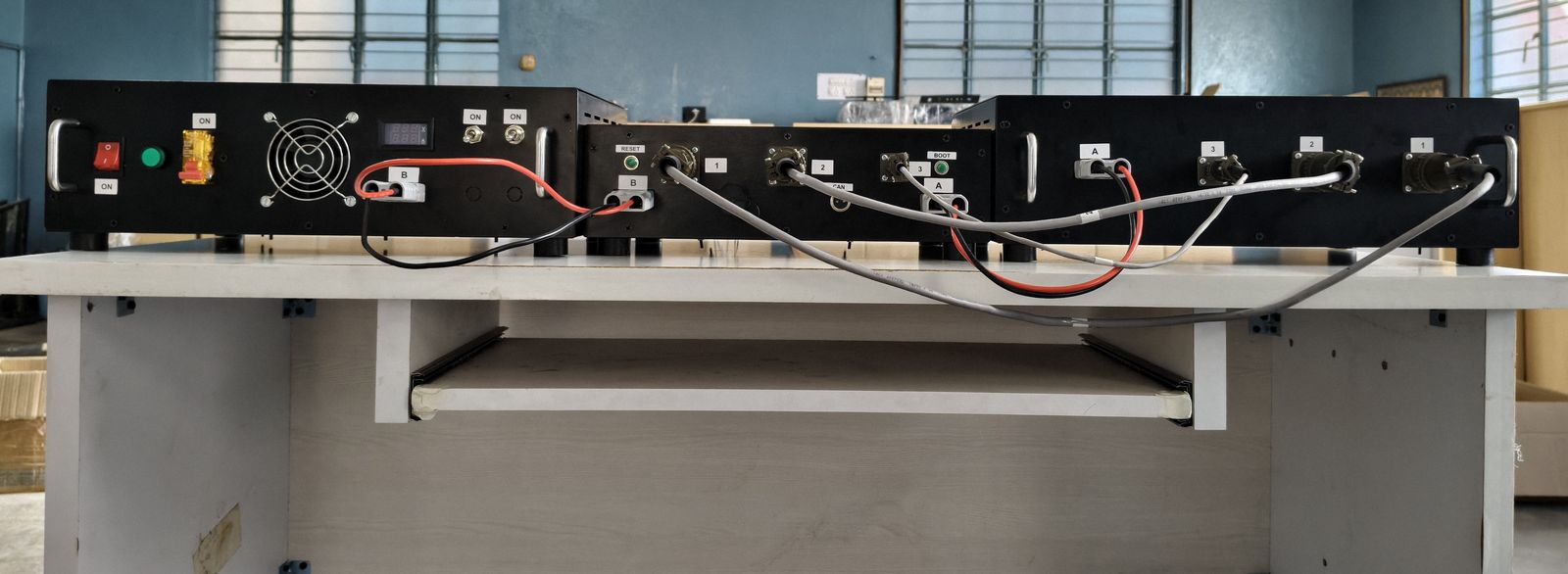
Our 48 V BMS rig.
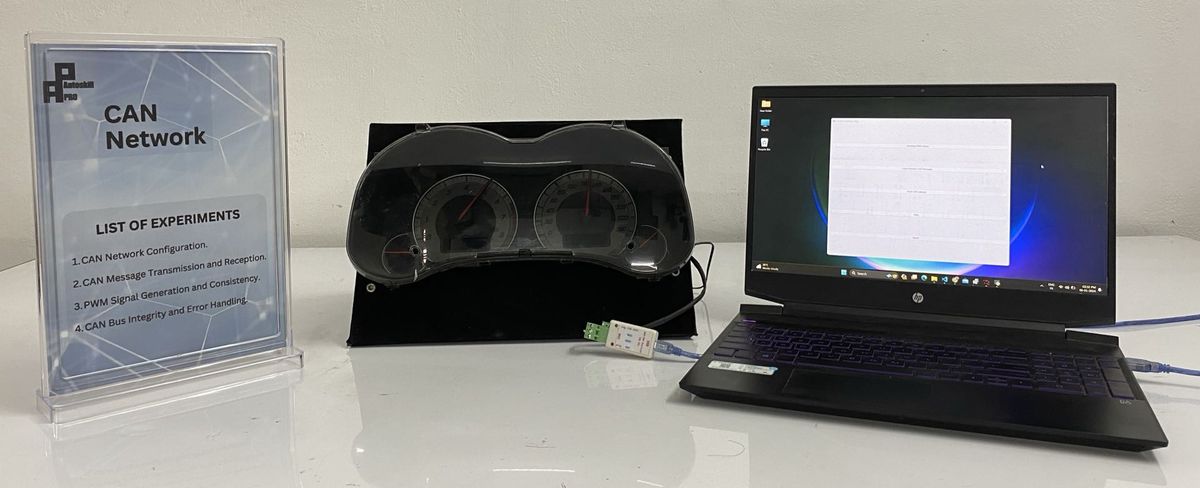
Our CAN network trainer.
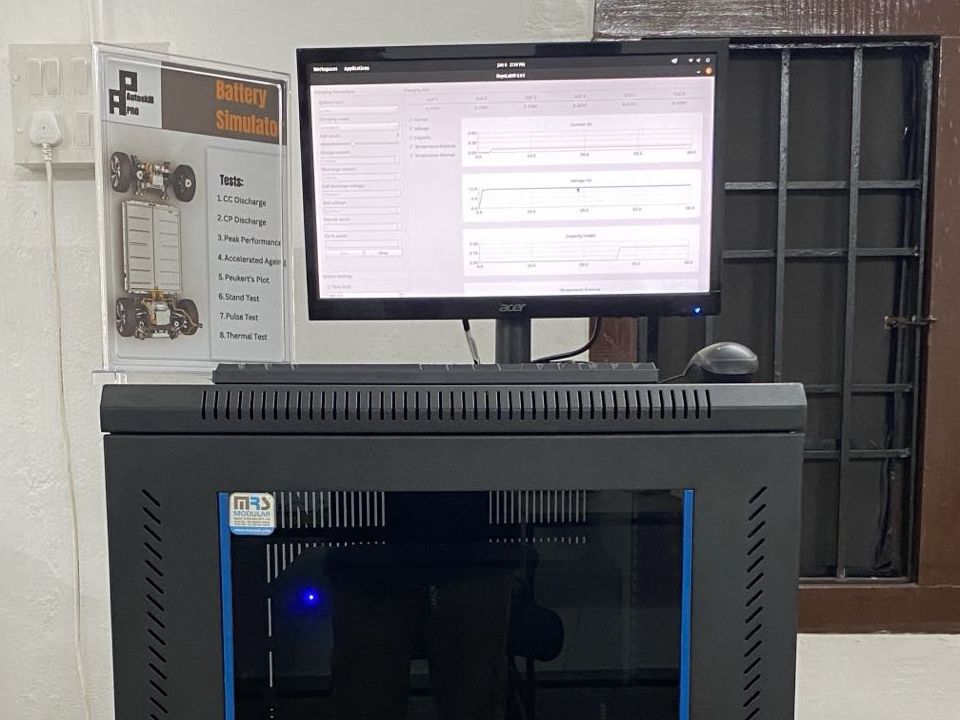
Our battery simulator.
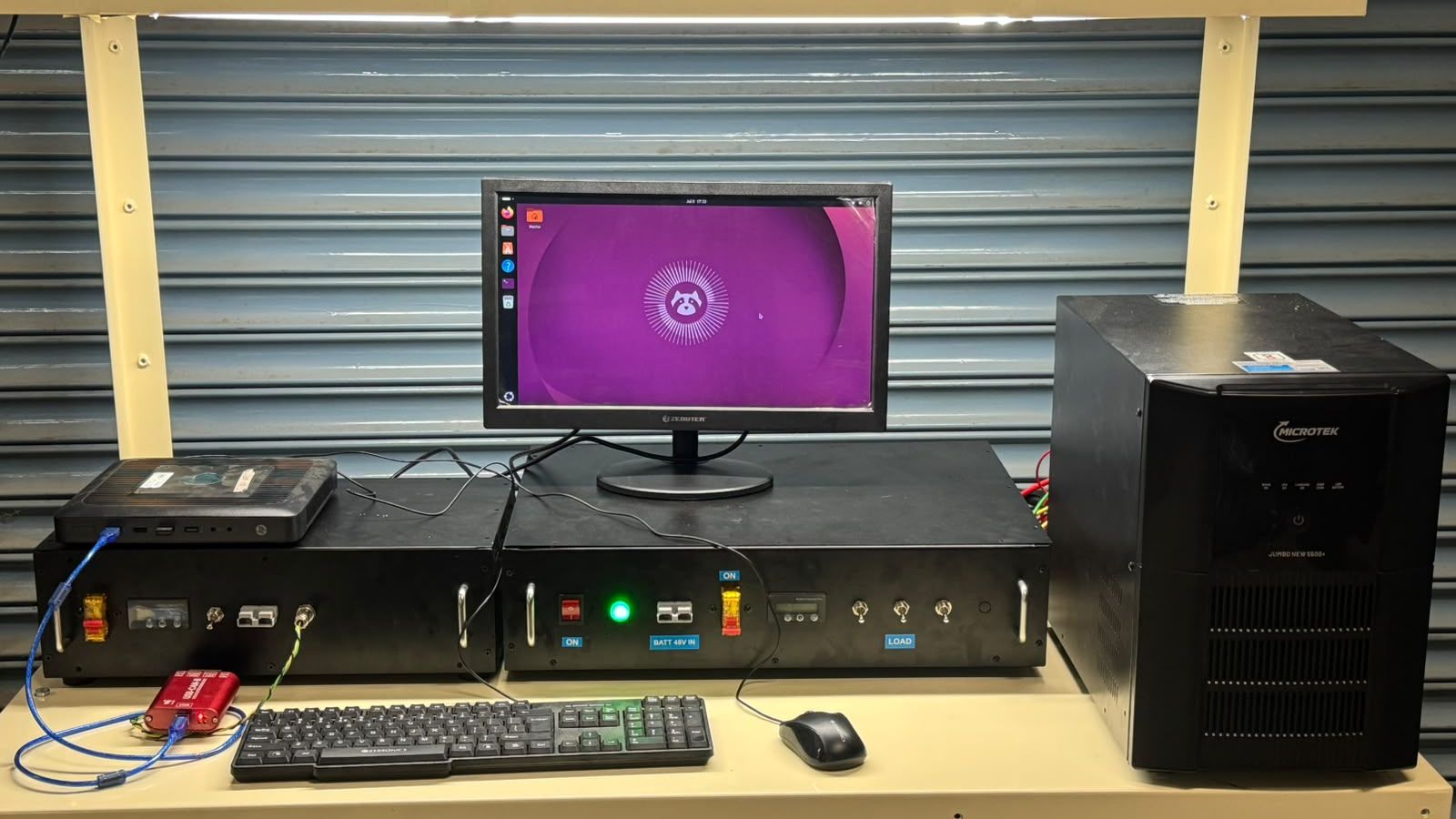
Our 48 V battery storage bench.
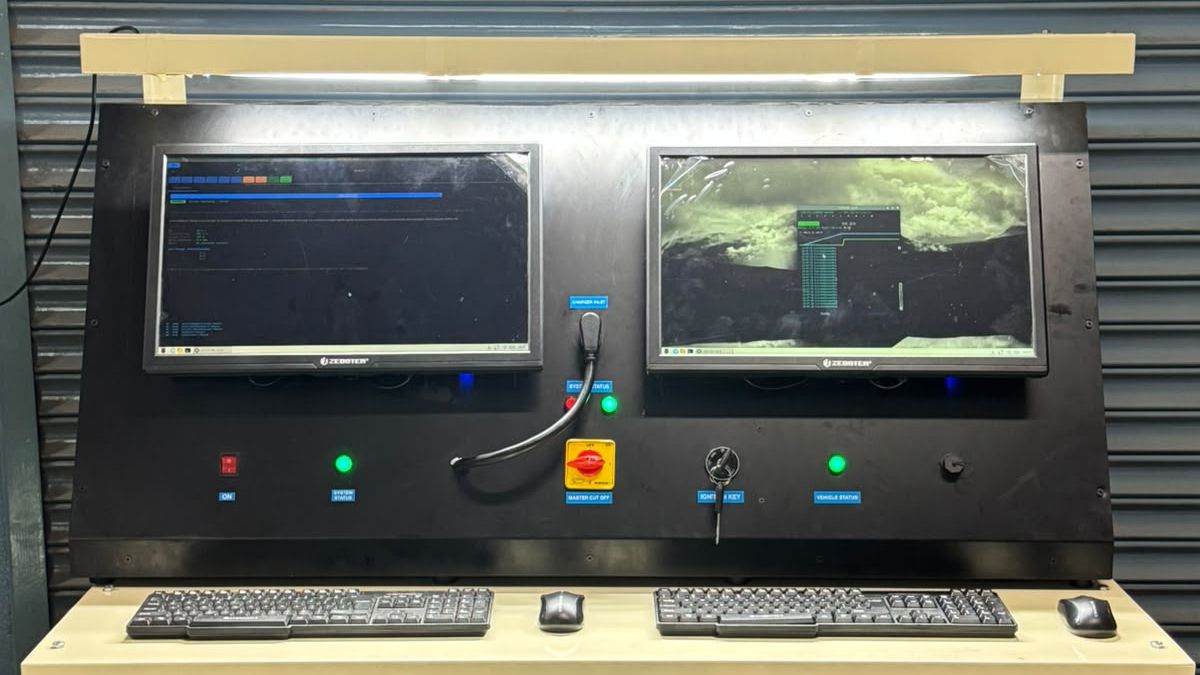
Our charging-system test station.
We have also trained Volvo Eicher Electric’s engineers in new product development.
40+colleges across India
3,000+students train on them every year
Colleges across India already teach on our lab tools and equipment. The same engineering goes into the tools you get on this course.
We are building EV service networks for vehicle makers
Silverback Motorcycles
India and Dubai
Angsa Motors
Indonesia and Vietnam
Konwert Motors
Retrofitted EVs
Every one of these networks needs technicians who can repair an EV, not just swap its parts. That is the work this course trains you for.
We train the technicians EV makers are short of
Our engineers are building EV systems and service networks for makers such as SB Moto and ME Electric Vehicles and Trucks. The same team runs this course, and can run a batch for you.
- Recruit from our batches once they pass the final practical.
- Give us your vehicle and we will train a batch on it.
- Send your dealer and service staff to us, or we can come to you.
Call or message us with your requirement. An engineer will reply, not a sales desk.
Across all Reynlab training programmes
- 18
- years training technicians and engineers
- 5,000+
- students trained
- 12+
- countries our students work in
Reynlab EV Refurbishment Centre
Parts and technical support from Q1 2027
After training you will still need parts, and help with the hard jobs. Once the centre opens, you will be able to:
- Buy refurbished battery packs and controllers for your customers’ repairs.
- Exchange a faulty unit and pay less for the refurbished one.
- Call the centre’s technicians when a fault beats you.
In the course you learn the same checks the centre will use before it hands back a repaired unit.
Porur, Chennai
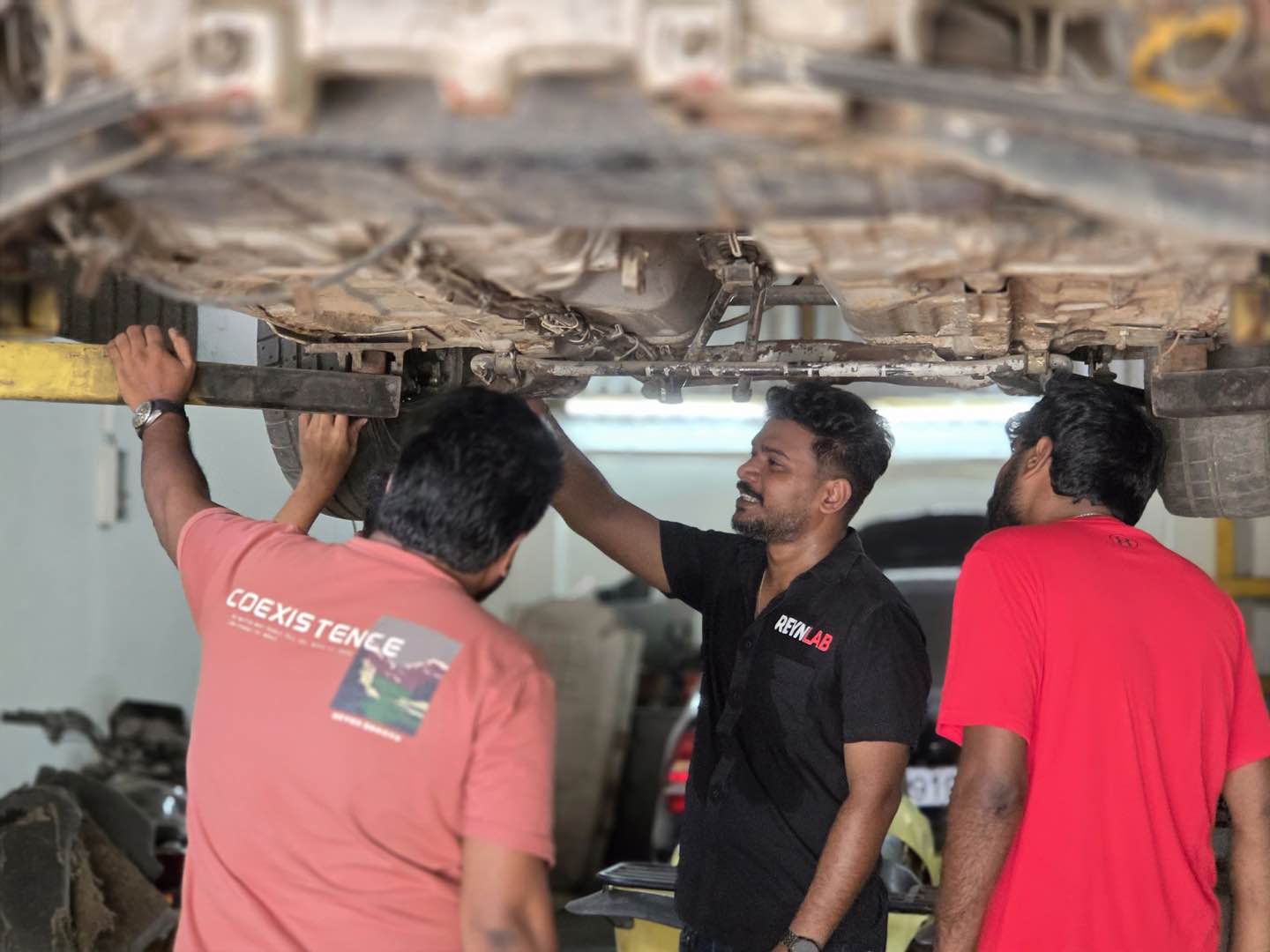
Come and see the garage before you pay
Look at the benches, meet the trainers and ask whatever you like. Tell us what work you do now and we will tell you honestly where to start.
Coming soon to Coimbatore, Trivandrum and Bangalore.
Questions before joining
What does the EV Service Technician course cover?
Four parts, each a week on the full-day batch and two weeks on the half-day batch. Part 1 is high-voltage safety and how a two-wheeler EV works, ending in a safety check you must pass. Part 2 is battery packs and the BMS: testing, cell replacement, spot welding, balancing and board repair. Part 3 is the motor, the controller and the charger, down to board level. Part 4 is diagnostics, job cards and returned units in our garage, and a final practical on a scooter with a real complaint. Batches after the Refurbishment Centre opens in Q1 2027 also visit it.
Who teaches the course?
Reynlab trainers who repair, diagnose and build vehicle electronics. Hariharan N set up our EV and IC engine lab and has more than ten years in diagnostics, ECU repair and EV conversion. Maniyarasu O built a CAN-based BMS viewer and a controller at Reynlab. Vasanthakumar P teaches chip-level repair of control modules. J Selvam has done EV fault-finding at Switch Mobility. Our engineers, who design and test our EV products, mentor learners on EV topics. Full profiles are at reynlab.com/trainers.
I have never worked on a vehicle. Can I join?
Take the bundle. You do Master Automotive Technician first, which covers the engine, chassis, electrics and scan tools, and then EV Service Technician. The bundle is ₹99,999 plus GST. The EV course alone assumes you can read a wiring diagram and use a meter from day 1. There is no entry test. Tell us what work you do now and we will help you choose.
What is the fee?
EV Service Technician is ₹60,000 plus GST, which is ₹70,800. The bundle with Master Automotive Technician is ₹99,999 plus GST, which is ₹1,17,999. The fee covers the training, materials, use of the workshop equipment, the Reynlab CAN interface and battery pack analyser, and the certificate.
Should I take the one-month or the two-month batch?
Both cover the same training for the same fee. The full-day batch finishes in one month: theory from 10 AM to 1 PM and practicals from 2 PM to 5 PM, Monday to Friday. The half-day batch runs for two months in a morning or afternoon slot, which suits a mechanic who cannot leave the shop for the whole day.
Why two-wheelers and not buses or trucks?
Most electric vehicles sold in India are two-wheelers, and once they are out of warranty they go to local workshops. Bus and truck packs are serviced by the maker and the fleet depot. A scooter pack is also tens of volts, against 600 to 800 V on a bus, so it is the safer place to build the habits. We are setting up partnerships with vehicle makers so that our learners can get time on heavy commercial EVs, and we will announce each one when it is signed.
Is it safe to work on EV batteries?
EV battery work carries real risks, so training starts with safety procedures and supervised work. You learn to isolate the pack, check for voltage with a tested meter, discharge the controller capacitors and use insulated tools. An isolated pack still stores energy, so you treat it as live. You must pass a safety check at the end of part 1 before you do any hands-on work on a pack.
Which tools do I get?
The Reynlab CAN interface, which reads the BMS and controller on the scooter, and the Reynlab battery pack analyser, which tests capacity, internal resistance and cell balance. Both are licensed to you for your own work. Our AI guided-diagnostics tool is included from its launch, with one year of access starting that day.
What is the Refurbishment Centre?
Reynlab is setting up an EV Refurbishment Centre that opens in Q1 2027. It will sell refurbished controllers and battery packs, and take dead units in exchange. Graduates will be able to buy from it for their customers, use its test standard and call its technicians when a fault beats them. Batches after it opens spend a day there.
Which certificate do I get?
A Reynlab certificate accredited by STEM.ORG, issued with our partners Konwert and KAL. It carries your name, the course and a code anyone can check at reynlab.com/verify-certificate.
Where is it taught? Is it coming to other cities?
At the Reynlab garage in Porur, Chennai. Batches in Coimbatore, Trivandrum and Bangalore are coming soon. Message us with your city and we will tell you when it starts there.
Is it online?
No. Opening packs, soldering boards and testing motors need the hardware in front of you and an instructor beside you. The course is taught in the classroom and the garage only.
Will I get a job after the course?
We provide placement support, but we do not guarantee a job. Many people take this course to repair EVs in their own workshop. Reynlab’s record across all courses: 92% of all students placed within 6 months of completion. Placement support includes resume building and mock technical interviews.
Can EV companies hire your technicians or book a batch for their team?
Yes. EV makers and dealers can recruit from our batches once learners pass the final practical. Give us your vehicle and we will train a batch on it, for your dealer and service staff, at our garage or at your site. Call or message us with your requirement and an engineer will reply.
Can I open my own EV repair shop after this?
That is one of the reasons the course exists. Part 4 covers job cards, estimates, warranty work and when to repair, replace or exchange a unit. Once the Refurbishment Centre opens, it gives you a parts supply and technical backup.
Electric scooters are already coming into your shop. Be the one who can fix them.
Send us a WhatsApp message or call. Tell us what you repair now and we will reply with the dates and timings.
Want to run an EV repair training centre in your city? See how the franchise works