Register Now !!

Compare Dyno, Street, and Chip Tuning for Best ECU Performance

Introduction

Vehicle tuning has evolved dramatically over the past few decades, transforming from mechanical adjustments to sophisticated digital programming. Today, performance enthusiasts and everyday drivers alike have multiple options when it comes to optimizing their vehicle’s performance: dyno tuning, street tuning, and chip tuning. Each method offers distinct advantages, challenges, and results.
Whether you’re looking to extract maximum horsepower, improve fuel efficiency, or simply enjoy a more responsive driving experience, understanding these different tuning approaches is crucial to achieving your goals. This comprehensive guide breaks down each method, comparing their processes, benefits, and ideal applications to help you make an informed decision for your specific vehicle and performance objectives.

Understanding Vehicle Tuning Basics

Before diving into specific tuning methods, it’s important to understand what vehicle tuning actually entails. At its core, engine tuning involves modifying the Engine Control Unit (ECU) parameters to alter how the engine operates. Modern vehicles rely on complex computer systems to manage everything from fuel injection timing to spark advance and turbocharger boost levels.

Key Parameters Modified During Tuning

  1. Fuel Maps: Control the air-fuel ratio across different RPM and load conditions
  2. Ignition Timing: Determines when the spark plugs fire
  3. Boost Control: Manages turbocharger or supercharger pressure
  4. Rev Limits: Sets maximum engine RPM
  5. Shift Points: In vehicles with automatic transmissions
  6. Torque Management: Controls power delivery to protect the drivetrain
  7. Idle Speed: Adjusts engine RPM at standstill

Goals of Performance Tuning

Different drivers have different objectives when tuning their vehicles:
  • Maximum Power: Extracting every possible horsepower
  • Improved Torque Curve: Better acceleration and drivability
  • Enhanced Fuel Economy: Optimizing efficiency
  • Accommodating Modifications: Adjusting parameters for aftermarket parts
  • Emissions Compliance: Maintaining legal operation while improving performance
With these basics in mind, let’s explore the three main tuning approaches and how they differ.

Dyno Tuning: The Professional Approach

Dyno tuning represents the gold standard in performance optimization, utilizing sophisticated dynamometer equipment to precisely measure power output while making adjustments.

How Dyno Tuning Works

  1. The vehicle is secured on a dynamometer, which simulates road conditions
  2. Baseline runs establish current performance metrics
  3. A professional tuner connects to the ECU with specialized software
  4. Multiple runs are performed with incremental adjustments
  5. Real-time data from sensors is analyzed after each run
  6. The process continues until optimal settings are achieved
  7. Final verification runs confirm improvements and ensure safety

Types of Dynamometers Available in India

Chassis Dynamometers:
  • Measures power at the wheels
  • Accounts for drivetrain losses
  • Most common in Indian performance shops
  • Available at specialized tuning centers in major cities (Delhi NCR, Mumbai, Bangalore, Chennai, Hyderabad, Pune)
  • Popular brands include Dynojet, Mustang Dynamometer, and MAHA Dyno
  • Typically costs ₹5,000-₹10,000 per session for customers
Engine Dynamometers:
  • Measures power directly at the crankshaft
  • Used primarily by professional motorsport teams and engine builders
  • Available at racing facilities like Madras Motor Sports Club and Buddh International Circuit
  • More accurate for pure engine development
  • Requires engine removal from the vehicle
  • Limited availability; mostly for professional use

Advantages of Dyno Tuning

  • Precise Measurement: Exact horsepower and torque figures
  • Controlled Environment: Consistent temperature and conditions
  • Safety: Potential issues identified in a controlled setting
  • Comprehensive Data: Multiple sensors providing detailed information
  • Professional Expertise: Access to experienced tuners
  • Repeatability: Easy to validate changes and improvements

Limitations of Dyno Tuning

  • Cost: Typically the most expensive tuning option (Rs.40,000-Rs.1,20,000+)
  • Availability: Requires specialized facilities
  • Static Conditions: May not perfectly replicate real-world driving
  • Time Consuming: Often requires full or half-day appointments
  • Travel Required: May need to transport vehicle to specialized facilities

Best Candidates for Dyno Tuning

Dyno tuning is ideal for:
  • Heavily modified vehicles
  • High-performance applications
  • Forced induction (turbo/supercharged) vehicles
  • Race cars and competition vehicles
  • Custom engine builds

Street Tuning: Real-World Performance

Street tuning offers a pragmatic approach to vehicle optimization by making adjustments while driving in actual road conditions, providing real-world validation of performance changes.

How Street Tuning Works

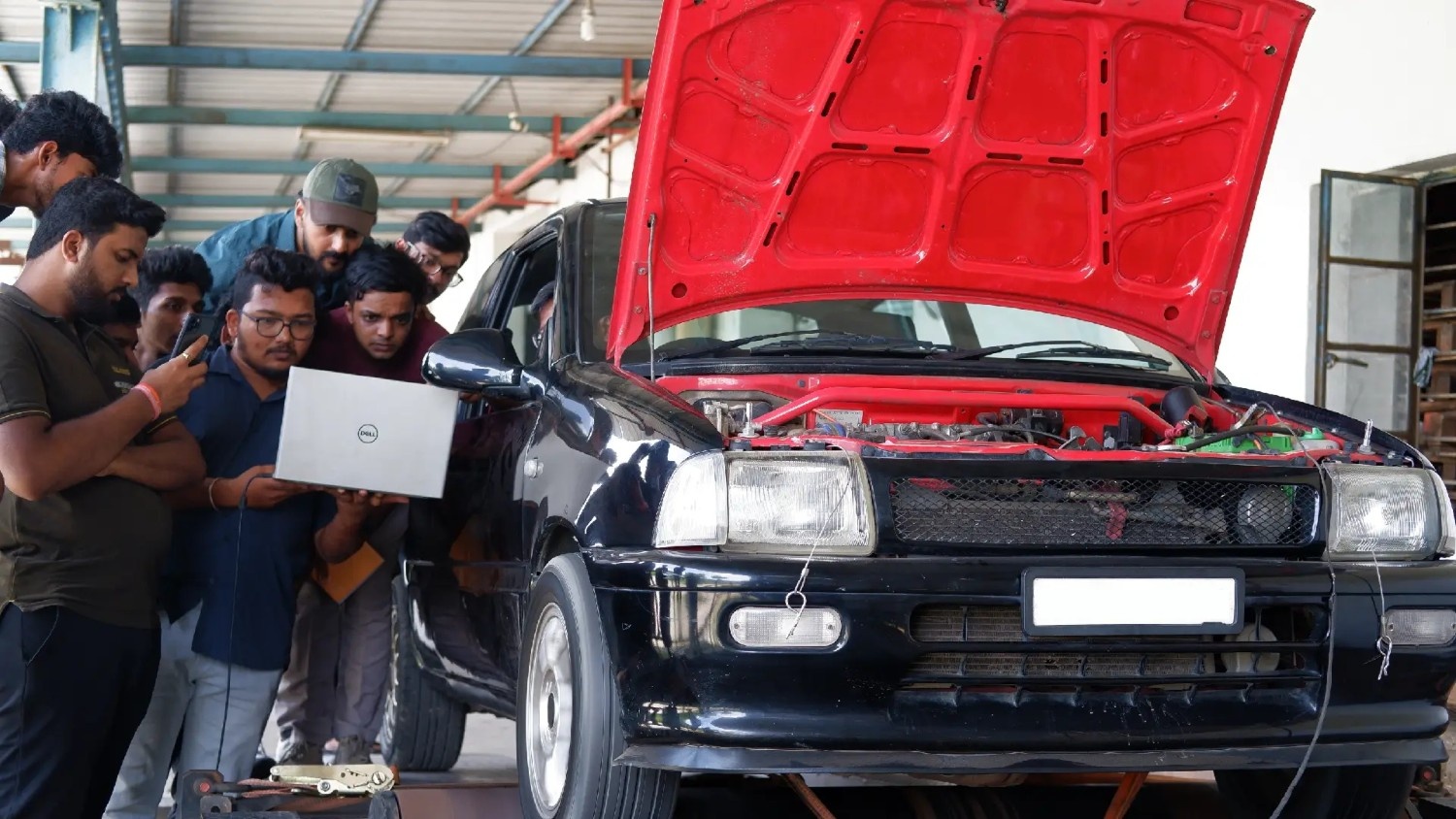
  1. Laptop or mobile device connects to the vehicle’s ECU
  2. Datalogging equipment records key parameters during normal driving
  3. Tuner analyzes logs and makes incremental adjustments
  4. Vehicle is tested under various conditions (highway, city, hills)
  5. Process is repeated until desired performance is achieved
  6. Final validation across all common driving scenarios

Required Equipment for Street Tuning in India

  • OBD-II Interface: ELM327 Bluetooth/WiFi adapters (₹1,000-₹3,000), Tactrix OpenPort 2.0 (₹15,000-₹20,000)
  • Tuning Software: HP Tuners India (₹18,000-₹30,000), ECUX software (₹12,000-₹15,000), TunerPro (Free)
  • Wideband Oxygen Sensor: INNOVATE Motorsports LC-2 (₹12,000-₹15,000), AEM UEGO (₹15,000-₹18,000)
  • Datalogging Equipment: Torque Pro app (₹300), OBD Fusion (₹700-₹1,000)
  • Knock Detection: Knock ears (₹2,000-₹4,000), Autel diagnostic tools (₹10,000-₹25,000)

Advantages of Street Tuning

  • Real-World Results: Tuning occurs in actual driving conditions
  • Lower Cost: Generally less expensive than dyno tuning
  • Convenience: Can be performed anywhere
  • Varied Conditions: Accounts for changing temperatures, grades, and scenarios
  • Ongoing Refinement: Easy to make adjustments over time
  • Personalized Experience: Tuned for your specific driving style and routes

Limitations of Street Tuning

  • Safety Concerns: Testing high-performance settings on public roads
  • Legal Issues: Potential for violating traffic laws
  • Inconsistent Conditions: Weather, traffic, and road surfaces vary
  • Less Precise Measurement: Cannot exactly quantify power gains
  • Time-Consuming: May require numerous driving sessions
  • Limited Load Conditions: Difficult to safely test full-throttle performance

Best Candidates for Street Tuning

Street tuning works well for:
  • Daily drivers
  • Mild to moderately modified vehicles
  • Emphasis on driveability over maximum power
  • Limited performance modification budgets
  • Vehicles used in varying conditions or altitudes

Chip Tuning: Plug-and-Play Solutions

Chip tuning (also called “flash tuning” or using “power modules”) offers pre-programmed performance improvements with minimal technical knowledge required.

How Chip Tuning Works

Depending on the specific product and vehicle, chip tuning works in one of several ways:
  1. ECU Reflashing: Reprogramming the factory ECU with new software
  2. Piggyback Systems: Devices that intercept and modify sensor signals
  3. Plug-in Modules: Connect to the OBD-II port and alter ECU parameters
  4. Replacement Chips: Physical replacement of memory chips (older vehicles)

Popular Chip Tuning Products Available in India

  • Handheld Programmers: Race Dynamics PowerTronics, Pete’s Tuned ECU, Quantum Tuning India
  • Piggyback Modules: Race Dynamics PiggyBack, Unichip India, RaceChip India, Code6 Performance Modules
  • Flash Tuning Services: Motormind Automotive, Wolf Moto, Red Rooster Performance
  • OBD Port Devices: Racechip XLR, PowerBox India, Pete’s Plug-N-Play modules

Advantages of Chip Tuning

  • Accessibility: Minimal technical knowledge required
  • Convenience: Quick installation and results
  • Reversibility: Most solutions can be easily removed
  • Consistency: Predictable results across similar vehicles
  • Cost-Effective: Generally lower cost than custom tuning
  • Support: Community feedback and established benchmarks
  • Multiple Maps: Many solutions offer different settings for various needs

Limitations of Chip Tuning

  • Generic Approach: Not tailored to specific vehicle conditions
  • Limited Customization: Preset parameters may not be ideal for all modifications
  • Quality Variance: Significant differences between brands and products
  • Potential Compatibility Issues: May not work well with certain modifications
  • Limited Adaptability: Cannot account for mechanical variations between engines
  • Safety Margins: Often conservative to ensure wide compatibility

Best Candidates for Chip Tuning

Chip tuning is suitable for:
  • Stock or lightly modified vehicles
  • First-time performance enthusiasts
  • Limited budgets
  • Leased vehicles (when reversibility is important)
  • Popular vehicle models with established tuning support

Comparative Analysis: Cost vs. Benefit

Cost Comparison

Tuning MethodTypical Cost Range (INR)Additional Equipment (INR)Ongoing Costs (INR)
Dyno Tuning₹40,000-₹1,20,000+None (included in service)Retuning after modifications (₹15,000-₹25,000)
Street Tuning₹10,000-₹30,000 for softwareInterfaces (₹5,000-₹15,000), Wideband O2 (₹7,500-₹15,000)Minimal
Chip Tuning₹15,000-₹40,000 for deviceNoneSubscription updates (varies)

Performance Benefit Comparison

Tuning MethodPower Gains (%)Driveability ImprovementFuel Economy ImpactReliability Factor
Dyno Tuning10-25%+High (custom-tailored)Can improve or decrease depending on goalsHigh (when done properly)
Street Tuning8-20%Very High (real-world optimized)Often improvedMedium-High
Chip Tuning5-15%Medium (preset parameters)Often decreasedMedium

Time Investment

  • Dyno Tuning: 4-8 hours in a single session
  • Street Tuning: 10-20 hours spread over days or weeks
  • Chip Tuning: 15 minutes to 1 hour for installation

Which Method Is Right for Your Vehicle?

Choose Dyno Tuning If:

  • You’ve invested significantly in performance modifications
  • Maximum power is your primary goal
  • You have a forced induction (turbo/supercharger) setup
  • You’re using your vehicle for competitive events
  • You need precise, quantifiable results
  • Budget is less of a concern than optimal performance

Choose Street Tuning If:

  • You prioritize real-world driveability
  • Your vehicle is used primarily for daily driving
  • You enjoy the tuning process and technical aspects
  • You drive in varying conditions or altitudes regularly
  • You want ongoing refinement capability
  • You have some technical knowledge and time to invest

Choose Chip Tuning If:

  • You have a mostly stock vehicle
  • You want a simple, plug-and-play solution
  • You have limited technical knowledge
  • You need the ability to easily return to stock
  • Your vehicle is common with established tuning support
  • You’re looking for modest gains with minimal investment

Hybrid Approaches

Many enthusiasts use combinations of these methods:
  1. Dyno + Street: Initial dyno tune followed by street refinement
  2. Chip + Street: Begin with off-the-shelf tune, then customize
  3. Staged Approach: Start with chip tuning, progress to street or dyno tuning as modifications increase

Common Myths and Misconceptions

Myth 1: Dyno Tuning Always Provides the Best Results

Reality: Dyno tuning offers precise power measurement but may not optimize for all real-world conditions.

Myth 2: Street Tuning Is Always Unsafe

Reality: When performed responsibly with proper equipment, street tuning can be safe and effective.

Myth 3: Chip Tuning Will Damage Your Engine

Reality: Quality chip tunes from reputable companies maintain appropriate safety margins.

Myth 4: You Need Maximum Timing Advance for Best Performance

Reality: Optimal timing varies greatly between engines and conditions; more isn’t always better.

Myth 5: Tuning Is Only About Horsepower

Reality: Proper tuning also addresses driveability, throttle response, and overall driving experience.

Myth 6: Factory Tunes Are Always Conservative

Reality: Many modern vehicles, especially performance models, have fairly optimized factory tunes with limited headroom.

Case Studies: Real Results from Different Tuning Methods

Case Study 1: 2020 Toyota Fortuner 2.8L Diesel

Dyno Tuning Results:
  • Power: +38 HP, +65 Nm torque
  • Cost: ₹35,000 (Wolf Moto, Bangalore)
  • Notable Benefits: Eliminated turbo lag, significant improvement in mid-range torque
  • Drawbacks: Required traveling to Bangalore from Hyderabad, two-day process
Similar Vehicle with Chip Tuning:
  • Power: +30 HP, +50 Nm torque (estimated)
  • Cost: ₹25,000 (Race Dynamics module)
  • Notable Benefits: Quick installation, multiple map options
  • Drawbacks: Occasional rough idle, conservative tune

Case Study 2: 2021 Hyundai i20 N Line 1.0 Turbo

Street Tuning Results:
  • Power: Estimated +18 HP, +32 Nm torque
  • Cost: ₹15,000 (software) + ₹12,000 (wideband sensor)
  • Notable Benefits: Perfect daily drivability, improved throttle response
  • Drawbacks: Time-consuming process, required technical knowledge
Similar Vehicle with Dyno Tuning:
  • Power: +22 HP, +38 Nm torque
  • Cost: ₹28,000 (Motormind Automotive, Delhi)
  • Notable Benefits: Precise air-fuel ratios, maximized power
  • Drawbacks: Less optimized for local fuel quality in tier-2 cities

Case Study 3: 2020 Skoda Octavia 1.8 TSI

Chip Tuning Results:
  • Power: +35 HP, +60 Nm torque
  • Cost: ₹32,000 (Code6 Performance Module)
  • Notable Benefits: Transformative torque increase, maintained reliability
  • Drawbacks: Limited customization for aftermarket parts
Similar Vehicle with Street Tuning:
  • Power: Estimated +42 HP, +70 Nm torque
  • Cost: ₹22,000 (software) + ₹15,000 (equipment)
  • Notable Benefits: Tailored for specific modifications, better throttle mapping
  • Drawbacks: Required several adjustments to optimize for Indian driving conditions

Future of Vehicle Tuning in India

As automotive technology evolves, so too does the landscape of vehicle tuning in the Indian market:

Emerging Trends in the Indian Tuning Scene

  1. Remote Tuning Services: Several Indian tuning shops now offer remote tuning services with datalogging upload, particularly valuable for customers in areas without local tuning expertise
  2. Smartphone App Integration: Mobile-based tuning platforms gaining popularity with apps like JV Power apps, Power Control apps specifically configured for Indian market vehicles
  3. BS6-Compliant Performance: Tuning solutions designed to work within the BS6 emissions framework, addressing the stricter regulations in metropolitan areas
  4. CNG/Alternative Fuel Tuning: Growing market for performance tuning of CNG, LPG, and other alternative fuel vehicles popular in the Indian market
  5. Electric Vehicle Tuning: Early adoption of power delivery and efficiency optimization for India’s growing EV market

Challenges Specific to the Indian Market

  1. Fuel Quality Variations: Tuning must account for significant variations in fuel quality across different regions of India
  2. Strict RTO Regulations: Regional Transport Office rules regarding vehicle modifications becoming increasingly stringent
  3. ECU Protection: Newer Indian market vehicles implementing stronger ECU protection measures
  4. Limited Technical Support: Fewer experienced tuners available compared to Western markets
  5. BS6 Compliance Issues: Balancing performance with newer emissions standards
  6. Climate Adaptation: Tuning must account for extreme temperature variations across India’s diverse climate zones

FAQs for Indian Vehicle Owners

Q: Will tuning void my vehicle warranty in India?

A: Yes, in most cases. Unlike the US, India doesn’t have equivalent consumer protection laws like the Magnuson-Moss Warranty Act. Indian manufacturers and dealerships can void your warranty if they detect ECU modifications. However, many tuning providers in India offer solutions that can be completely reversed before service visits. Popular options like PowerTronics and Race Dynamics modules can be removed without leaving traces.

Q: Which tuning method is safest for Indian road conditions and fuel quality?

A: For Indian conditions, street tuning often provides the best balance as it can be optimized for local fuel quality variations and typical driving conditions. Dyno tuning from reputable shops like Red Rooster Performance or Wolf Moto offers professional oversight with Indian road conditions in mind. For beginners, chip tuning from established Indian brands maintains appropriate safety margins for our market.

Q: How much power can I expect to gain from tuning Indian market vehicles?

A: This varies based on vehicle type and fuel:
  • Naturally aspirated petrol engines: typically 5-8% gains
  • Turbocharged petrol engines: often 10-25% gains
  • Diesel engines (particularly common in India): 15-30% torque gains
  • CNG/LPG converted vehicles: 8-12% improvements

Q: Do I need supporting modifications for Indian market vehicles?

A: For most Indian market vehicles, supporting modifications are recommended:
  • Free-flow air filters work well with Indian dusty conditions
  • Upgraded intercoolers are valuable for turbocharged vehicles in hot Indian climate
  • Better quality fuel (higher octane where available) is strongly recommended
  • Engine oil coolers for vehicles used in extreme heat conditions

Q: How often should I re-tune my vehicle considering Indian conditions?

A: In the Indian context, you should consider re-tuning when:
  • You install new performance modifications
  • You move between regions with significantly different fuel quality (e.g., metro to rural areas)
  • You switch between summer and monsoon seasons (for performance vehicles)
  • You change from regular to premium fuel availability areas
  • After significant service work or parts replacement

Q: Can tuning improve fuel economy for city driving in Indian traffic conditions?

A: Yes, especially with tunes focused on low-end torque and throttle response. Many Indian customers report 1-2 km/l improvements in city conditions with economy-oriented tunes. However, performance-focused tunes may reduce efficiency by 0.5-1 km/l, though the trade-off is often worth it for enthusiasts. Several Indian tuning companies like Quantum Tuning India and Pete’s offer specific economy maps for urban Indian driving conditions.

Conclusion: The Indian Perspective on Vehicle Tuning

Choosing between dyno tuning, street tuning, and chip tuning in the Indian automotive landscape requires careful consideration of several unique factors including regional fuel quality, climate variations, driving conditions, and regulatory environment.
For maximum performance and precision in the Indian context, dyno tuning from established shops like Red Rooster Performance, Wolf Moto, or Motormind Automotive remains the gold standard, though availability is limited to major metropolitan areas. For enthusiasts in other regions, street tuning provides a practical approach that can be optimized for local conditions. For simplicity and accessibility, chip tuning solutions from Indian companies like Race Dynamics, PowerTronics, and Code6 offer significant improvements with minimal technical knowledge required.
The Indian tuning community continues to grow, with active forums like Team-BHP, xBhp, and various regional Facebook groups providing valuable insights and shared experiences. Many Indian enthusiasts begin their journey with simple bolt-on modifications and chip tuning before gradually exploring more advanced options as they gain knowledge and experience.
When tuning in India, consider these additional factors:
  • Regional variations in fuel quality may require different maps based on your location
  • Extreme temperatures in many parts of India necessitate careful tuning to prevent heat-related issues
  • BS6 emissions compliance is increasingly important, especially in NCR and other monitored regions
  • Regular maintenance becomes even more critical with tuned vehicles due to varying road conditions
Whatever path you choose, thorough research, quality equipment from reputable Indian distributors, and realistic expectations will help ensure a positive tuning experience that enhances your driving enjoyment while maintaining reliability across India’s diverse driving conditions.
📺 Watch a real battery testing demo here: Reynlab YouTube Channel
🌐 Explore our automotive training programs: www.reynlab.com/our-courses
Facebook
LinkedIn
WhatsApp
Email