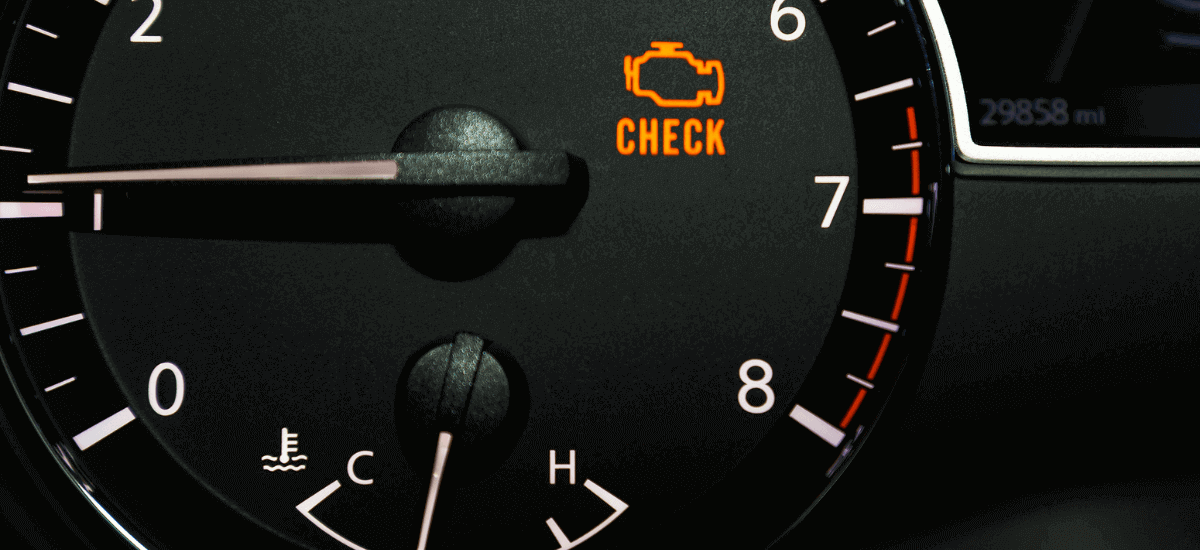
If you see a yellow engine-shaped icon 🟡 glowing on your dashboard, that’s the Check Engine Light (CEL)—and it’s one of the most important alerts in modern vehicles.
But here’s something many drivers don’t realize:
👉 It’s not just about the engine—it’s about emissions, sensors, and system performance.
What Does the Check Engine Light Really Mean?
The Check Engine Light (CEL) turns ON when:
👉 Your car detects a problem that could increase emissions or affect performance
This is monitored by the Powertrain Control Module (PCM) (your car’s main computer).
When an issue is detected:
- The system stores a Diagnostic Trouble Code (DTC)
- The warning light turns ON
👉 In short:
Your car has found a fault—it just needs diagnosis.
Why This Warning Is More Important Than You Think
Many drivers assume:
👉 “It’s just a small issue”
But in reality:
- It can affect emissions
- It can reduce engine efficiency
- It can lead to serious damage if ignored
👉 The CEL is basically your car’s early warning system
Why CEL Is Common in India
Indian driving conditions can trigger CEL more frequently:
- Dust affecting sensors
- Fuel quality variations
- Stop-and-go traffic
- Heat impacting electronics
These conditions can:
👉 Stress sensors and emission systems
Common Causes of Check Engine Light
Let’s break down the most common real-world reasons:
- Sensor Failures (Most Common)
- Oxygen sensor
- MAF sensor
- Temperature sensors
👉 Incorrect readings → wrong engine operation
- Circuit or Wiring Problems
- Loose connections
- Damaged wires
- Fuse issues
Modern cars have:
👉 Kilometers of wiring → more chances of faults
- Ignition System Issues
- Faulty spark plugs
- Bad ignition coils
👉 Causes misfire → increases emissions
- Air-Fuel Mixture Problems
- Incorrect fuel-air ratio
- Poor combustion
👉 Leads to:
- Poor mileage
- Rough performance
- Emission System Problems
- Catalytic converter
- EGR valve
- EVAP system
👉 Directly triggers CEL
- Engine Mechanical Issues
- Compression loss
- Internal wear
👉 Serious performance issues
- Module & Network Problems
- ECU/PCM faults
- Communication issues
Modern cars rely on:
👉 Multiple modules communicating continuously
- Transmission-Related Issues
- Gear system affecting engine load
- Can trigger CEL indirectly
All these issues can trigger the check engine light.
What Do Different CEL Behaviors Mean?
Understanding this is crucial:
🟡 Steady Light
- Minor or moderate issue
- Needs diagnosis soon
🔴 Flashing Light
- Serious issue (misfire)
- Can damage engine immediately
👉 Action:
Stop driving immediately if flashing
Symptoms You Might Notice
- Reduced engine power
- Poor fuel efficiency
- Rough idling
- Engine hesitation
- Unusual exhaust smell
Can You Drive With Check Engine Light ON?
👉 Depends on the situation:
- Steady light → Drive short distance carefully
- Flashing light → Stop immediately
Ignoring it can:
- Damage catalytic converter
- Increase repair cost
What Should You Do When CEL Appears?
Follow this practical checklist:
Step 1: Check Simple Causes
- Fuel cap tight?
Step 2: Observe Light Behavior
- Steady or flashing
Step 3: Restart the Vehicle
Temporary glitches may reset
Step 4: Scan for Error Codes
Use OBD scanner
Step 5: Note Symptoms
Performance, noise, smell
Step 6: Visit a Mechanic
For proper diagnosis
Cost of Repair in India
Here’s a rough estimate:
Minor Fixes:
- Sensor cleaning/replacement: ₹2,000 – ₹8,000
Medium Repairs:
- Ignition system repair: ₹5,000 – ₹15,000
Major Repairs:
- Catalytic converter: ₹20,000 – ₹80,000+
- Engine repair: ₹50,000+
How to Prevent Check Engine Light Issues
Simple habits can help:
✔ Use Good Quality Fuel
Prevents sensor and emission issues
✔ Regular Servicing
Maintain engine health
✔ Replace Worn Components
Spark plugs, filters, etc.
✔ Avoid Ignoring Small Issues
Fix early → save big
Why Understanding This Matters Today
Modern vehicles depend on:
- Sensors
- ECU/PCM systems
- Emission controls
The CEL is:
👉 A central diagnostic system alert
Understanding it helps you:
- Detect issues early
- Avoid breakdowns
- Maintain efficiency
From Driver to Smart Automotive Enthusiast
Most drivers:
- Fear the CEL
- Ignore it until it worsens
But informed drivers:
- Read error codes
- Understand system behavior
- Fix issues early
That’s a big advantage.
A Subtle Upgrade: Build Real Automotive Skills
If you’re curious about how modern vehicles diagnose themselves, this is the perfect starting point.
Learning skills like:
- OBD diagnostics
- Sensor analysis
- ECU troubleshooting
…can completely change your confidence level.
You move from:
👉 “Why is this light on?”
to
👉 “I can diagnose this myself.”
Final Thoughts
The Check Engine Light is not just a warning—it’s your car’s diagnostic communication system.
Ignoring it can:
- Increase emissions
- Reduce performance
- Lead to costly repairs
If you’ve ever wanted to truly understand engine diagnostics, sensors, and ECU communication, exploring structured automotive learning—especially in diagnostics and vehicle electronics—can be a valuable next step. It’s a practical way to become a more confident driver or mechanic who actually understands what your car is trying to tell you.
 Watch a real battery testing demo here: Reynlab YouTube Channel
 Explore our automotive training programs: www.reynlab.com/our-courses