Car Won’t Start? How to Diagnose a Faulty ECM (Step-by-Step)
· ECM Repair – Diagnostics & Maintenance
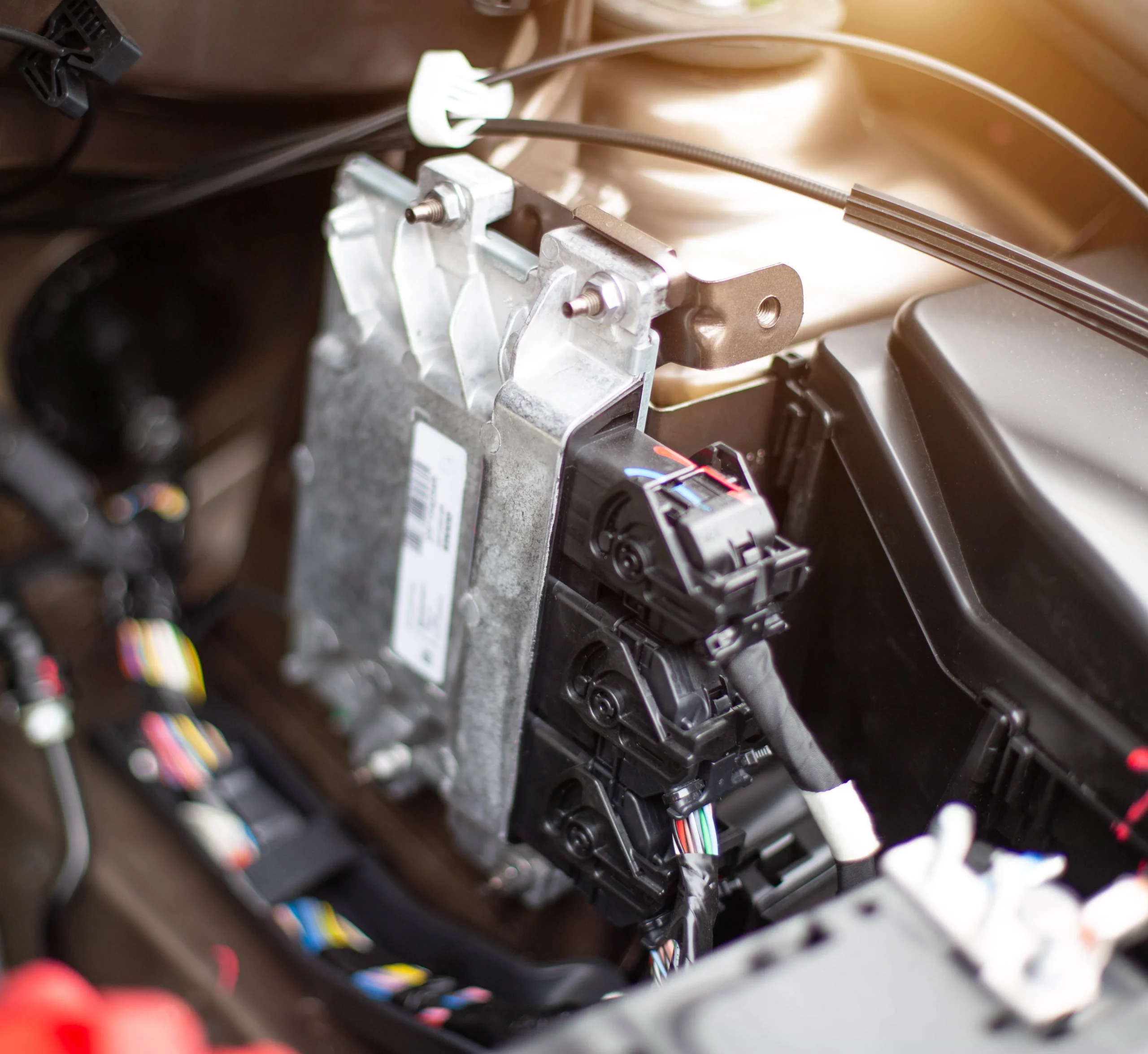
Few things are more frustrating than this: you turn the key, the engine cranks, but the car won't start. Most people then assume a battery problem, a fuel pump issue or a starter motor fault. In many modern vehicles, however, the real issue can be a faulty ECM (Engine Control Module).
Understanding the problem
For an engine to start, three things are required: fuel injection, spark (ignition) and compression. The ECM controls the first two. If the ECM fails, there is no fuel or no spark, and the engine will not start.
Types of “no start” problems
Case 1: No crank
The engine does not turn. This is usually not the ECM, but a battery or starter issue.
Case 2: Crank but no start (important)
The engine turns but does not start. This is where ECM diagnosis begins.
Step-by-step ECM check (no-start condition)
Step 1: Check battery and power
Check the battery voltage (12V+), the fuse condition and the ignition supply. Low voltage can mimic ECM failure.
Step 2: Scan for error codes
Use an OBD scanner and look for crank sensor errors and ECM communication issues. Keep in mind that no codes does not mean no problem.
Step 3: Check RPM while cranking
Observe RPM using the scanner. If RPM is 0, the crank sensor is the issue. If RPM is normal, continue the diagnosis.
Step 4: Check fuel injection
Use a test light or noid light. If there is no injector pulse, the ECM is not sending the signal.
Step 5: Check spark
Remove a spark plug and check for spark. If there is no spark, the problem is the ECM or the ignition system.
Step 6: Check the fuel pump signal
Check whether the pump is running and whether the ECM is triggering the relay. The ECM controls the fuel pump in many vehicles.
Step 7: Check ECM power and ground
Use a multimeter to check the voltage at the ECM pins and the grounding. A loose ground can mimic ECM failure.
Step 8: Check the immobilizer system
The symptom is an engine that cranks but won't start, and the cause is the ECM being blocked by the immobilizer. This is common in modern Indian cars.
Step 9: Check the wiring harness
Inspect for broken wires, loose connectors and corrosion. These are very common in Indian conditions.
Step 10: Confirm the ECM fault
Only after all these checks, confirm ECM failure if there is no injector signal, no ignition signal, the sensors are working properly and the power supply is OK.
Real workshop case study
A car came in with a crank but no start. The initial assumption was a fuel pump issue. Diagnosis showed no injector pulse, with the sensors and power both OK. The final cause was a faulty ECM driver. The ECM was repaired and the vehicle started.
Common mistakes
- Replacing the fuel pump blindly. Always test the signal first.
- Ignoring the crank sensor. The engine won't start without it.
- Skipping the wiring check. Wiring faults mimic ECM failure.
Indian conditions impact
Common causes of an ECM-related no-start are water entry during monsoon, rodent damage and poor aftermarket modifications.
Cost comparison
ECM replacement costs ₹20,000 – ₹1,00,000+, while ECM repair costs ₹3,000 – ₹15,000. Always diagnose before replacing.
Tools required
Basic tools are a multimeter and an OBD scanner. Advanced tools are an oscilloscope and an injector tester.
Quick diagnostic checklist
- Battery OK
- RPM signal present
- Injector pulse present
- Spark present
- Fuel pump working
If any of these is missing, trace it back to the ECM.
Frequently asked questions
Can the ECM cause a car not to start?
Yes, the ECM can cause a no-start if it fails to control fuel or spark.
How do I know if the ECM is bad?
Check the injector pulse, spark and sensor signals.
What is crank but no start?
It is a condition where the engine rotates but doesn't fire.
Can a bad sensor cause no start?
Yes, especially a faulty crankshaft sensor.
Should I replace the ECM immediately?
No, you should always diagnose first.
Summary
A car that cranks but won't start is not always a fuel or battery issue. It can be ECM-related. Follow a structured process, check inputs and outputs, and confirm before replacing anything. Master this process and you become a trusted diagnostic expert, and accurate diagnosis makes you a higher-value technician.
Watch our workshop videos on the Reynlab YouTube Channel, and explore our automotive training programs at www.reynlab.com/our-courses.
How to Understand Car Wiring Diagrams ?
How to Diagnose ECM Failure Step-by-Step (Complete Workshop Guide)
How to Repair Burnt Tracks on ECM PCB (Step-by-Step Professional Guide)