How ECM Controls Fuel Injection and Ignition Timing: A Practical Guide
· ECM Repair – Diagnostics & Maintenance
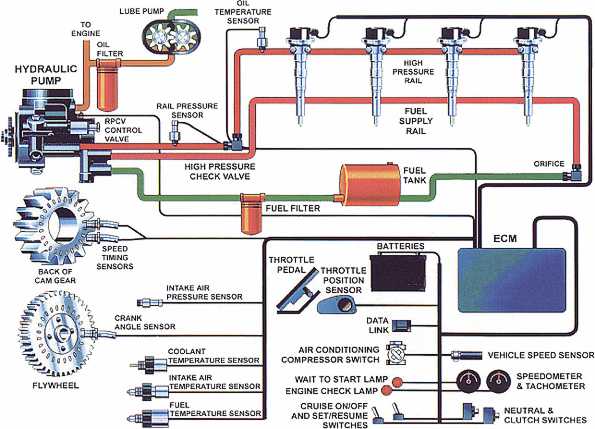
Two things decide how your engine performs: fuel injection and ignition timing. Both are controlled by the Engine Control Module (ECM). Whether you want better mileage, more power or accurate diagnostics, understanding this topic is non-negotiable.
The core concept
For an engine to run properly, it needs the right amount of fuel, at the right time, with the right spark timing. The ECM makes sure all three happen.
Part 1: How the ECM controls fuel injection
What is fuel injection?
Fuel injection is the process of delivering fuel into the engine cylinders. Too much fuel means waste and smoke, and too little means power loss.
How the ECM decides fuel quantity
The ECM calculates fuel based on multiple sensor inputs. The key sensors are:
- Mass Air Flow (MAF) sensor
- Manifold Absolute Pressure (MAP) sensor
- Throttle Position Sensor (TPS)
- Oxygen (O2) sensor
- Engine temperature sensor
Fuel injection process, step by step
- Air measurement. The ECM checks how much air is entering the engine. More air means more fuel is needed.
- Calculation. The ECM calculates the ideal air-fuel ratio (AFR).
- Injector control. The ECM signals the injectors when to open and how long to stay open. This is called injector pulse width.
For example, when you press the accelerator, the TPS detects the movement, the ECM calculates that more fuel is needed and the injectors spray more fuel, so the engine produces more power.
Air-fuel ratio (AFR), the key concept
The ideal AFR for petrol is 14.7:1 (air : fuel). The table shows why it matters.
| Condition | AFR | Result |
|---|---|---|
| Rich mixture | More fuel | More power, less efficiency |
| Lean mixture | Less fuel | Better mileage, less power |
Open loop vs closed loop fuel control
In open loop there is no O2 sensor feedback, and this mode is used during cold start. In closed loop the ECM uses the O2 sensor and adjusts fuel dynamically. Most driving happens in closed loop.
Part 2: How the ECM controls ignition timing
What is ignition timing?
Ignition timing is when the spark plug fires in the engine cycle. If it is too early, the engine knocks and can be damaged. If it is too late, power is lost.
How the ECM controls timing
The ECM uses data from the crankshaft position sensor, the camshaft position sensor and the knock sensor.
Ignition timing process
- Engine position detection. The crankshaft sensor tells the ECM the exact piston position.
- Load calculation. The ECM checks speed, load and temperature.
- Spark control. The ECM triggers the ignition coil so the spark occurs at the perfect moment.
At high speed the ECM advances timing for more efficiency. At heavy load it retards timing to prevent knocking.
Role of the knock sensor
The knock sensor detects abnormal combustion, and the ECM adjusts timing instantly to protect the engine.
Fuel injection and ignition timing together
These two systems are connected. More fuel requires a timing adjustment, so if the ECM increases fuel it may also adjust spark timing to ensure smooth combustion.
Practical diagnostic insight
When a car has poor mileage, misfire or power loss, check the injector signals and the ignition timing.
Tools for diagnosis
The basic tool is an OBD scanner. Advanced options are an oscilloscope and scan tools with live data. The live data parameters to check are fuel trim, injector pulse width and ignition advance.
Common problems related to ECM control
- Poor mileage: caused by wrong fuel injection.
- Engine knocking: caused by incorrect ignition timing.
- Black smoke: caused by a rich fuel mixture.
- Loss of power: caused by a lean mixture or delayed spark.
Impact of Indian driving conditions
Stop-and-go traffic, poor fuel quality and high temperature mean the ECM constantly adjusts fuel and timing.
Workshop case study
A car came in with low mileage. Diagnosis showed a faulty O2 sensor and an ECM running rich. The fix was to replace the sensor, and mileage improved.
Advanced concept: fuel maps and timing maps
The ECM uses pre-programmed maps, a fuel map and an ignition map. These are lookup tables used for decision-making.
Tuning and remapping insight
When tuning, the fuel maps are modified and ignition timing is adjusted, which increases power and performance. Improper tuning can damage the engine and reduce its life.
Common beginner mistakes
- Ignoring sensors. The ECM depends on accurate data.
- Blaming the ECM directly. Often the sensors are faulty.
- Not checking live data. This leads to wrong diagnosis.
Frequently asked questions
How does the ECM control fuel injection?
It calculates air intake and controls injector pulse width.
What is ignition timing?
It is the timing of spark plug firing in the engine cycle.
Can the ECM affect mileage?
Yes, significantly.
What causes wrong fuel injection?
Faulty sensors or ECM logic issues.
Can ignition timing be adjusted?
Yes, through ECM tuning.
Summary
The ECM's control over fuel injection and ignition timing is what makes modern engines efficient, powerful and reliable. It decides how much fuel goes in and when the spark happens. Mastering this gives you better diagnostic skills, a strong foundation for tuning and higher earning potential.
Watch our workshop videos on the Reynlab YouTube Channel. Explore our automotive training programs at www.reynlab.com/our-courses.
Must-Have Automotive Tools in India (Best Picks to Boost Profit)
How to Replace Faulty ICs in ECM (Step-by-Step Professional Guide)
How to Repair ECM in India: A Practical Guide for Technicians