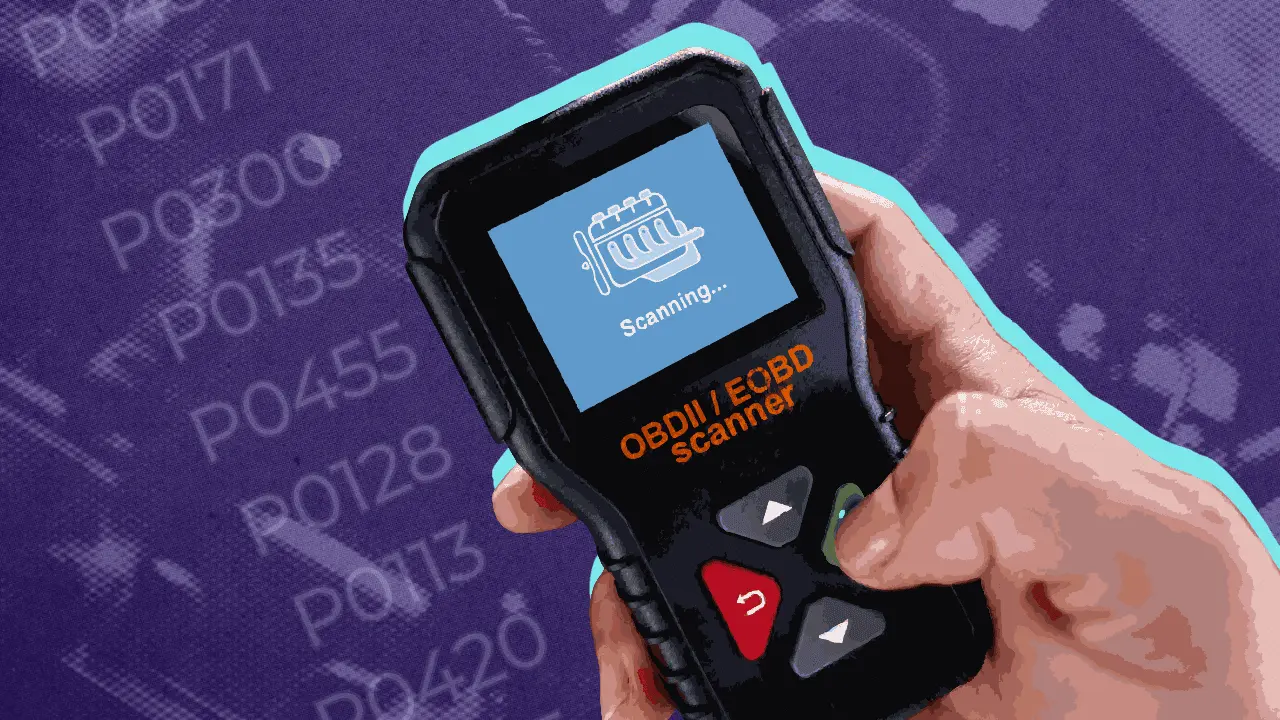
You connect a scanner and see something like:
👉 P0300
👉 P0171
👉 P0420
But what do these codes actually mean?
Most beginners:
- Read the code ❌
- Replace parts blindly ❌
👉 That’s the wrong approach.
🧠 What Are ECM Trouble Codes?
ECM trouble codes (also called DTCs – Diagnostic Trouble Codes) are signals generated when the ECM detects a problem.
👉 Think of them as:
Clues, not final answers
🔍 Structure of Trouble Codes
Each code follows a format:
👉 P0XXX
📊 Code Breakdown:
- P → Powertrain (engine-related)
- 0 → Standard code
- XXX → Specific fault
🧪 Example:
- P0301 → Cylinder 1 misfire
- P0171 → Lean fuel mixture
🔢 Types of ECM Trouble Codes
1️⃣ Generic Codes
👉 Standard across all vehicles
2️⃣ Manufacturer-Specific Codes
👉 Unique to brands
3️⃣ Pending Codes
👉 Problem detected but not confirmed
4️⃣ Permanent Codes
👉 Stored until issue is fixed
🔍 Most Common ECM Trouble Codes
🔴 P0300 – Random Misfire
🔍 Meaning:
Multiple cylinders misfiring
Causes:
- Spark plugs
- Injectors
- ECM control issue
🔴 P0171 – System Too Lean
🔍 Meaning:
Too much air, less fuel
Causes:
- Vacuum leak
- Faulty MAF sensor
🔴 P0172 – System Too Rich
🔍 Meaning:
Too much fuel
Causes:
- Injector issue
- ECM miscalculation
🔴 P0335 – Crankshaft Sensor Fault
🔍 Meaning:
No crank signal
Impact:
Engine may not start
🔴 P0420 – Catalyst Efficiency Low
🔍 Meaning:
Emission system issue
Causes:
- Catalytic converter
- O2 sensor
🔴 P0606 – ECM Processor Fault
🔍 Meaning:
Internal ECM failure
👉 Important code for ECM repair
🔴 P0620 – Charging System Malfunction
🔍 Meaning:
Alternator/voltage issue
👉 Can damage ECM
⚠️ Important Rule
👉 Never replace parts based on code alone
🔍 How to Interpret Trouble Codes Correctly
🟢 Step 1: Read the Code
👉 Identify type
🟡 Step 2: Understand the System
👉 Fuel, ignition, sensor
🔵 Step 3: Check Live Data
👉 Verify issue
🟠 Step 4: Inspect Components
👉 Sensors, wiring
🔴 Step 5: Confirm Root Cause
👉 Fix actual problem
🧠 ECM-Specific Trouble Codes
🚨 Key ECM Codes:
- P0600 → Communication error
- P0606 → Processor fault
- P0610 → Control module issue
👉 These often indicate ECM problems
🛠️ Real Workshop Case Study
🚘 Problem:
Check engine light ON
Code:
P0171
Initial Guess:
Fuel injector issue
Diagnosis:
- Vacuum leak found
Result:
👉 Fixed leak → problem solved
🧪 Advanced Case Study
🚘 Problem:
Car not starting
Code:
P0606
Diagnosis:
- ECM internal failure
Solution:
- ECM repaired
⚠️ Common Mistakes
❌ Mistake 1: Replacing parts blindly
👉 Code is not final answer
❌ Mistake 2: Ignoring pending codes
👉 Early warning signs
❌ Mistake 3: Not checking live data
👉 Leads to wrong diagnosis
🇮🇳 Indian Conditions Insight
Common Issues:
- Poor fuel quality
- Cheap sensors
- Improper repairs
👉 Codes often point to symptoms, not causes
💰 Cost Impact
Wrong Diagnosis:
₹5,000–₹50,000 wasted
Correct Diagnosis:
Minimal cost
👉 Knowledge saves money
🔧 Tools Required
🧰 Basic:
- OBD scanner
🔬 Advanced:
- Professional scan tool
- Oscilloscope
📊 Quick Code Interpretation Checklist
👉 Read code
👉 Check system
👉 Verify with data
👉 Inspect components
👉 Confirm cause
❓ Frequently Asked Questions (FAQs)
Q1: What is a trouble code?
A code generated by ECM when it detects a problem.
Q2: Can I fix car using code only?
No, further diagnosis is required.
Q3: What is P0300?
Random misfire code.
Q4: What is P0606?
ECM internal fault.
Q5: Should I clear codes immediately?
Only after diagnosis.
🏁 Conclusion
ECM trouble codes are powerful tools—but only if used correctly.
👉 Remember:
- Codes are clues
- Data confirms truth
- Diagnosis solves problems
Mastering this helps you:
👉 Diagnose faster
👉 Avoid mistakes
👉 Build expertise
📺 Watch a real battery testing demo here: Reynlab YouTube Channel
🌐 Explore our automotive training programs: www.reynlab.com/our-courses