Engine Misfire Due to ECM
· ECU Repair – Diagnostics & Maintenance
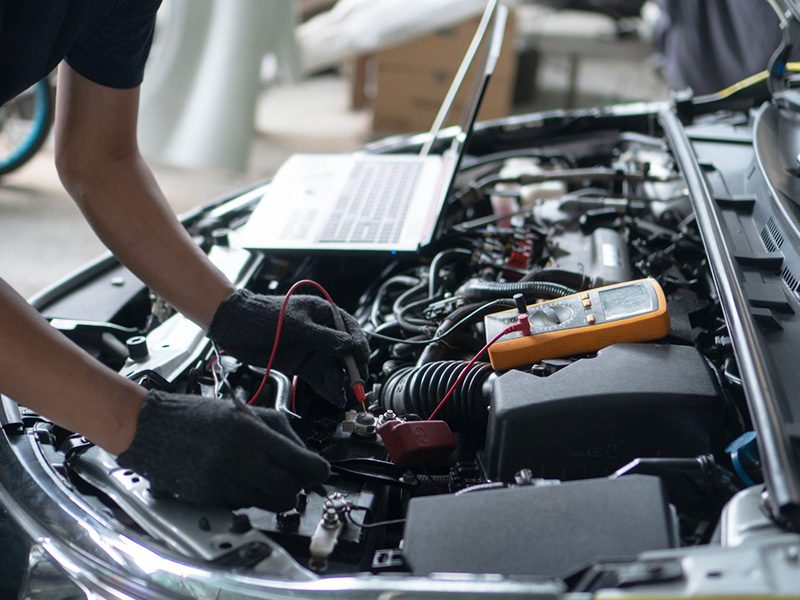
Engine misfire is one of the most common problems in cars. You may notice engine jerking, loss of power or a rough idle. Most people suspect the spark plugs or the fuel system first, but sometimes the real culprit is the ECM (Engine Control Module).
What is an engine misfire?
A misfire happens when one or more cylinders fail to burn fuel properly. The result is incomplete combustion, power loss and increased emissions.
One point matters here: the ECM does not directly cause a misfire. It causes one indirectly, through its control of fuel injection and ignition timing.
Common misfire symptoms
- Engine jerking
- Loss of power
- Rough idle
- Check engine light
- Poor mileage
Common misfire codes
On an OBD scanner, P0300 means a random misfire. P0301 to P0304 point to a misfire in a specific cylinder.
Main causes of misfire
Before you blame the ECM, check the usual suspects: spark plugs, ignition coils, fuel injectors and air intake issues. These are the most common causes.
How the ECM can cause a misfire
- Incorrect fuel injection: the ECM sends the wrong amount of fuel, giving a rich or lean mixture and a misfire.
- Wrong ignition timing: the spark timing is incorrect, which leaves combustion incomplete.
- Faulty injector control: the ECM driver circuit fails, so the injector does not work.
- Sensor misinterpretation: the ECM receives wrong data and makes incorrect decisions.
Step-by-step diagnosis
- Scan for codes. Identify whether the misfire is cylinder-specific or random.
- Check the spark system. Inspect the spark plugs and ignition coils, and replace any that are faulty.
- Check the fuel system. Test the injectors and the fuel pressure.
- Check the air intake. Look for vacuum leaks and a dirty air filter.
- Check sensor data. Look at the MAF and O2 sensor. Abnormal readings point to a sensor issue.
- Check the ECM outputs. Test the injector pulse and the ignition signal. A missing signal points to an ECM issue.
- Swap components. Swap a coil or an injector between cylinders. If the misfire moves, the component is faulty. If it stays, the problem is the ECM or the wiring.
- Confirm the ECM fault. Do this only after you have eliminated all other causes.
Workshop case studies
Cylinder 2 misfire
The initial guess was a spark plug issue. Diagnosis showed that the spark was fine but the injector was not firing. The root cause was an ECM injector driver failure. The ECM was repaired and the misfire was resolved.
Random misfire
Diagnosis found a faulty O2 sensor. The ECM was miscalculating fuel because of it, so the sensor was replaced and the misfire was fixed.
Common mistakes
- Blaming the ECM first. It is a rare cause.
- Not checking the basics. Always check spark and fuel first.
- Ignoring live data. The data shows what is really happening.
Indian conditions
Common causes here are poor fuel quality, cheap spare parts and dust affecting sensors. An ECM-related misfire is less common, but when it happens it is critical.
Cost comparison
Diagnosing correctly saves money.
- Spark plug fix: ₹500 – ₹2,000
- Injector repair: ₹2,000 – ₹6,000
- ECM repair: ₹3,000 – ₹15,000
Tools required
The basic tools are an OBD scanner and a multimeter. For advanced work you need an oscilloscope and an injector tester.
Quick diagnosis checklist
- Check spark
- Check fuel
- Check air
- Check sensors
- Check ECM outputs
Frequently asked questions
Can the ECM cause engine misfire?
Yes, but only indirectly, through its control of fuel injection and ignition timing.
What is the most common cause of misfire?
The most common causes are spark plug or ignition coil failure.
How do I fix a misfire?
Diagnose it step by step, starting with spark, fuel and air before you look at the ECM.
Is a misfire dangerous?
Yes, a misfire can damage the engine.
Should I replace the ECM for a misfire?
Only after you have confirmed that the ECM is at fault.
Summary
Misfire is a common issue, but diagnosing it correctly means understanding the role of the ECM. Check the basics first, use live data, and confirm the fault before replacing the ECM. Working this way makes you more accurate, more efficient and more valuable.
Watch our workshop videos on the Reynlab YouTube Channel. Explore our automotive training programs at www.reynlab.com/our-courses.