Most ECM failures don’t happen randomly.
👉 They are caused by electrical problems, especially voltage issues.
In India, due to:
- Poor wiring
- Low-quality batteries
- Improper jump-starting
👉 Voltage-related ECM damage is extremely common.
🧠 Why Voltage Matters for ECM
The ECM is designed to operate within a specific voltage range.
👉 Typically:
- 12V system (car battery)
- Safe range: 11V – 14.5V
⚠️ What Happens When Voltage Goes Wrong
When voltage is:
- Too high ⚡
- Too low 🔋
- Fluctuating 🔄
👉 ECM components get damaged.
🟩 ECM Damage from Voltage Issues
4
🔍 Types of Voltage Problems
1️⃣ Overvoltage (High Voltage)
⚡ What It Is:
Voltage exceeds safe limit (above ~15V)
🔍 Causes:
- Faulty alternator
- Jump-start mistakes
- Wrong battery
🚨 Damage:
- Burnt components
- Microcontroller failure
2️⃣ Undervoltage (Low Voltage)
🔋 What It Is:
Voltage drops below required level
🔍 Causes:
- Weak battery
- Loose connections
🚨 Effect:
- ECM malfunction
- No start
3️⃣ Voltage Fluctuations
🔄 What It Is:
Voltage constantly changes
🔍 Causes:
- Poor grounding
- Alternator issues
🚨 Effect:
- Intermittent faults
- Random engine behavior
🔥 How Voltage Damages ECM Components
⚙️ 1. Capacitors
- Burst due to overvoltage
- Lose capacity over time
⚙️ 2. Voltage Regulators
- Fail under unstable voltage
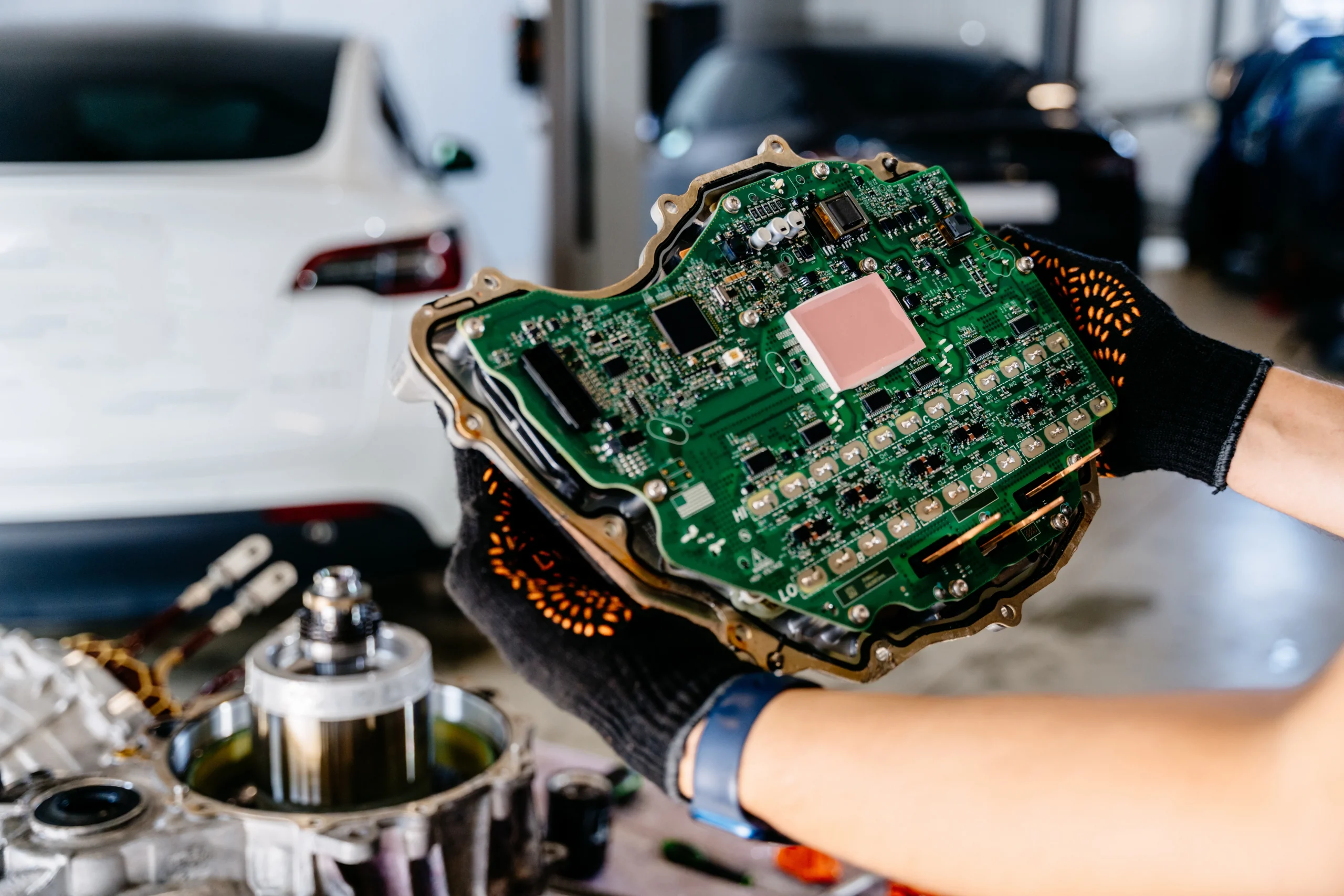
⚙️ 3. Microcontroller
- Sensitive to spikes
- Permanent damage possible
⚙️ 4. PCB Tracks
- Burn under high current
🚨 Symptoms of Voltage-Damaged ECM
🔴 1. Car Not Starting
🔴 2. Burning Smell
🔴 3. Multiple Error Codes
🔴 4. Random Engine Shutdown
🔴 5. No Communication with Scanner
🔍 Step-by-Step Diagnosis
🟢 Step 1: Check Battery Voltage
🔧 Use Multimeter:
- Engine OFF → ~12.5V
- Engine ON → ~13.5–14.5V
🟡 Step 2: Check Alternator Output
👉 Over 15V = problem
🔵 Step 3: Check Ground Connections
👉 Poor grounding causes fluctuations
🟠 Step 4: Inspect Wiring
👉 Look for:
- Loose wires
- Corrosion
⚫ Step 5: Check ECM Power Pins
👉 Ensure stable voltage
🛠️ Real Workshop Case Study
🚘 Problem:
ECM burnt repeatedly
Diagnosis:
- Alternator output = 17V
Solution:
- Replaced alternator
- Repaired ECM
Result:
👉 Problem solved permanently
⚠️ Common Mistakes
❌ Mistake 1: Replacing ECM without fixing voltage
👉 New ECM gets damaged again
❌ Mistake 2: Ignoring grounding
👉 Causes intermittent faults
❌ Mistake 3: Using wrong battery
👉 Voltage mismatch
🇮🇳 Indian Conditions Insight
Common Issues:
- Local wiring modifications
- Cheap alternators
- Improper jump-starting
🔧 How to Prevent Voltage Damage
🛡️ Prevention Tips
✅ 1. Check Battery Regularly
- Replace weak battery
✅ 2. Maintain Alternator
- Ensure proper output
✅ 3. Proper Jump Start
🔧 Correct Method:
- Connect positive first
- Connect ground properly
🟩 Jump Start Safety
4
❌ Avoid:
- Reverse polarity
- Sparks near battery
✅ 4. Ensure Proper Grounding
✅ 5. Avoid Cheap Electrical Modifications
💰 Cost Impact
Ignoring Voltage Issue:
- Repeated ECM failure
Repair Cost:
₹3,000 – ₹15,000
Replacement Cost:
₹20,000 – ₹1,00,000+
👉 Fix root cause first
❓ Frequently Asked Questions (FAQs)
Q1: Can voltage damage ECM?
Yes, it is one of the main causes.
Q2: What voltage is safe for ECM?
11V – 14.5V typically.
Q3: Can a bad alternator damage ECM?
Yes, due to overvoltage.
Q4: Can low battery affect ECM?
Yes, it causes malfunction.
Q5: How to prevent ECM damage?
Maintain battery, alternator, and wiring.
🏁 Conclusion
Voltage issues are one of the biggest hidden killers of ECMs.
👉 The key:
- Monitor voltage
- Fix electrical problems early
- Prevent damage instead of repairing
Mastering this helps you:
👉 Avoid repeated failures
👉 Save money
👉 Become a skilled technician
📺 Watch a real battery testing demo here: Reynlab YouTube Channel
🌐 Explore our automotive training programs: www.reynlab.com/our-courses