How EV Cars Work: Easy Guide for Technicians in India
· Electric Vehicles – Insights & Evolution
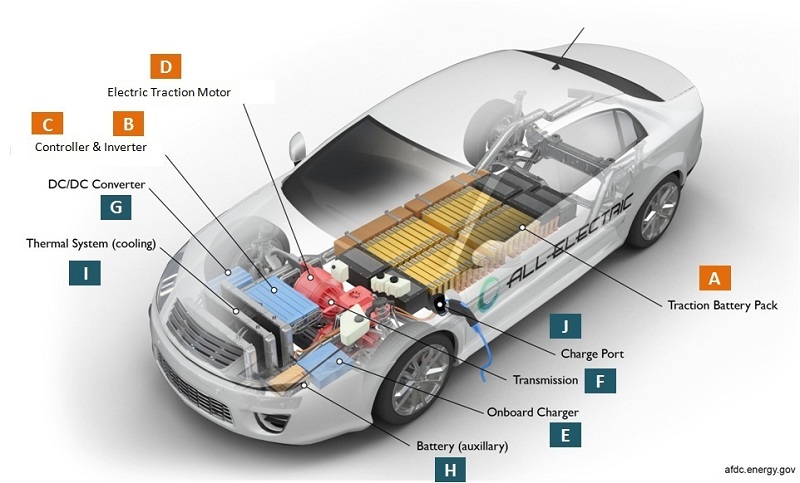
Electric vehicles (EVs): complete beginner guide for technicians
Electric vehicles are rapidly transforming the Indian automotive industry. With brands like Tata Motors, Mahindra Electric and MG Motor India launching EVs, the demand for EV technicians is growing fast. For automotive technicians and workshop owners, understanding how EVs work is no longer optional. It is essential.
What is an electric vehicle (EV)?
An EV is a vehicle powered by electricity instead of petrol or diesel. The key difference is that an ICE car uses fuel and an engine, while an EV uses a battery and an electric motor.
Main components of an EV
1. Battery pack (the heart of the EV)
The battery pack stores electrical energy. It uses lithium-ion batteries at high voltage (300V–800V), and it is the most expensive component in an EV.
2. Electric motor
The motor converts electrical energy into motion. Its advantages are instant torque and smooth acceleration.
3. Inverter
The inverter converts DC (battery) to AC (motor), which is essential for motor operation.
4. Charging system
Charging is either home charging or fast charging. EVs plug into electricity instead of visiting fuel stations.
5. Battery Management System (BMS)
The BMS monitors battery health and prevents overcharging. It is critical for safety.
How EV cars work, step by step
- The battery stores energy.
- The inverter converts power.
- The motor drives the wheels.
- Regenerative braking recharges the battery.
It is a simple system compared to petrol cars.
Regenerative braking explained
Regenerative braking converts braking energy into electricity, which improves efficiency and range.
EV vs petrol cars: quick comparison
| Feature | EV | Petrol Car |
|---|---|---|
| Engine | Electric motor | Internal combustion |
| Fuel | Electricity | Petrol/Diesel |
| Maintenance | Low | High |
| Noise | Silent | Noisy |
Maintenance differences for technicians
EV maintenance centres on battery diagnostics, software checks and electrical systems. Petrol maintenance covers engine repair, oil changes and the fuel system. EVs have fewer moving parts.
Safety precautions for EV technicians
- High voltage handling
- Use insulated tools
- Proper training required
Safety is critical in EV repairs.
For workshop owners: why EV skills matter
The EV market in India is growing, there is less competition at present and the services are high-value. Early adopters will dominate.
EV growth in India
Government incentives, rising fuel prices and increasing EV adoption are driving rapid expansion of the EV market.
Frequently asked questions
How do electric cars work?
They use battery power to drive an electric motor.
Are EVs easier to maintain?
Yes, they have fewer moving parts compared to petrol cars.
Can mechanics learn EV repair easily?
Yes, with proper training.
Summary
Electric vehicles are the future of the automotive industry in India. For technicians and workshop owners, learning EV basics today means staying relevant, increasing income potential and future-proofing your career.
Watch our workshop videos on the Reynlab YouTube Channel. Explore our automotive training programs at www.reynlab.com/our-courses.
More posts for automotive technicians
For course on Automotive Technician
Battery Maintenance Tips: Easy and Essential Guide for Technicians in India
Car Brake System Repair: Easy and Essential Guide in India
EV Charging Systems Explained: Easy Guide for Technicians in India