ECU Cloning Explained: Easy and Essential Guide for Technicians in India
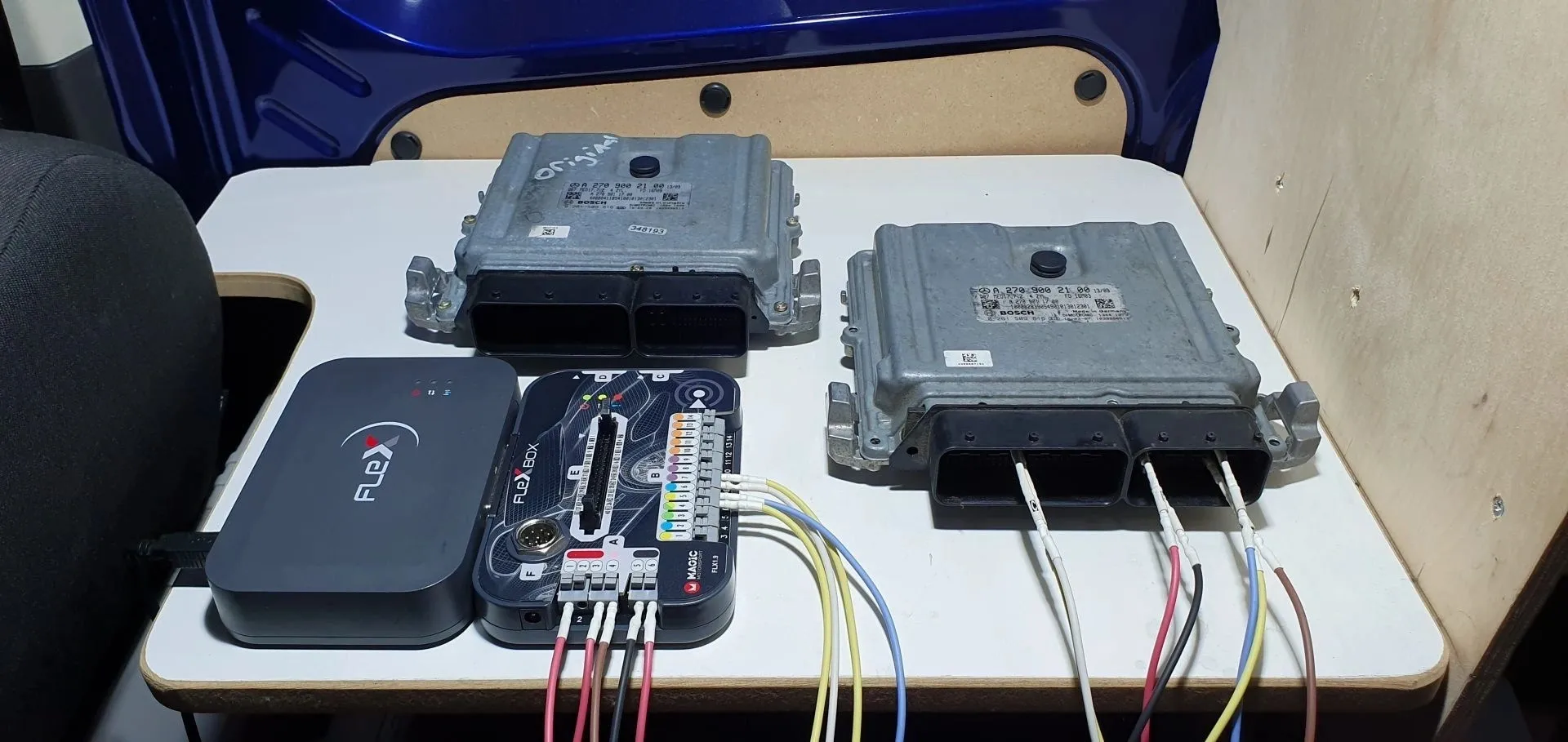
In the world of ECU tuning and vehicle diagnostics, one advanced technique that often comes up is ECU cloning. Many people confuse it with remapping or IMMO Off, but ECU cloning serves a completely different purpose.
It is widely used by workshops, ECU repair specialists and tuning professionals, especially when dealing with damaged ECUs or key-related issues. This guide explains how ECU cloning works, why it is done, the tools required, and its real-world use in India.
What is ECU cloning?
ECU cloning is the process of copying all data from one ECU (the original) to another ECU (the replacement). This includes the software (firmware), calibration data, immobilizer data and the VIN (Vehicle Identification Number). In simple terms, you make a new ECU behave exactly like the original ECU.
Why is ECU cloning done?
ECU cloning is not a performance upgrade. It is a problem-solving technique. These are the common scenarios faced by Indian workshops:
- ECU failure: the ECU is damaged due to electrical or software issues.
- Lost key or immobilizer issues: there is no access to the original key code.
- ECU replacement: the new ECU needs to match the vehicle data.
- Incorrect remapping: the ECU was corrupted by improper tuning.
- Backup ECU for racing: separate ECU setups for track use.
How ECU cloning works
Each ECU is uniquely coded with the VIN number, immobilizer data and security codes. Because of this, cloning requires specialized tools and expertise.
ECU cloning process (step by step)
- Read the original ECU, including the EEPROM data and flash data.
- Analyze the data. Identify the immobilizer and security sections and verify file integrity.
- Write the data to the new ECU. Transfer all data to the replacement ECU.
- Install the ECU in the vehicle. No additional coding is required and the vehicle starts normally.
This process makes the ECU replacement smooth.
Tools used for ECU cloning
The hardware tools are KTAG, KESS3 and FLEX. The software tools are WinOLS and Swiftec.
Challenges in ECU cloning
- Security locks
- Immobilizer integration
- Data complexity
- ECU variants
ECU cloning pros and cons
Advantages
- Cost saving
- Quick solution
- No key reprogramming needed
- Plug-and-play replacement
Disadvantages
- Requires expertise
- Tool cost
- Not always possible
ECU cloning vs IMMO Off
ECU cloning keeps the immobilizer active, while IMMO Off disables the immobilizer.
ECU cloning in India (real-world insight)
Cloning is commonly done on these brands:
- Maruti Suzuki
- Hyundai / Kia
- Tata / Mahindra
- Volkswagen / Skoda
ECU cloning cost in India
ECU cloning costs ₹5,000 – ₹25,000+.
Who should use ECU cloning?
Car owners, workshops and tuners can all use it.
ECU cloning training and learning
To learn cloning you need ECU architecture knowledge, software training and hands-on experience.
Important note
Cloning done wrongly can leave the vehicle not starting, damage the ECU or corrupt the data.
Final verdict
Choose ECU cloning when the ECU is damaged, the key data is lost or a replacement ECU is needed.
Summary
ECU cloning is a powerful and practical solution widely used in modern automotive repair and tuning. Diagnose the issue first, choose cloning over replacement, and always work with professionals.
Watch our workshop videos on the Reynlab YouTube Channel. Explore our automotive training programs: www.reynlab.com/our-courses
For blog on Ecu tuning & remap
For course on Ecu tuning & remap
TVA Removal Explained: Easy and Essential Valve Fix in India
WinOLS Software: Easy and Essential ECU Tuning Guide in India