How ECU Remapping Supercharges Cooling and Performance
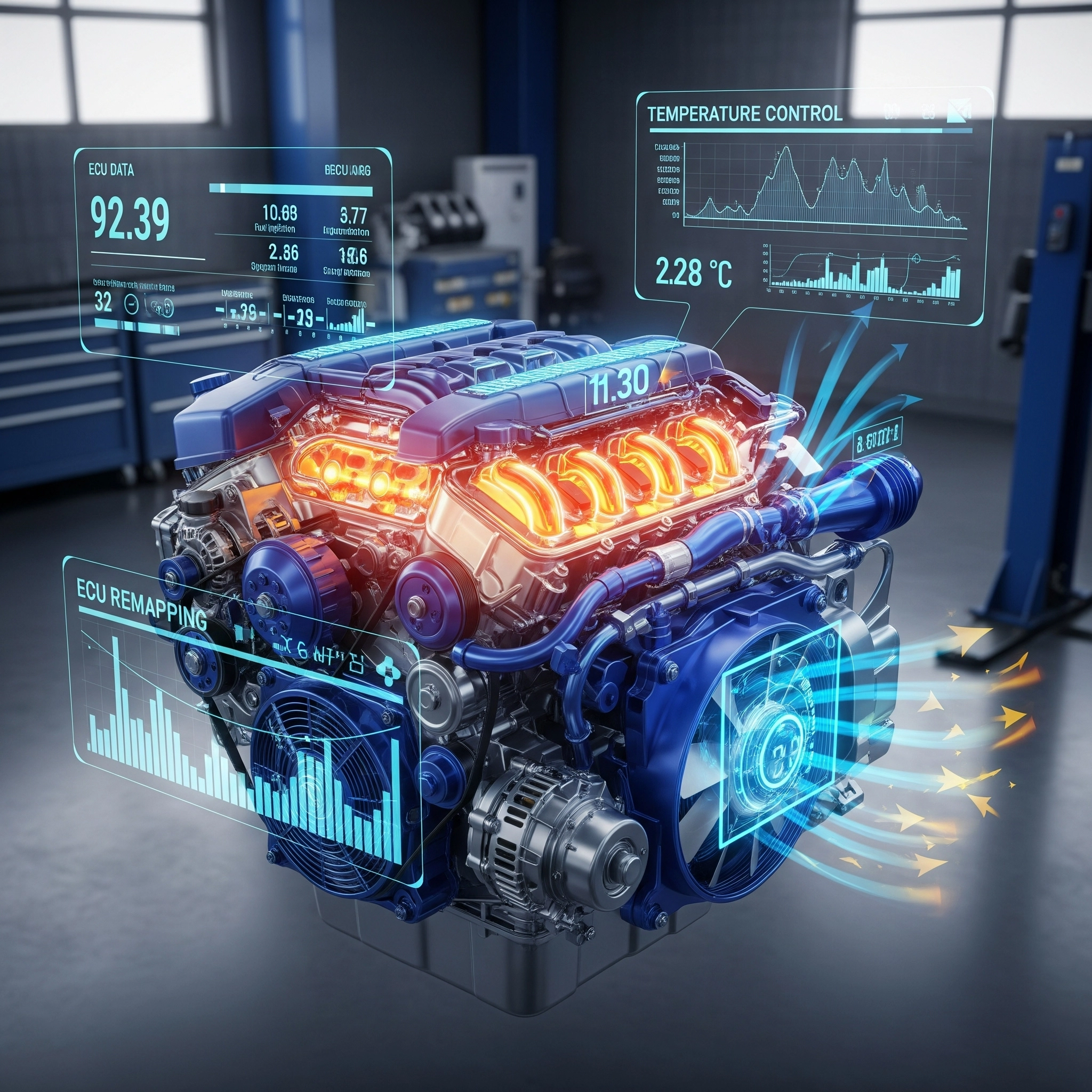
ECU remapping is usually discussed for its power and fuel efficiency gains, but it can also improve engine cooling. By optimising internal engine parameters, a remap helps manage engine temperatures, reduces the risk of overheating and extends engine life. Understanding how it affects cooling helps both performance enthusiasts and practical drivers who care about reliability and efficiency.
What Is ECU Remapping?
ECU remapping, also known as chip tuning, is the process of modifying the software inside a vehicle's Engine Control Unit (ECU). The ECU is the brain of the vehicle and controls critical parameters such as ignition timing, fuel injection, air-fuel ratio and boost pressure.
Manufacturers often program the ECU conservatively to meet emission standards, cope with different fuels and guarantee reliability across varying global conditions. These limits can be recalibrated to improve performance, efficiency and engine cooling.
Not just for sports cars
Remapping is no longer limited to high-performance vehicles. Even standard passenger cars can gain smoother acceleration, better throttle response, improved fuel economy and better thermal management. With today's tuning tools, the work is precise, customisable and widely accessible.
Why Engine Cooling Efficiency Matters
An efficient cooling system keeps the engine within its optimal operating range and prevents damage from excessive heat. Poor cooling can lead to warped cylinder heads, blown head gaskets, pre-ignition or detonation, and complete engine failure.
Good cooling also improves combustion quality, stabilises fuel delivery systems and makes the vehicle more reliable. This matters more now, because modern engines are designed to run hotter to meet emission requirements.
How ECU Remapping Enhances Engine Cooling
A remap changes the key parameters that affect how much heat the engine produces and how well it is removed.
1. Ignition timing adjustment
Optimised ignition timing gives more efficient combustion. That produces less waste heat and helps keep engine temperatures lower.
2. Air-fuel ratio calibration
A precise air-fuel mixture burns more cleanly and in a more controlled way, which lowers cylinder temperature and reduces thermal load.
3. Cooling fan activation points
A remap can change the temperature thresholds at which the electric cooling fan switches on, keeping engine temperature more consistent and safer.
4. Thermostat and water pump control
Advanced remapping may also adjust the behaviour of the water pump and thermostat to regulate coolant flow better.
Key Benefits for Cooling Efficiency
Improved heat management
The engine handles heat better across a variety of driving conditions, so overheating becomes less likely.
Better reliability and longevity
Cooler, more consistent operating temperatures reduce stress on internal components, which means longer service life and fewer breakdowns.
Better fuel efficiency
Stable temperatures allow more efficient combustion, often giving better mileage and cleaner emissions.
Consistent performance under load
When towing, climbing steep grades or driving in extreme heat, a properly remapped ECU keeps temperatures safe and stable.
Common ECU Remapping Myths
Myth: it is only for high-performance vehicles
Family sedans, commuter cars and work trucks can also see significant improvements in drivability and cooling.
Myth: it voids the vehicle warranty
When certified professionals work within safe tuning limits, a remap should not void the manufacturer's warranty, and many remaps are fully reversible.
Myth: it is too expensive or risky
Tuning technology is more affordable and reliable than before, and the long-term benefits in performance, efficiency and reliability outweigh the initial investment.
Risks of Poor ECU Remapping
An improper remap from an unqualified source can cause increased engine wear, check engine lights or fault codes, turbocharger damage, loss of fuel efficiency and emissions test failures. Always use certified, experienced professionals for ECU tuning, and avoid generic "off-the-shelf" maps.
Signs Your Vehicle May Benefit
- Sluggish acceleration or throttle response
- A noticeable drop in fuel efficiency
- Frequent overheating or temperature fluctuations
- Rough idle or hesitation
- Delayed or weak power delivery
If these problems persist despite regular maintenance, the ECU parameters may need optimisation.
The ECU Remapping Process
- Initial diagnostics: the vehicle is connected to specialised software to read the existing ECU map.
- Custom calibration: parameters such as fuel injection, timing and fan settings are optimised for your goals.
- Flashing the ECU: the updated map is written into the ECU's memory.
- Verification and testing: post-remap testing, on the road or on a dyno, confirms that all systems operate within safe limits.
The process typically takes 2 to 4 hours, depending on the vehicle and the level of customisation.
Choosing the Right Remapping Service
- Pick a provider with proven experience and strong customer reviews.
- Make sure the technicians use certified, high-quality tools and offer ECU backups.
- Ask for a tuning plan tailored to your vehicle's engine and usage.
- Avoid "universal maps" and bargain services that may not be safe for your engine.
Case Studies: Real-World Cooling Improvements
Track-focused performance coupe
The car kept overheating during races. It was remapped to adjust fan curves and AFR, which stabilised temperatures and gave smoother throttle response.
Mid-size family sedan
The car had poor mileage and rising temperatures. A remap addressed ignition timing and fan control, improving fuel economy and lowering average engine temperatures.
Long-haul delivery vehicle
The vehicle overheated under heavy loads. Recalibrating the cooling system thresholds solved it, and after the remap the vehicle ran cooler on long routes with better fuel efficiency.
Summary
ECU remapping offers more than horsepower. By optimising cooling, ignition and fuel delivery parameters, it improves thermal efficiency, reduces the risk of overheating and helps long-term engine reliability. For better drivability, longer engine life or peace of mind under heavy loads, it is a worthwhile investment when done professionally and responsibly.