How ECU Tuning Improves Vehicle Responsiveness?
Introduction
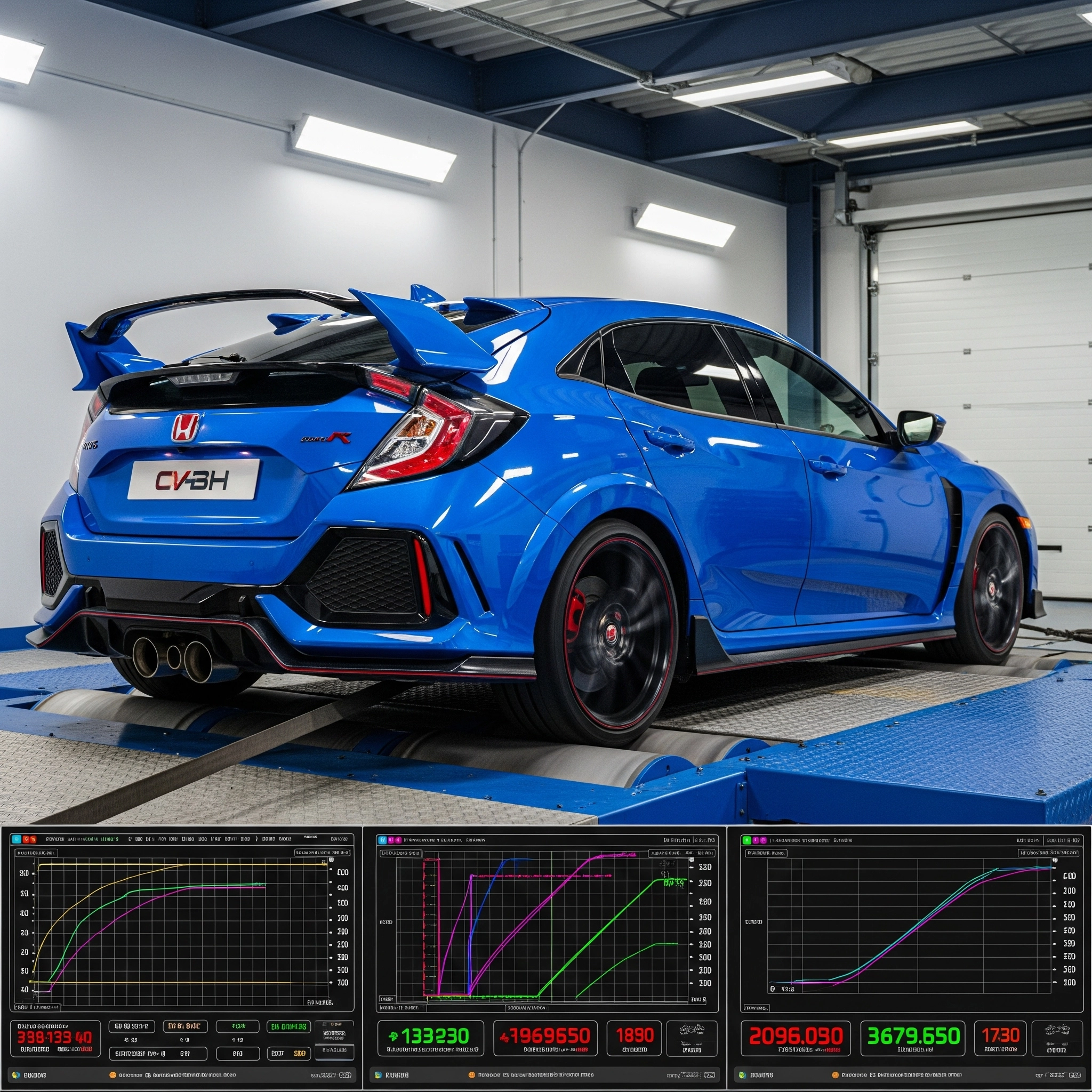
ECU tuning responsiveness is about how quickly and cleanly your vehicle reacts to what your right foot asks for. Sharper throttle control and quicker power delivery can often be had by changing the ECU calibration alone, with no hardware changes.
This post explains what responsiveness means, which ECU settings affect it, and what to check before you tune.
What is vehicle responsiveness?
Responsiveness is the combined result of several systems working together:
- Throttle response: how fast and how precisely the engine reacts to accelerator input.
- Turbo lag reduction: shortening the delay between throttle application and boost in turbocharged engines.
- Power delivery: how smooth and consistent the torque is across the rpm band.
- Transmission response: how quickly and sensibly the transmission adapts to the way you are driving.
- Overall drivability: what you feel when all of the above work in sync.
From the factory, ECUs are calibrated conservatively. The maker has to meet regulations and keep the engine reliable on poor fuel and in hot or cold climates. These settings are practical, but they often hold back responsiveness.
How ECU tuning improves responsiveness
1. Throttle mapping
Modern drive-by-wire systems turn pedal movement into an electronic signal that the ECU interprets. Stock throttle maps often soften the response so the car is easy to drive every day.
Tuning can remove "dead zones" in pedal travel, give you a linear or sportier throttle map, and set a different sensitivity for each drive mode. The result is a more direct connection between your foot and the engine.
2. Ignition timing
Ignition timing decides when the spark plug fires relative to piston position. Factory timing is cautious to keep the engine from knocking.
A tune can advance timing within safe margins, which improves mid-range torque and sharpens throttle response and combustion efficiency. Modern ECUs use knock sensors, so timing can be adjusted in real time and kept safe.
3. Fuel delivery
The fuel-air mixture matters most during quick throttle changes. A performance tune adjusts air-fuel ratios for good combustion, improves transient fueling so the engine reacts faster, and improves torque delivery through the rev range. Properly tuned fueling reduces hesitation, especially in hard acceleration and load transitions.
4. Turbocharger and supercharger management
Forced induction benefits a lot from tuning, because the ECU controls how boost is built and delivered. You can get earlier and faster boost build-up, less turbo lag, better boost control over the rpm range, and dynamic overboost for short bursts of extra power. A lag-prone engine then reacts much more precisely to the throttle.
5. Rev limiter and redline
Rev limiters are usually conservative from the factory. Raised safely, they give access to a higher redline, within mechanical limits. Tuning can also make the limiter progressive instead of abrupt and smooth out power at high rpm. This helps most in spirited driving and on the track, where every rpm counts.
6. Torque management
OEM torque management cuts engine output in certain conditions to protect the drivetrain or keep the car stable. These restrictions can dull responsiveness.
Tuning can recalibrate gear-specific torque limits, throttle intervention during shifts, and traction and stability control thresholds. Driver inputs then reach the road more directly, while safety is kept where it is needed.
Real-world benefits
Daily driving
- Safer overtaking: instant power reduces hesitation.
- Merging confidence: a responsive throttle helps you time gaps.
- Fuel efficiency: better low-end torque means less frequent downshifting.
- Engagement: the car feels more connected to you.
Performance driving
- Corner exits: immediate power application helps acceleration.
- Driver control: a precise throttle lets you adjust balance mid-corner.
- Consistency: a good tune holds performance across varying temperatures and loads.
Before you tune
1. Reliability and engine life
Not all tunes are equal. Aggressive, poorly developed tunes can shorten engine life or stress components. Use a reputable tuner, make sure the tune suits your vehicle's hardware, and monitor temperatures and boost pressure after the tune.
2. Warranty
Factory warranties typically do not cover ECU modifications. You can use a reversible tuning option, wait until the warranty ends, or look for a dealer-approved tuning service if one exists.
3. Fuel requirements
Many tunes need higher-octane fuel to support advanced timing and boost. Check that you can get it regularly and include the long-term cost.
4. Emissions compliance
Some ECU modifications may violate local emissions rules. Confirm legality before tuning, especially if your vehicle needs annual inspection.
ECU tuning options
Off-the-shelf (OTS) tunes
These are made for specific vehicles and modifications. They cost less and are plug-and-play, and they are thoroughly tested, though less personalised.
Custom dyno tuning
The tune is built around your car's exact configuration, which gives the best performance and reliability. It needs professional tuning equipment and expertise.
Flash versus piggyback
Flash tuning alters the factory ECU directly. Piggyback units modify sensor signals without rewriting the ECU code. Choose based on vehicle compatibility, budget and performance goals.
Summary
ECU tuning is one of the most efficient upgrades for responsiveness. Faster throttle reaction, smoother power delivery and better turbo behaviour can make a car feel sharper and more enjoyable to drive.
Balance performance with safety and compliance. Work with experienced tuners, understand the implications for fuel, warranty and legality, and tune with a clear purpose.