Powerful Techniques to Balance Vehicle Stability with ECU Tuning
Introduction
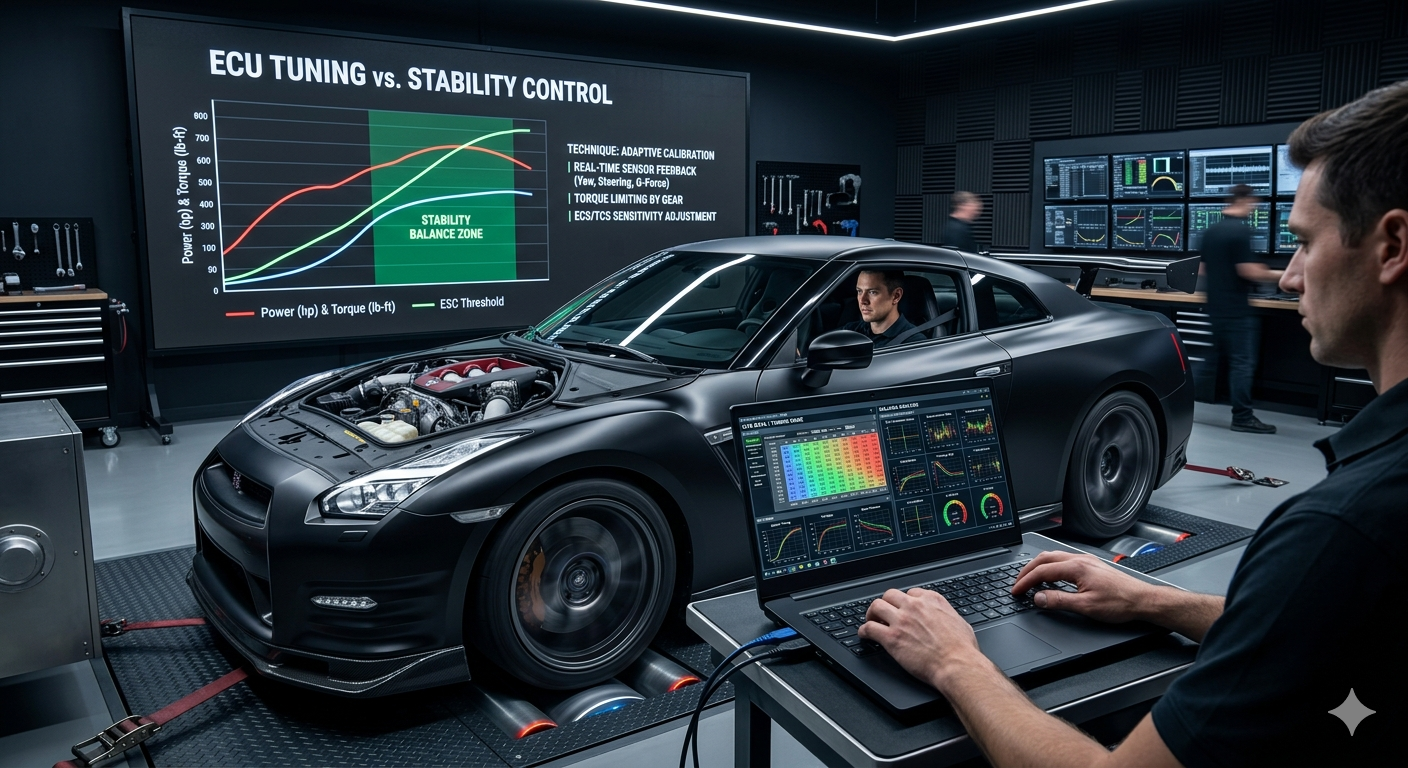
Electronic control units (ECUs) are the digital brains of modern vehicles. For performance enthusiasts in India, ECU tuning is an attractive way to unlock hidden potential without extensive mechanical modifications. The practice has risks, though, particularly for the vehicle stability systems that protect you on the road.
This guide explores the relationship between ECU tuning and vehicle stability systems for Indian automotive engineering students and car enthusiasts. It looks at how changes to your vehicle's electronic brain can affect safety features that might one day save your life on India's diverse and challenging roads.
Understanding ECU fundamentals
What exactly is an ECU?
The Electronic Control Unit (ECU) is your vehicle's central computer. It processes data from numerous sensors throughout the car and makes real-time adjustments to various systems. Modern vehicles typically contain several specialised ECUs working together to control everything from engine performance to stability systems.
In Indian market vehicles, from affordable hatchbacks like the Tata Tiago to premium sedans like the Honda City, ECUs manage parameters including:
- Fuel injection timing and quantity
- Ignition timing
- Turbocharger boost pressure (in turbocharged vehicles)
- Throttle response
- Shift points (in automatic transmissions)
- Anti-lock braking system (ABS) operation
- Traction control engagement
- Electronic stability control interventions
The rise of ECU tuning in India
ECU tuning has become popular among India's younger car enthusiasts mainly because of the performance gains possible without expensive hardware upgrades. This matters in India, where import duties and taxes make aftermarket parts costly.
For many Indian engineering students and young professionals, ECU tuning is an accessible entry point into vehicle modification. Cities like Delhi, Mumbai, Bangalore and Chennai now host numerous tuning shops catering to this growing demand.
ECU tuning explained
What is ECU tuning or remapping?
ECU tuning, also called remapping or flashing, means modifying the software parameters that govern how your vehicle's computer makes decisions. Factory ECU settings are typically conservative, prioritising reliability, emissions compliance and fuel economy over maximum performance.
Tuning adjusts these parameters to extract additional performance, typically in four areas:
- Power and torque increases by optimising fuel and ignition maps.
- Throttle response, giving a more immediate engine response to pedal inputs.
- Removing limitations, such as top speed governors or rev limiters.
- Turbo boost adjustment, increasing boost pressure in turbocharged engines.
For Indian market vehicles like the Hyundai i20 N Line, Skoda Octavia RS or Mahindra XUV700, quality tuning can yield power increases of 10-25% depending on the engine design and its original state of tune.
Common ECU tuning methods
Chip tuning
Traditional chip tuning involves physically replacing or modifying the ECU's microchip. This method was common in older vehicles but is increasingly rare in modern cars with sophisticated, integrated ECUs.
OBD flashing
This method uses the vehicle's on-board diagnostics (OBD) port to rewrite the ECU software. It is the most common approach in India today, offering convenience and reversibility. Popular devices like the EvoTech PowerControl or Racechip connect through the OBD-II port and are relatively straightforward to install.
Bench flashing
This more invasive approach requires removing the ECU from the vehicle and reprogramming it on a specialised "bench". It takes more time, but it allows deeper modifications and is often necessary for heavily modified vehicles.
Piggyback systems
These systems intercept and modify sensor signals before they reach the ECU, effectively "tricking" it into adjusting performance parameters. They are popular in India because they are non-invasive, and devices like the Unichip offer modular tuning without permanent ECU modifications.
Vehicle stability systems overview
Safety systems in modern vehicles
Modern vehicles have several electronic stability systems that work together to maintain control in challenging driving conditions.
Anti-lock Braking System (ABS)
ABS prevents wheel lockup during heavy braking, maintaining steering control and reducing stopping distances on slippery surfaces. This is particularly valuable during India's monsoon season, when roads become treacherously slick.
Electronic Stability Control (ESC/ESP)
ESP detects and reduces loss of traction, helping prevent skids and keeping the vehicle going in its intended direction. It is especially important on India's varied road conditions, from smooth highways to unpredictable rural roads.
Traction Control System (TCS)
TCS prevents wheel spin during acceleration by reducing engine power or applying brake pressure to specific wheels. This improves stability on low-friction surfaces like the wet roads common during Indian monsoons.
Electronic Brake-force Distribution (EBD)
EBD optimises brake pressure between front and rear wheels based on load conditions, improving stability during emergency stopping.
Brake Assist System (BAS)
BAS detects emergency braking situations and automatically increases braking pressure to reduce stopping distances. This can matter a great deal on India's congested urban roads, where sudden stops are common.
How these systems communicate with the ECU
These stability systems do not operate in isolation. They constantly communicate with the engine ECU and each other through the vehicle's Controller Area Network (CAN), which ensures coordinated responses to changing driving conditions.
For example, when ESP detects potential understeer, it may ask the engine ECU to reduce power while applying brake pressure to specific wheels. All of this happens within milliseconds, often without the driver noticing.
How ECU tuning affects vehicle stability systems
The interconnected relationship
When an ECU is tuned for more performance, several changes can affect how the stability systems work:
- Increased torque and power. Tuning typically increases engine torque, especially in the mid-range. This improves acceleration, but the stability systems must work harder to manage the extra power, particularly in front-wheel-drive vehicles common in India like the Honda City or Hyundai Verna.
- Modified throttle maps. More aggressive throttle mapping (the relationship between pedal position and throttle opening) can make power delivery more sudden, potentially challenging traction control on wet or uneven road surfaces.
- Altered sensor parameters. Some tunes change how the ECU interprets sensor data, which can affect how quickly stability systems detect and respond to traction loss.
Specific impacts on key safety systems
Impact on ABS
ECU tuning typically has minimal direct impact on ABS, as these systems operate relatively independently. However, higher performance can mean higher speeds and more demanding braking, potentially pushing the ABS closer to its operational limits.
Impact on traction control
Traction control systems are significantly affected by ECU tuning, particularly in high-torque situations. When engine power increases substantially, the stock traction control may become either:
- Overly intrusive: constantly engaging and reducing driver enjoyment
- Insufficient: unable to manage the increased power properly in low-traction situations
Impact on electronic stability control
ESC systems face similar challenges when performance increases. The stock calibration may not be optimised for the new power delivery, which can reduce its effectiveness or cause overly aggressive interventions.
Case studies: real-world examples from Indian roads
Case study 1: Turbocharged hatchbacks
Popular turbocharged hatchbacks in India like the Volkswagen Polo GT TSI respond dramatically to ECU tuning. A standard remap can increase output from approximately 110 PS to 130-140 PS. In dry conditions this typically presents few issues for the stability systems.
During the monsoon, however, when roads are slick with water, the extra torque can overwhelm the front wheels during cornering or when driving over standing water. In these situations owners report more frequent and sometimes unpredictable traction control interventions.
Case study 2: Premium sedans with performance tunes
Models like the Skoda Octavia and Honda Civic with aggressive ECU tunes often need complementary modifications to the traction and stability systems. Without these adjustments, drivers report that:
- Traction control cuts power too aggressively during spirited driving
- ESP interventions feel unnatural or occur at inappropriate times
- The vehicle's handling becomes less predictable at the limit
Case study 3: SUVs with increased torque
Popular Indian market SUVs like the Mahindra Thar and Tata Harrier see substantial torque increases from ECU tuning. This helps off-road performance, but the additional torque can affect on-road stability, particularly in cornering, where weight transfer is already significant.
Professional tuning shops in Bangalore and Delhi now offer stability system recalibration alongside ECU tuning for these vehicles to maintain safety margins.
Best practices for safe ECU tuning
Maintaining stability system functionality
If you are considering ECU tuning, these guidelines help keep the vehicle safe to drive:
- Choose reputable tuners. Select established tuning services with specific experience of your vehicle model. In India, look for shops with verifiable testimonials and a history of successful tunes on similar vehicles.
- Consider comprehensive tuning packages. Quality tuners do not focus only on maximum power. They also recalibrate stability systems to work with the new performance parameters, which might include adjusting traction control thresholds, recalibrating ESP intervention points and fine-tuning ABS operation for the changed vehicle dynamics.
- Stage your modifications. Rather than pushing for maximum performance immediately, work in stages. Stage 1 is a conservative ECU tune with minimal stability system impact. Stage 2 adds moderate performance increases with stability system adjustments. Stage 3 is maximum performance, which needs comprehensive stability system recalibration.
- Test under various conditions. After tuning, gradually test your vehicle before pushing its limits: on dry roads with good visibility, in wet conditions with cautious driving, with different loads (passengers, cargo) and on the various road surfaces common in India (smooth highways, rough rural roads).
Legal and warranty considerations in India
Indian vehicle owners should be aware of several points before ECU tuning:
- Warranty implications. Most manufacturer warranties in India become void with ECU modifications. Some premium brands like Mercedes-Benz and BMW actively scan for tuning during service visits.
- Insurance concerns. Many Indian insurance policies require disclosure of performance modifications. Undisclosed modifications can lead to claim denials after an accident.
- Emissions compliance. With India's increasingly strict BS6 emissions standards, improper tuning could make your vehicle non-compliant. Quality tunes keep emissions control working while improving performance.
- Regional Transport Office (RTO) regulations. Some states have specific regulations on engine modifications. Always check local RTO guidelines before making significant performance changes.
Advanced tuning considerations for engineering students
Understanding ECU communication protocols
For automotive engineering students, understanding the communication protocols between the ECU and the stability systems is valuable:
- CAN bus architecture: modern vehicles use Controller Area Network (CAN) systems for inter-ECU communication.
- OBD-II protocols: these include ISO 9141-2, ISO 14230, SAE J1850 and ISO 15765 (CAN).
- FlexRay: a higher-bandwidth protocol used in advanced stability systems.
Diagnostic tools for analysis
Several diagnostic tools can help engineering students analyse how the ECU and stability systems interact:
- VCDS (VAG-COM Diagnostic System): popular for Volkswagen Group vehicles in India.
- Launch X431: a widely available diagnostic tool with good coverage of Indian market vehicles.
- ELM327-based OBD scanners: affordable entry-level options for basic monitoring.
Future trends in ECU tuning and stability systems
AI-driven adaptive tuning
The next step in ECU tuning is artificial intelligence that adapts vehicle performance and stability parameters in real time based on driver behaviour patterns, road conditions, weather factors and traffic situations. Several Indian tech startups are developing these adaptive systems, particularly for the unique driving conditions across the subcontinent.
Integration with Advanced Driver Assistance Systems (ADAS)
As ADAS features become more common in Indian market vehicles, ECU tuning will need to take these systems into account: lane keeping assistance, adaptive cruise control, emergency braking systems and semi-autonomous driving features. Future tuning solutions will likely offer comprehensive packages that optimise performance while maintaining or improving these safety systems.
Summary
ECU tuning offers exciting possibilities for vehicle performance, but it needs careful thought about how the changes affect safety systems. For Indian automotive students and enthusiasts, understanding this relationship is key to making informed decisions about modifications.
By choosing reputable tuners, taking a methodical approach and staying aware of how stability systems interact with performance gains, you can enjoy improved performance without compromising safety. Whether you are an engineering student learning about automotive systems or an enthusiast seeking responsible upgrades, the balance between performance and safety should remain the priority.
Frequently asked questions
Will ECU tuning void my car warranty in India?
Yes, most manufacturer warranties in India are voided by ECU modifications, though some aftermarket tuners offer their own limited warranties.
Can I revert to the stock ECU tune if needed?
Yes, reputable tuning services in India typically save your vehicle's original programming, allowing restoration to factory settings.
How much power increase can I expect from ECU tuning?
For Indian market vehicles, typical gains range from 10-25% depending on the engine design, with turbocharged engines generally seeing the largest improvements.
Is ECU tuning legal in India?
ECU tuning itself is not explicitly illegal, but modifications that affect emissions or significantly alter vehicle characteristics may violate RTO regulations in some states.
Should I inform my insurance company about ECU tuning?
Yes, failing to disclose significant performance modifications could invalidate your insurance coverage in the event of an accident or claim.
Watch our workshop videos on the Reynlab YouTube Channel. You can also explore our automotive training programs at www.reynlab.com/our-courses.
For blog on Ecu tuning & remap
For course on Ecu tuning & remap
Expert Strategies for Better Engine Cooling with ECU Remapping
ECU Tuning for Improved Towing and Hauling Capabilities
OBD-II vs Direct ECU Access: What Indian Tuners Need to Know (2025 Guide)