The Role of ECU Tuning in Motorsport and Racing
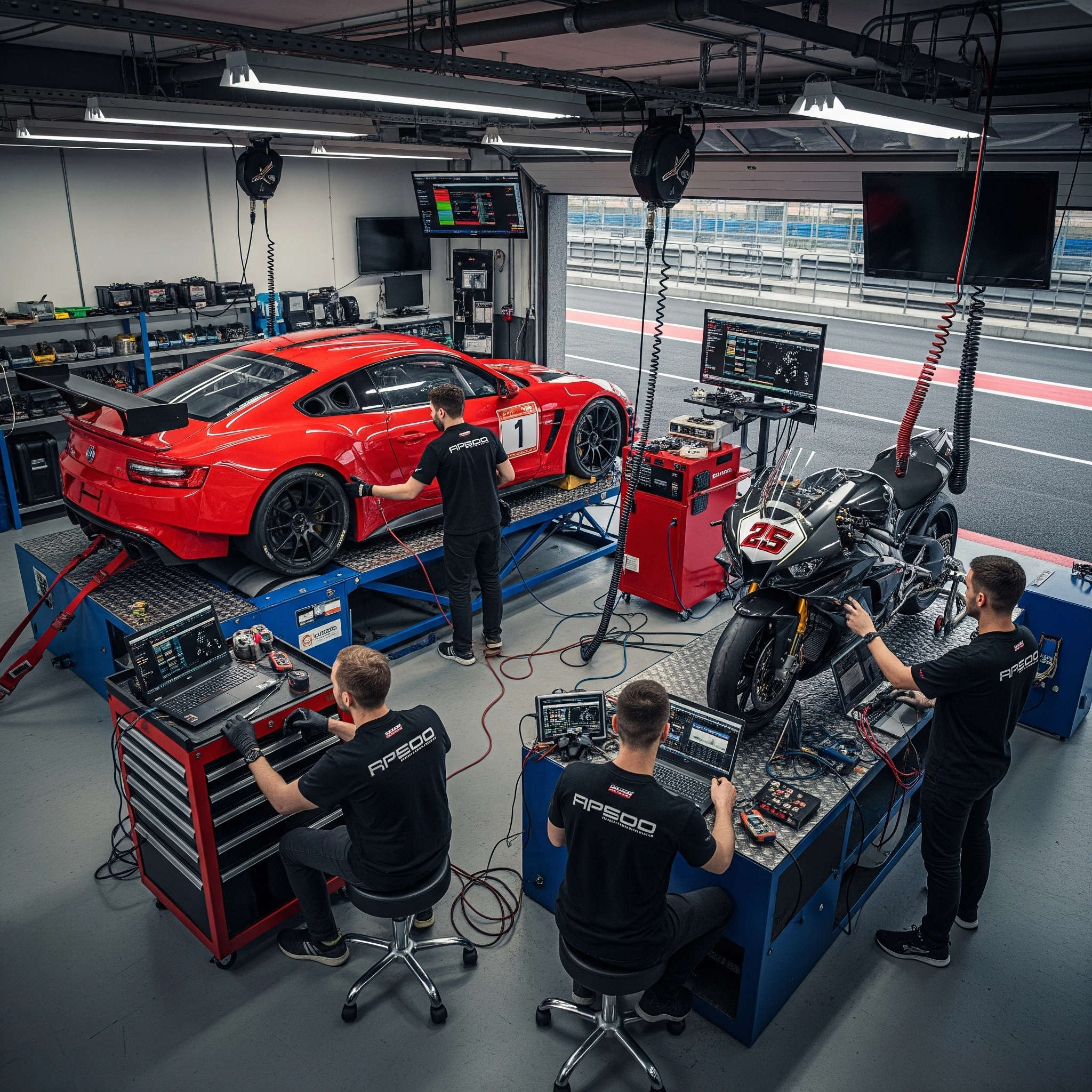
Motorsport has always been at the forefront of automotive innovation, pushing the limits of performance and technology. In modern racing, a competitive edge comes from optimizing every part of the car, including the engine. Electronic Control Unit (ECU) tuning has become a key tool for this, letting teams extract the maximum from their engines and gain an advantage on the track.
This post looks at the role of ECU tuning in motorsport and racing, and how this engine management technique improves performance, improves drivability and contributes to results on race day.
The evolution of engine management in motorsport
The history of motorsport is closely tied to advances in engine management. In the early days of racing, mechanical carburetors and ignition systems controlled the engine. As technology moved on, electronic engine management replaced carburetors and brought precise control and real-time adjustment. The introduction of ECUs changed motorsport, because engineers and tuners could now optimize performance and drivability with far greater precision.
Understanding ECU tuning in motorsport
ECU tuning in motorsport means modifying the engine control software to reach specific performance goals. Tuners and engineers adjust parameters such as fuel injection timing, air-to-fuel ratios, ignition timing and turbocharger boost pressure. The adjustments are tailored to the racing team, the track conditions and the driver's preferences.
Customization for different racing disciplines
ECU tuning is versatile enough to suit different racing disciplines. Whether the category is Formula 1, NASCAR, rally or endurance racing, teams can shape engine performance to its particular demands. Rally cars, for example, may need different power delivery to handle rough terrain, while Formula 1 cars prioritize high-speed performance and responsiveness.
Maximizing engine power output
Engine power directly influences a car's lap times and competitive standing. ECU tuning plays a central role in maximizing it by precisely adjusting fuel delivery, ignition timing and other engine parameters. Extracting every ounce of power from the engine is necessary to gain a competitive edge.
Enhancing torque delivery
Torque delivery is just as important, because it affects acceleration and drivability. ECU tuning optimizes torque across the engine's RPM range, giving a consistent and predictable powerband. This helps drivers get the most from their cars, particularly on corner exits and when overtaking.
Improved throttle response
In high-speed racing, split-second decisions can make all the difference. ECU tuning can significantly improve throttle response by reducing the lag between pressing the accelerator pedal and the engine reacting. This lets drivers make quick adjustments and take full advantage of opportunities on the track.
Managing fuel efficiency and race strategy
Racing is often associated with maximum power, but fuel efficiency also plays a part in success. ECU tuning lets teams balance performance against fuel use, optimizing fuel delivery to hold competitive lap times while conserving fuel. This matters most in endurance racing, where long races call for strategic fuel stops and efficient pit strategies.
Advanced data logging and analysis
In modern motorsport, ECU tuning goes hand in hand with data logging and analysis. Teams use sophisticated telemetry systems to monitor engine parameters such as temperatures, pressures and other performance metrics. This real-time data lets engineers and tuners make precise adjustments to the ECU during practice sessions and races, fine-tuning the engine for optimal performance.
Tailoring ECU maps to track conditions
Every track presents its own challenges, such as tight corners, long straights or changing weather. ECU tuning lets teams create custom engine maps for specific track characteristics and ambient conditions. By matching the map to the track, drivers can use the car's potential fully and adapt as conditions change during the race.
Custom ECU solutions for motorsport
Some teams use custom ECU solutions designed explicitly for racing. These specialized ECUs give even more flexibility and control over engine parameters, allowing very specific tuning to match the team's needs and the car's setup.
Compliance with racing regulations
ECU tuning offers significant performance advantages, but teams must still follow racing regulations and technical specifications. Series such as Formula 1 and NASCAR impose strict rules on engine modifications and ECU tuning. Teams have to balance pushing the limits of performance against staying within the rules, to avoid penalties or disqualification.
Collaboration between engineers, tuners and drivers
ECU tuning in motorsport is a team effort. Engineers analyze data, develop strategies and refine engine maps, while tuners implement the changes based on the engineers' recommendations and the driver's feedback. The driver's real-time comments on performance and drivability help the team set up the ECU to suit the driver's racing style.
Summary
In motorsport every fraction of a second counts, and ECU tuning has become a standard tool for teams that want to optimize engine performance, improve drivability and gain an advantage on track. By customizing engine parameters, maximizing power and fine-tuning torque delivery, teams bring out the full potential of their race cars. Data logging and analysis allow real-time adjustments during practice and races, so the engine keeps being optimized.
Racing regulations and the need for engine reliability, however, call for a careful and responsible approach. Teams that put engine safety and compliance first can use ECU tuning to succeed on race day and earn their place in the winner's circle.