The Mathematical Concept That Helped Man Land on Moon!
· Differential Calculus · Engineering Fundamentals · Hero – Key Skills for Automotive Professionals · Integral Calculus – Engineering Applications · Mathematics – Applied Concepts in Auto Tech
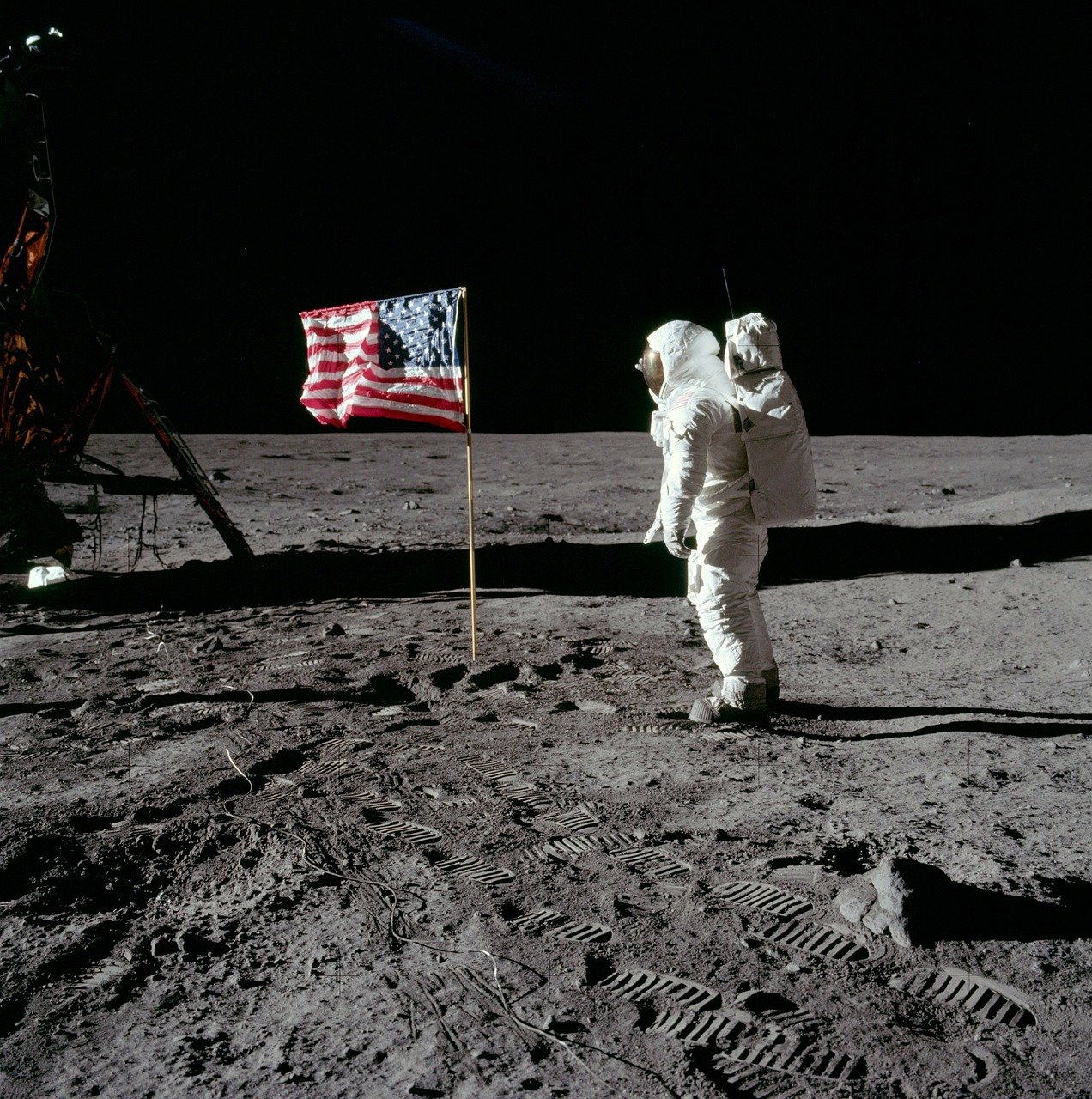
The moon landing happened almost 50 years ago, and it remains the only moon landing ever attempted. Ask most people what they remember about it and the answer is usually a short list:
- Neil Armstrong and Buzz Aldrin
- "One small step for man, a giant leap for mankind"
- President Nixon's speech announcing the moon mission
- NASA, probably
Hardly anyone remembers the scientists who worked behind the scenes, or the technology that made the mission possible. I could not name them either, and a quick search did not get me far. One thing did stand out, though: the single concept that probably helped more than any other to land a man on the moon.
The Kalman filter
That concept is the Kalman filter, a mathematical and control idea proposed by Rudolf Kalman and later adapted by Stanley Schmidt of NASA for the Apollo programme. Kalman's principles let scientists solve "trajectory estimation" problems, which means working out where the spacecraft is at any moment.
This is a hard problem in space. There are no fixed points of reference, so navigation depends entirely on instruments. If the instruments are off even by a tiny margin, the error keeps adding up until the spacecraft is far from where it was meant to be. Kalman's hypothesis, later developed into the Kalman filter, lets scientists estimate the errors that have crept into the calculations and remove them.
Why it matters
What makes this remarkable is the hardware. The computer carried by the Apollo programme had a clock speed of 100 Hz and around 2 MB of RAM. The Kalman filter is valuable because it delivers good results even on such a weak computing platform, something modern machine learning and AI algorithms cannot claim.
Learn more
To know more about Kalman filters, please check out our course videos on Control Systems.